Forget the pristine datasheets and polished marketing videos. That animation of a proximity sensor's magnetic field engaging a target? It's a beautiful lie in about 40% of real-world heavy industrial applications. After two decades of deploying these units into foundries, mining sites, and offshore rigs, I've compiled the unvarnished truths that separate functional installations from catastrophic failures.
Experience Correction: The "Standard Range" Fallacy. The rated sensing distance (Sn) is derived under laboratory conditions with a standard target. In practice, this value is often useless. The critical parameter you must derate is the effective sensing distance under contamination. For instance, a 10mm-range inductive sensor in a machining cell will see its effective range degrade by up to 60% within weeks due to an almost invisible buildup of ferrous dust and coolant mist on the active face. This isn't a failure; it's an expected operational decay. The fix isn't a "better" sensor, but a systemic one: we specify sensors with a 2.5x Sn overkill and implement mandatory, weekly face-wiping protocols via a simple pneumatic jet. Relying on the nominal Sn for machine timing or safety interlocks is a direct path to unplanned downtime.
Boundary Conditions: Where It Will Fail. Proximity sensors are not universal detectives. Their failure zones are stark and non-negotiable.
1. High-Velocity Non-Ferrous Targets: Detecting aluminum cans on a high-speed bottling line (>3 m/s) with standard inductive sensors is a gamble. The eddy currents generated are weak and fleeting. You'll get intermittent false negatives. The solution is a specialized, high-frequency oscillation sensor, not a standard unit.
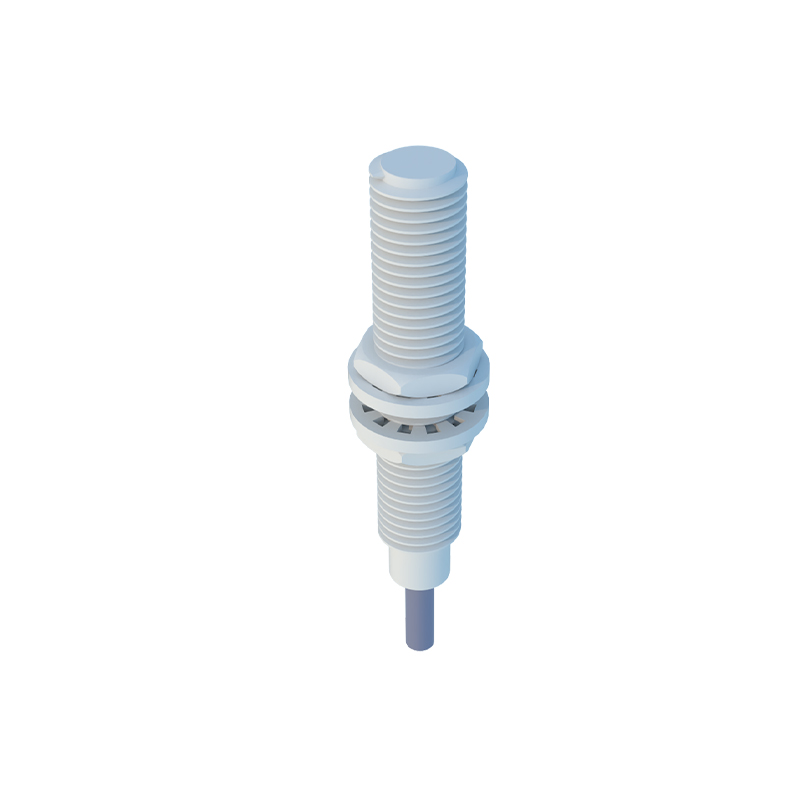
2. Conductive Slurries or Dust Clouds: In mineral processing, airborne conductive dust (e.g., copper, graphite) can capacitively couple to the sensor, causing it to latch "ON" permanently. Similarly, a sensor near a flowing slurry of conductive material will give a continuous presence signal. In these environments, you abandon inductive/capacitive principles and move to mechanical limit switches or completely isolated ultrasonic units.
3. Extreme Thermal Gradients: Mounting a sensor on a machine frame that experiences rapid, cyclical temperature changes (e.g., a die-casting machine) will cause internal stress on the ferrite core. Over months, this leads to micro-cracks, altering the magnetic field's shape and reducing range unpredictably. The failure is gradual and untraceable via standard diagnostics. The rule: for surfaces with ΔT > 50°C per hour, use sensors with potted, stress-relieved coils and mandate replacement on a calendar schedule, not a failure schedule.
Counterintuitive Conclusion: Sometimes, Less Sensing is More. The industry's drive is toward longer range and higher sensitivity. This is often wrong. In high-density valve banks or robotic end-effectors with multiple closely packed sensors, increased sensitivity leads to cross-talk and mutual interference. The sensor for Valve A can detect the metal piston of Valve B, causing a cascade fault. Here, the professional move is to deliberately de-tune or select sensors with shorter ranges and shielded faces. We actively seek "inferior" specs to achieve system-level robustness. Another paradox: in detecting very thin or small targets (e.g., foil, a M3 screw), reducing the supply voltage (e.g., from 24V to 12V) can sometimes improve consistency. The lower voltage creates a less aggressive field, reducing oscillation noise and providing a cleaner, more repeatable switching signal for marginal targets. This flies in the face of standard "run at rated voltage" practice but is a proven field tactic.
The animation shows a single, clean detection event. Reality is a war against noise, contamination, physics, and the unintended consequences of the sensor's own presence. Your design must start from the premise of degradation and interference, not idealized performance. Specify not just the sensor, but its maintenance ritual and its failure mode. That is what separates a diagram from a durable system.