Forget the pristine lab conditions on the data sheet. After two decades of deploying inductive, capacitive, and photoelectric proximity sensors in foundries, chemical plants, and offshore rigs, I can tell you the published specs are often a polite fiction. The real knowledge is written in the scars of failed installations. Let's cut to the chase.
Experience Corrections: The Reality Gap
Theoretical sensing ranges are the first casualty. An inductive sensor rated for 15mm in a clean environment might reliably detect only 10-12mm on a vibrating conveyor coated with ferrous dust. The issue isn't sensitivity; it's the conductive dust forming a false "core," altering the electromagnetic field's shape. I've seen "fail-safe" sensors latch onto a dust layer, reporting a metal target's presence indefinitely. The correction? Derate the nominal sensing distance by at least 25% for dirty environments and specify a housing with an IP69K rating, not just IP67. IP67 means immersion, but IP69K guarantees high-pressure, high-temperature jet cleaning—a critical distinction often overlooked.
Temperature ratings are another minefield. A sensor rated for -25°C to 70°C might survive at 71°C, but its cycle time will degrade. More critically, at the extreme cold end, standard seals harden and crack. The failure mode isn't immediate cessation but a gradual ingress of moisture that leads to internal condensation and eventual short-circuit during a thaw cycle. The fix? For sub-zero applications, insist on sensors with FKM (Viton) seals instead of standard NBR, and specify a "condensation-proof" variant if available, even if it's not in the main catalog.
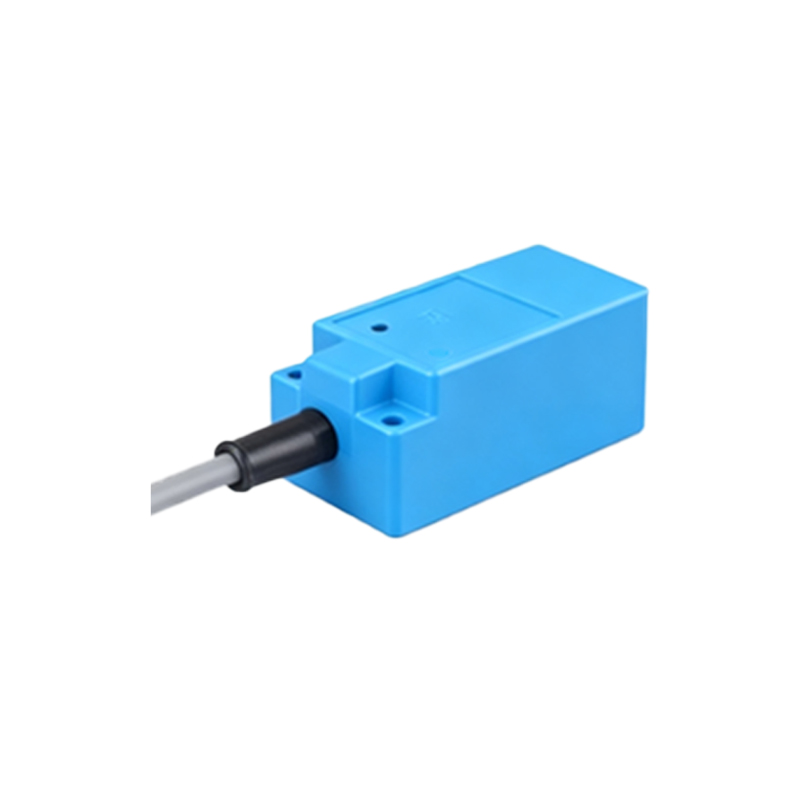
Boundary Conditions: Where It Will Fail
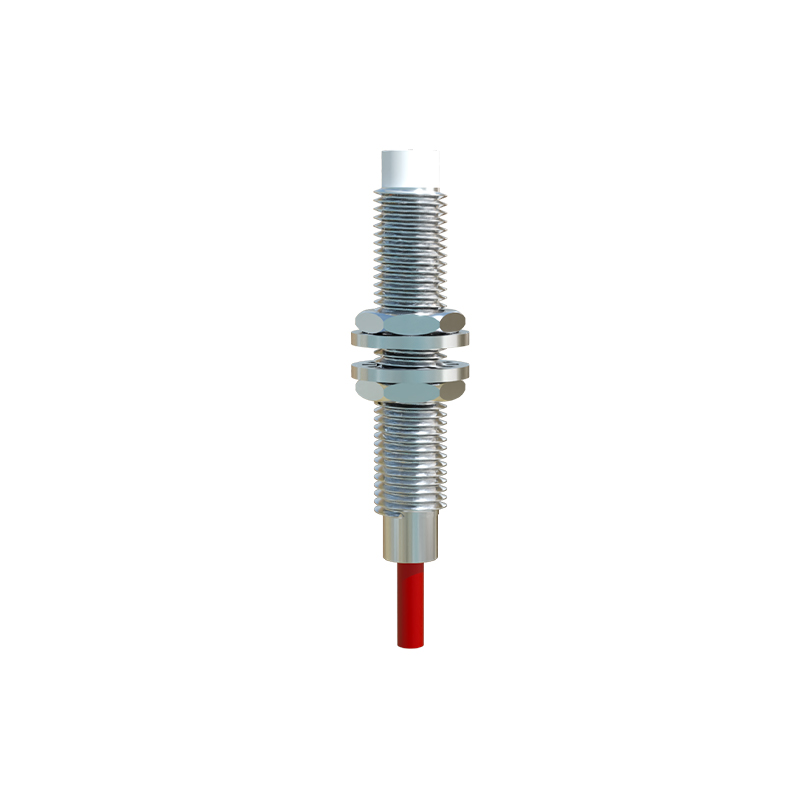
Proximity sensors are not universal tools. Here are the hard boundaries:
1. Inductive Sensors on Non-Ferrous Metals: They work on aluminum, brass, and copper, but the effective sensing distance plummets. For aluminum, it's roughly 40-50% of the rated ferrous distance. In high-speed counting applications with mixed or unknown alloys, this leads to missed counts. Do not use standard inductive sensors here; use a "factor 1" all-metal variant, even at double the cost.
2. Capacitive Sensors for Level Detection in Bulk Solids: They are famously "tunable," which is a euphemism for prone to false triggering. In a silo with powdered material, material buildup on the sensor face creates a permanent false signal. Furthermore, changes in material moisture content or dielectric constant (e.g., between different batches of grain) will shift the detection point unpredictably. In these applications, they are a maintenance headache. A diaphragm-style mechanical switch or a non-contact radar sensor is often a more robust, albeit more expensive, solution.
3. Photoelectric Sensors in Steam or Heavy Aerosol: Any photoelectric sensor (diffuse, retro-reflective, through-beam) will fail in an atmosphere of dense steam or oil mist. The particles scatter the light beam, causing either false triggers or a complete loss of signal. This is not a mounting or tuning issue; it's a physics limit. In such environments, switch to a pneumatic proximity sensor or a ruggedized inductive sensor if the target is metal.
Counter-Intuitive Conclusions: Data-Driven Insights
1. A Slower Sensor Can Be More Reliable. In high-vibration environments (e.g., stamping presses), a sensor with a slightly slower response time (e.g., 3ms vs. 1ms) often performs better. The ultra-fast sensor can pick up vibrational harmonics as multiple triggers, causing PLC errors. The slower sensor effectively acts as a low-pass filter, providing a cleaner, more stable signal. Speed isn't always king; signal integrity is.
2. Shielding Can Be a Detriment. The dogma is that a shielded (flush-mountable) inductive sensor is better for metal-rich environments. True, it's immune to lateral metal. However, its sensing field is a shallow hemisphere. In applications where the target surface is uneven or warped (like hot steel plates), a non-shielded sensor, with its longer, more conical field, provides more consistent detection despite requiring more side clearance. The unshielded sensor's vulnerability to adjacent metal is often a lesser evil than the shielded sensor's sensitivity to target surface imperfections.
3. Voltage Tolerance is More Critical Than Ruggedness. Engineers obsess over housing material (stainless steel vs. PBT plastic) but often ignore the power supply line. In plants with large motor loads, voltage spikes and brownouts are common. A sensor rated for 10-30V DC that fails at