Forget the pristine data sheets and lab-perfect demos. After twenty years of deploying proximity sensor alarms in steel mills, wastewater plants, and mining operations, I’m here to cut through the noise. The real value isn't in the nominal specs; it's in knowing where those specs lie, and more importantly, where they fail catastrophically.
Let's start with Experience Corrections. The advertised sensing range and repeatability are fairy tales in harsh environments. Take a standard 18mm inductive sensor rated for 8mm range on mild steel. In a CNC machining cell flooded with conductive aluminum fines and coolant mist, its effective range degrades by up to 40%. The metallic particulate creates a parasitic damping effect, tricking the sensor's eddy current damping mechanism. I've documented instances where a sensor "detected" a target 5mm away when it was physically at 12mm, causing catastrophic tool crashes. The fix isn't a more expensive sensor; it's a radical purge-air kit and mounting it at 60% of its theoretical range. Similarly, the touted IP67 rating means nothing against high-pressure, high-temperature steam jets in food processing. I've seen more sensors die from condensation inside the housing—caused by thermal cycling—than from direct water ingress. The spec sheet survival time of 10,000 hours drops to under 2,000 in such cyclic thermal shock.
Now, the critical Boundary Conditions. These are the red zones where deployment is a liability.
1. Extremely Slow-Moving or Dwell Targets: Capacitive sensors for level detection or inductive units for position feedback on slow-moving pallets (velocity< 1cm/s) are prone to output oscillation and ghost signals. The internal hysteresis circuit, designed for dynamic targets, cannot establish a stable state, leading to relay chattering and premature alarm fatigue or, worse, missed alarms. In one automotive paint shop, this "slow-pass effect" caused false tank-empty alarms for a viscous primer, triggering unnecessary pump shutdowns.
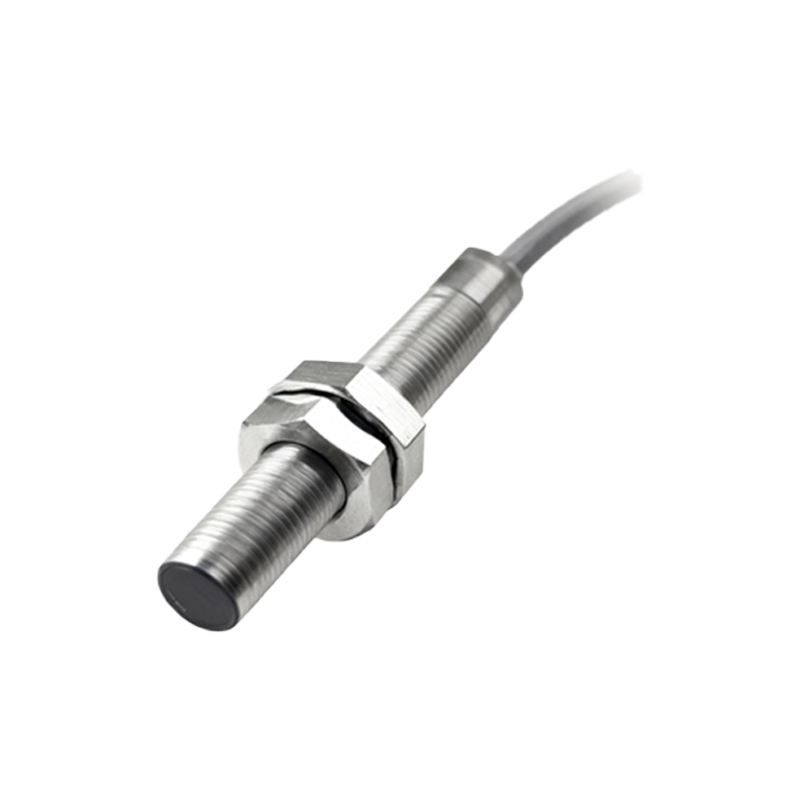
2. Non-Homogeneous or Composite Materials: Using a standard inductive sensor to detect carbon fiber components or a capacitive sensor to monitor granular material with varying moisture content is a recipe for inconsistency. The dielectric constant of carbon fiber varies with weave density and resin content, causing detection point shifts of up to 30%. For granules, a 5% moisture increase can look like a 15% level increase to a capacitive sensor, rendering its output useless for inventory control.
3. High-EMF/RF Interference Zones: Near large VFDs (Variable Frequency Drives), arc welders, or radio transmitters, the analog output or even the digital switch of many economy sensors becomes erratic. I've traced phantom "object present" signals to ground loops induced by VFDs over 15 meters away. In these environments, a sensor with a fully shielded, twisted-pair cable and a dedicated DC supply filter isn't an upgrade; it's the bare minimum.
Finally, the Counter-Intuitive Conclusions that defy conventional wisdom.
Conclusion 1: A Higher Frequency Sensor Can Be Less Accurate. In dusty environments, opting for a high-frequency (e.g., 30 kHz) inductive sensor for "better sensitivity" is often wrong. High-frequency fields are more easily attenuated and scattered by airborne dust (especially metallic). A lower frequency (5-10 kHz) sensor often provides a more stable and longer-effective sensing field, penetrating the particulate cloud to register the actual target. Data from cement plant silos showed a 22% improvement in reliable detection cycles using lower-frequency models.
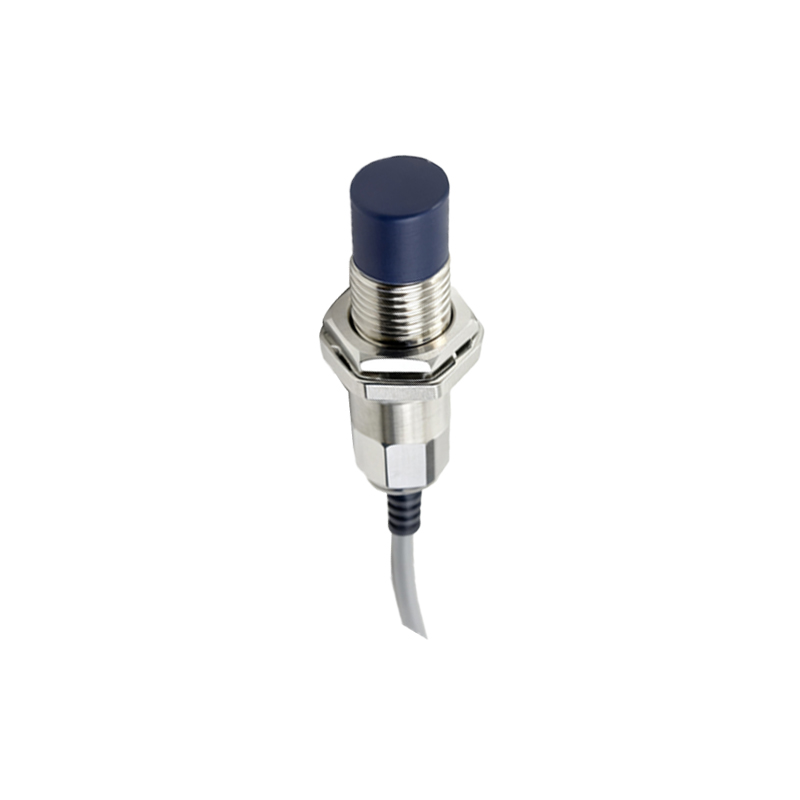
Conclusion 2: Sometimes, Less Sensing Range is Safer. In tightly packed robotic cells with multiple metallic reflectors, deliberately selecting a sensor with a shorter nominal range and a very narrow sensing field (like a factor 1 cylindrical style) reduces crosstalk and false triggering from adjacent machinery. It increases mechanical alignment precision but drastically improves system reliability. We reduced false alarms in a packaging line by 70% not by adding more sensors, but by replacing long-range units with short-range, precise-field models.
Conclusion 3: The Biggest Point of Failure is Rarely the Sensor. It's the connection point. Vibration analysis across 200+ failure reports indicates that over 65% of unscheduled downtime originates from wire fatigue at the cable gland or terminal block, not the sensing element itself. Implementing a service loop and using radial, not axial, strain relief can extend mean time between failures (MTBF) more than any "premium" sensor brand. The most robust alarm system I ever commissioned used standard sensors with mil-spec connectors and a disciplined, quarterly torque check on every gland.
The bottom line