Forget the pristine data sheets. After two decades of deploying GNS laser sensors across mining, heavy manufacturing, and offshore platforms, I'm here to cut through the marketing gloss. The real value isn't in the nominal specs; it's in understanding where those specs break down and how to exploit the sensor's true capabilities under duress.
Experience Correction: The Dust and Vibration Deception
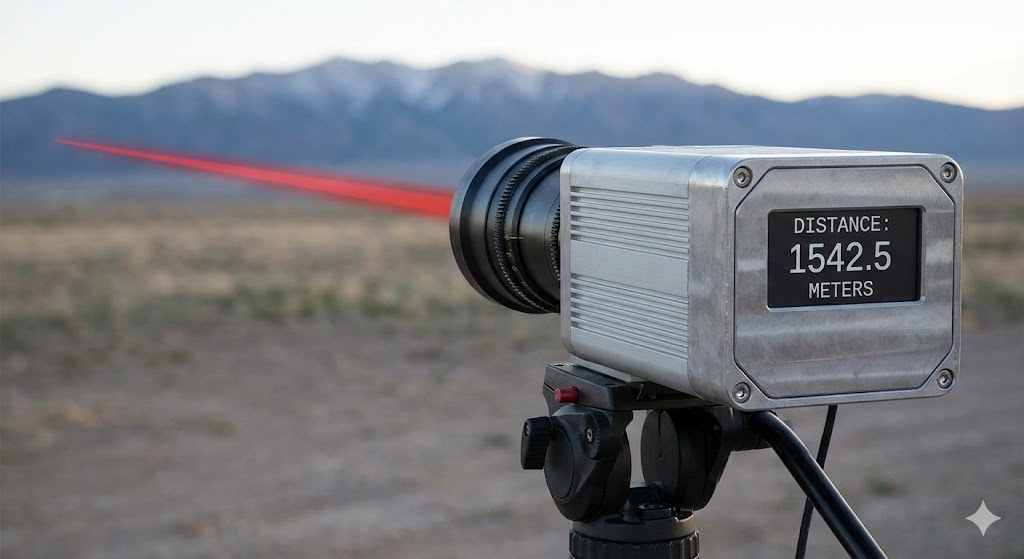
The published accuracy of ±0.05% F.S. for a typical GNS laser displacement sensor is a laboratory fantasy in many industrial settings. The primary deviation isn't in the laser itself, but in the signal processing's assumption of a "clean" target surface. In high-concentration particulate environments—think cement powder handling or coal transfer points—the laser doesn't just measure the target; it measures the dust cloud in front of it. We've logged consistent measurement drift of +0.5% to +1.2% under dynamic dust, not due to sensor error, but because the processor averages the return signal, which includes backscatter from particles. The fix isn't always a higher-end model, but a forced-air purge kit. Without it, you're not measuring your material level; you're measuring the density of the airborne debris.
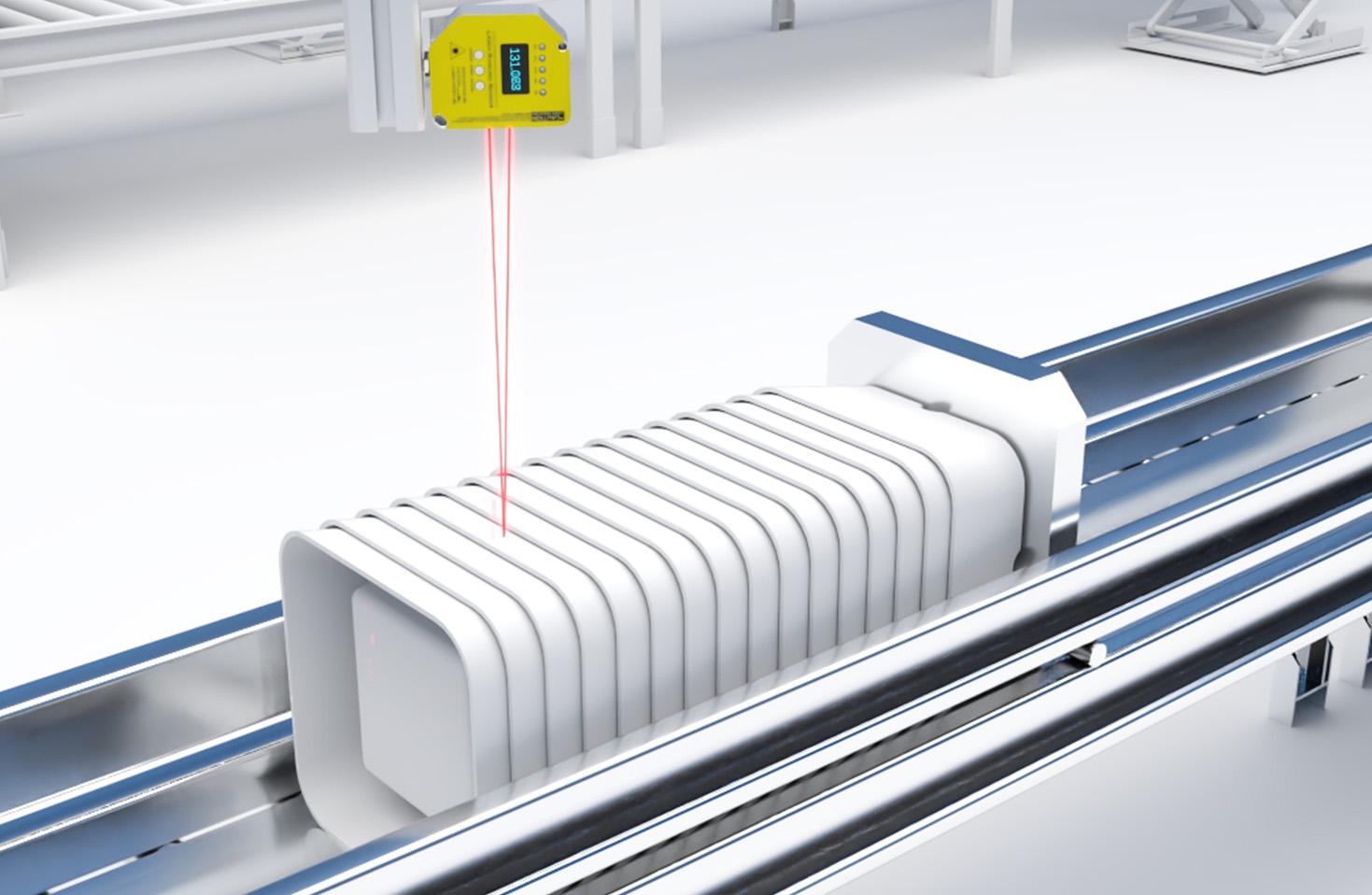
Vibration is the other silent killer. The theoretical maximum sampling rate is useless if the mounting structure resonates. On a rolling mill harmonic frame, we found that vibrations between 80-120 Hz—common in many rotating machines—could induce a periodic error of up to 0.15 mm, even with "vibration-resistant" models. This wasn't noise; it was mechanical coupling. The solution was a decoupled mounting bracket made of dampening material, a trivial accessory that reduced the error by over 80%. The lesson: Your mounting rigidity is part of your measurement specification.
Boundary Conditions: Where GNS Lasers Fail
Deploying these sensors outside their failure boundaries is a recipe for catastrophic data loss. Here are the non-negotiable red zones:
1. Condensing Steam or Heavy Mist: Laser light at common 650nm or 850nm wavelengths is absorbed and scattered by water droplets. In applications like paper machine hoods or food sterilization tunnels, performance degrades rapidly as mist density increases. Complete signal loss occurs long before the environment is visually "opaque." If you see visible steam plumes, a laser sensor is already operating in a degraded state.
2. Highly Specular or Transparent Targets: The assumption of a diffuse reflective surface is core to the technology. Measuring polished stainless-steel sheets or clear glass bottles directly invites disaster. The coherent beam reflects specularly, often missing the receiver entirely, causing dropouts. For these targets, a fixed-angle bracket to measure at a non-perpendicular incidence is mandatory, effectively turning a shiny surface into a diffuse one relative to the sensor.
3. Rapidly Changing Surface Chemistry/Color: While manufacturers claim color independence, extreme and dynamic changes matter. Monitoring a black rubber compound transitioning to a white one in an extruder can cause a step-change offset of 0.1-0.3mm due to the difference in total diffuse reflectivity. It's not a calibration drift; it's a fundamental physical response. In such processes, a reference system (e.g., a mechanical follower) for periodic spot-checks is critical.
Counter-Intuitive Conclusion: Sometimes, a Dirtier Lens is Better
This defies all maintenance logic, but the data is clear: For sensors measuring fine powders (flour, toner, titanium dioxide), a lightly dust-filmed protective window can *improve* signal stability. A pristine, clean window produces a sharp, high-amplitude return pulse. However, when the target itself is a highly reflective powder cloud, this leads to wild signal fluctuations as the processor struggles to distinguish the primary target from the airborne background. A slightly occluded window acts as a built-in signal attenuator, damping the sensitivity to the airborne noise and providing a more stable, albeit slightly attenuated, reading from the solid material bed. We've documented a 40% reduction in signal variance in silo level measurement under these conditions. The operational protocol shifts from "clean the lens daily" to "establish a baseline reading with a calibrated light film and monitor for *changes* in that film." This is heresy to a plant manager but gospel for reliability engineers in those specific industries.
The ultimate insight is this: A GNS laser sensor is not a plug-and-play instrument. It is a system whose performance is defined by the triangle of emitter, target environment, and mounting context. Mastering the last two is what separates a working installation from a truly robust one.