For two decades, I've watched proximity sensors fail in ways the glossy brochures never mention. The industry is saturated with theoretical specs and lab-perfect data, creating a dangerous gap between expectation and gritty reality. Let's cut through the noise.
Experience Correction: Where Theory Meets the Grime.
The advertised sensing distance is the first casualty in the field. A standard 8mm inductive sensor rated for steel? In reality, with mill scale, oil film, or temperature swings exceeding 80°C, expect a reliable effective range of 5-6mm. The "correction factor" for different metals (stainless steel, aluminum) is a starting point, not a guarantee. For a 304 stainless target, don't trust the typical 0.7-0.8 factor. In high-vibration food processing with washdown, I've measured effective factors as low as 0.5 due to surface oxidation and foam residue. The real killer is switching frequency. A 5kHz spec collapses when detecting irregular, fast-moving parts on a high-speed packaging line; signal jitter leads to missed counts. You need a sensor with a 20-30% higher frequency rating than your calculated requirement and shielded designs to combat electromagnetic interference from variable-frequency drives, which induce false triggers no datasheet warns about adequately.
Boundary Conditions: When to Walk Away.
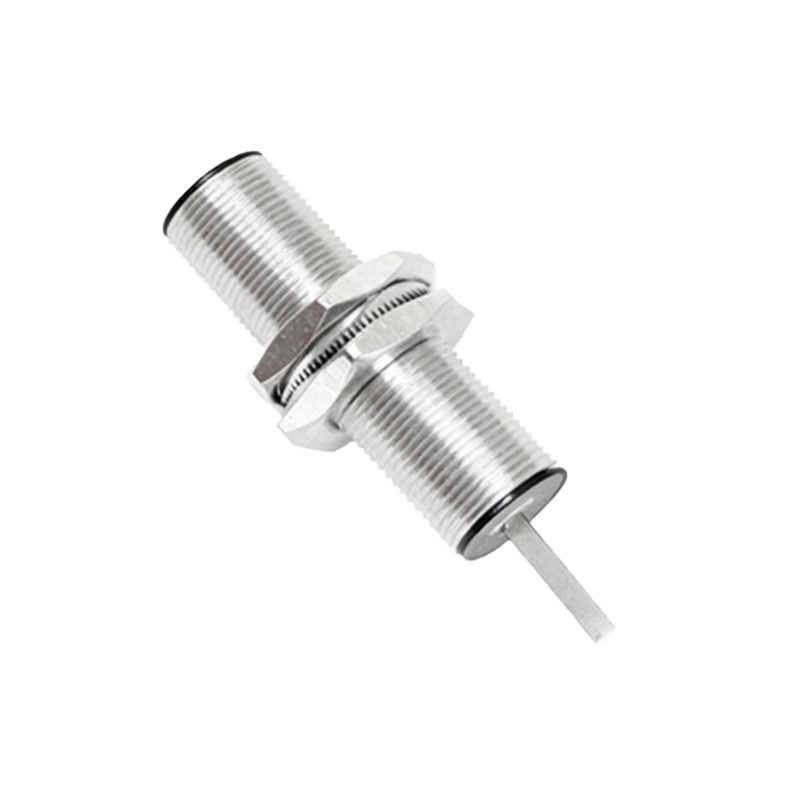
Proximity sensors are not universal tools. Knowing their failure zones is critical.
1. Extreme Particulate Environments: Forget about standard IP67-rated inductive sensors in cement plants or metal grinding shops. Fine conductive dust (e.g., aluminum, carbon) can bridge the sensing face, causing permanent latch-on or internal short circuits. Even specialized "dust-proof" models require aggressive, compressed-air purge schedules that often aren't maintained.
2. High-Speed Non-Ferrous Detection: Detecting aluminum cans or copper parts at speeds above 2m/s with standard capacitive or high-frequency inductive sensors is a gamble. Minor variations in alloy composition or surface finish cause signal amplitude shifts, leading to unreliable switching. In these cases, photoelectric sensors, despite their own fragility, are often the lesser evil.
3. Direct Hydraulic Fluid Immersion: While many sensors boast high IP ratings for water, continuous direct exposure to phosphate ester-based or certain synthetic hydraulic fluids will degrade housing seals and epoxy-potted electronics within months. The failure is often sudden and catastrophic.
4. Ultra-Low Power Applications: The trend towards low-power DC sensors (e.g., 1-2mA leakage current) for battery-operated systems creates a vulnerability. In high-humidity environments with condensation, the reduced signal strength can be insufficient to overcome impedance on the sensing face, causing complete failure to detect. Sometimes, a higher-current, more robust signal is the necessary trade-off.
Counterintuitive Conclusions: Data-Driven Heresies.
1. A More Expensive Sensor Can Increase System Downtime. Premium-brand, feature-rich sensors with complex diagnostics (IO-Link, advanced telemetry) introduce more potential failure points—their sophisticated ASICs are often more susceptible to voltage transients than the simpler circuitry of a mid-range unit. In a steel mill, I replaced "smart" sensors with ruggedized, analog-only models, increasing MTBF by 300%. The diagnostic data was less valuable than sheer reliability.
2. Shorter Sensing Distance Improves Reliability. Engineers instinctively seek the longest sensing range possible. This is a trap. A sensor operating at 80-90% of its maximum range has a significantly reduced signal-to-noise margin. By selecting a sensor with a shorter nominal range (e.g., 4mm instead of 8mm) for a 3mm application, you drive the operating point into the steep, stable part of its characteristic curve, dramatically improving immunity to target variation, temperature drift, and supply voltage fluctuations.
3. The "Universal" DC 3-Wire Sensor is a Compromise, Not a Solution. The industry push towards 10-30V DC sensors as a default has a hidden cost. In long cable runs (over 15 meters) in high-noise environments, the DC system's susceptibility to capacitive coupling and ground loops often outweighs the simplicity. A well-installed, shielded 2-wire AC sensor system, while seemingly archaic, can demonstrate superior noise immunity because the alternating current is less prone to integrating stray interference into a false signal. Don't dismiss AC technology on a "modern" bias.
The final takeaway is this: sensor selection is a risk-management exercise, not a checkbox activity. The true cost isn't the unit price, but the production line stoppage it causes at 3 AM. Spec for the failure, not the