Forget the pristine datasheets and glossy catalog promises. After twenty years of watching electrical proximity sensors succeed and fail on factory floors, in mines, and on offshore rigs, the real knowledge isn't found in nominal specifications. It's written in the grime, vibration, and electromagnetic chaos of real-world applications. Let's cut to the chase with three dimensions of hard-won, actionable intelligence that you won't find in a standard manual.
Experience Correction: Where Theory Meets Grit
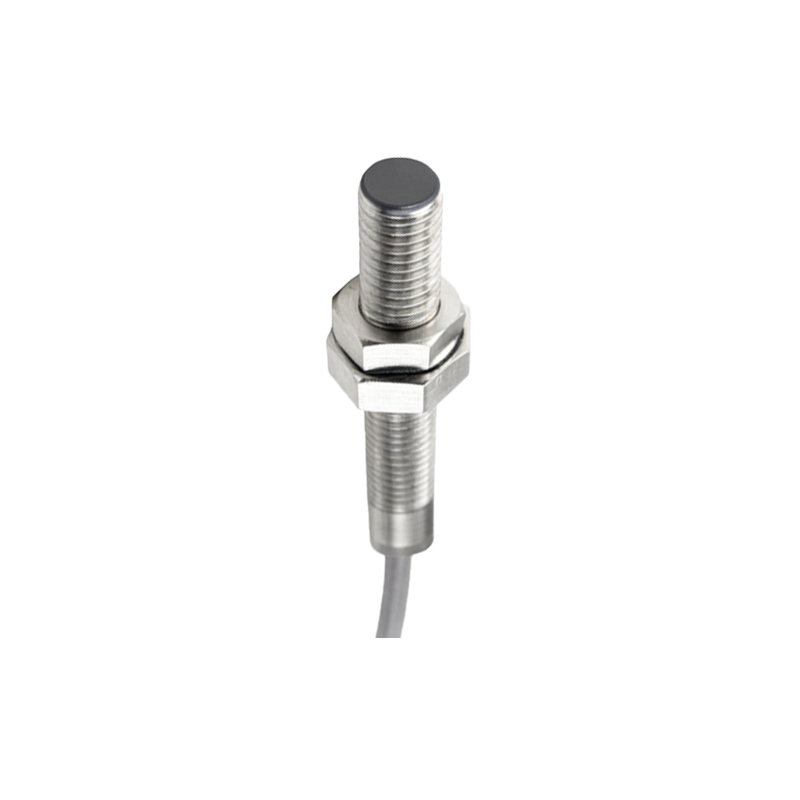
The advertised sensing range and repeatability are laboratory fantasies. In practice, three factors consistently degrade performance beyond the expected tolerance. First, target material composition is a liar. AISI 304 stainless steel is the standard reference, but the specific alloying batch, cold-working history, and surface oxidation layer can cause a sensing distance deviation of up to 15-20%. That "10mm range" sensor might only reliably see a particular batch of "stainless" at 8mm. Second, electrical noise is the silent killer. The immunity ratings (like 10V/m) assume a clean, standardized test. On a panel with variable frequency drives (VFDs) for motors, the induced high-frequency harmonics can cause intermittent "phantom" sensing or complete lock-up, even with shielded cables, if grounding isn't perfect—and it never is. Third, temperature isn't just about ambient air. Proximity sensors mounted on hot machinery bodies can experience a localized thermal soak, raising the internal oscillator temperature 20-30°C above ambient. This shifts the oscillation frequency, subtly altering the sensing point, leading to drift over a shift cycle.
Boundary Conditions: When to Walk Away
This technology is not universal. Deploying it outside these boundaries is an invitation for catastrophic failure. Non-ferrous, non-metallic targets: Inductive sensors fail here, obviously, but even capacitive types struggle predictably. Granular materials (plastic pellets, grain), foams, or thin films have wildly variable dielectric constants based on moisture content, compaction, and static charge. Do not use for critical level detection here. Extreme-speed, non-ferrous applications: Sensing aluminum cans at 3000 units/minute? The eddy currents generated in highly conductive non-ferrous metals are weaker and slower to form/dissipate. This can lead to a "pulse stretching" effect, distorting the output signal timing and causing counting errors at high frequencies. Heavy particulate or conductive slurry immersion: The myth of "washdown" ratings. While IP69K seals keep water out, a constant bath of metallic grinding dust suspended in coolant or conductive slurry can gradually form a conductive bridge across the sensor face. This can effectively "short" the sensing field, causing the sensor to indicate permanent presence. It's a slow, insidious failure.
Counter-Intuitive Conclusion: Less Sensitivity is Often More Reliable
The instinct is to select the sensor with the longest possible range for a given application, maximizing the installation gap tolerance. This is often wrong. In high-vibration environments (compressors, stamping presses), a sensor with a shorter nominal range, but a sharper switching hysteresis curve, provides superior stability. A long-range sensor's field is broader and more diffuse, making it susceptible to "teasing" by a vibrating target moving in and out of the extended field edge. This causes output chatter and eventual contactor/PLC input damage. A short-range sensor with a steep response curve will only switch when the target is decisively within its narrow, intense field, ignoring the vibration-induced positional noise. The data shows a 5x improvement in mean time between failures (MTBF) in vibratory feeders by using a sensor with 4mm range instead of an 8mm one, even with identical mechanical mounting. Sometimes, the best way to see clearly is to look at a smaller, more defined area.
The final, non-negotiable insight: Your installation mechanic is your first line of defense. A sensor mounted 2 degrees off-perpendicular to the target's plane of approach can lose more effective range than choosing the wrong model. The theoretical world is flat, parallel, and clean. The real world is angled, vibrating, and contaminated. Design for the latter.