In the world of automation and smart technology, proximity sensors are the silent, unseen guardians. These devices detect the presence or absence of an object within a specific range without any physical contact. Their ability to perform this task reliably, quickly, and in challenging environments makes them indispensable across countless industries, from manufacturing and automotive to consumer electronics and security systems.
At their core, proximity sensors work by emitting a field or beam of electromagnetic radiation, such as infrared light, radio waves, or an electromagnetic field, and then looking for changes in the field or the return signal. The specific method of detection defines the primary types of sensors available. Inductive proximity sensors are one of the most common types. They generate an oscillating electromagnetic field. When a metallic object enters this field, it induces eddy currents within the object, which dampens the oscillator's amplitude. The sensor detects this change and triggers a switch. These sensors are exceptionally robust, ideal for industrial environments, and only detect metals, making them immune to dust, oil, or other non-metallic contaminants.
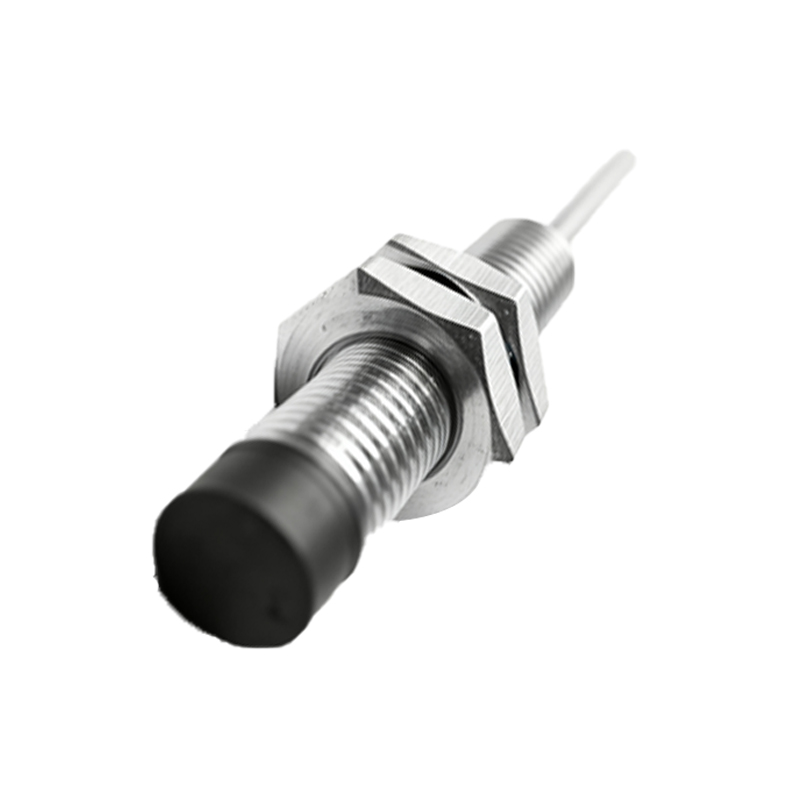
Capacitive proximity sensors, on the other hand, can detect both metallic and non-metallic objects, including liquids, powders, plastics, and wood. They function by generating an electrostatic field. Any object that enters this field alters the capacitance of the sensor's circuit, triggering detection. This makes them perfect for applications like liquid level sensing, material handling, and detecting filled containers on a production line. Photoelectric sensors use light, typically infrared or laser, to detect objects. They consist of an emitter and a receiver. The presence of an object is detected either by the interruption of the light beam (through-beam), the reflection of light back to a receiver housed in the same unit (retro-reflective), or the reflection of diffused light from the object itself (diffuse reflective). They offer long sensing ranges and high precision, suitable for packaging, assembly verification, and object counting.
Ultrasonic sensors operate similarly to sonar, emitting high-frequency sound waves and measuring the time it takes for the echo to return. They are excellent for detecting objects of any material, shape, or color, and are particularly effective for distance measurement, level control of bulk materials, and in environments with heavy dust or fog where optical sensors might fail. Finally, magnetic proximity sensors, often called reed switches or Hall-effect sensors, detect the presence of a permanent magnet. They are simple, cost-effective, and used in applications like door/window security sensors, speed sensing, and position detection in machinery.
The applications for these sensors are vast and varied. In a modern automotive assembly plant, inductive sensors ensure robotic arms correctly position metal components. Capacitive sensors in a food processing plant monitor the level of liquids in mixing vats. Photoelectric sensors on a high-speed conveyor belt count every bottle that passes by. Ultrasonic sensors help a robotic vacuum cleaner navigate around furniture, while magnetic sensors tell a laptop when its lid is closed. The choice of sensor depends on a careful analysis of several factors: the target material (metal, plastic, liquid), the required sensing distance, the environmental conditions (temperature, humidity, contaminants), the required response speed, and the electrical output needed (digital on/off or analog signal).
When selecting a proximity sensor, engineers must also consider the mounting style, housing material (often nickel-plated brass or stainless steel for durability), and protection rating (IP67 or IP69K for washdown environments). Proper installation is crucial; sensors must be positioned correctly to avoid false triggers from background objects or electrical noise from nearby machinery. Regular maintenance, though minimal, involves keeping the sensing face clean and checking for physical damage.
As technology advances, proximity sensors are becoming smarter, smaller, and more integrated. IO-Link communication allows sensors to provide detailed diagnostic data, not just a simple on/off signal, enabling predictive maintenance. The rise of the Industrial Internet of Things (IIoT) sees these humble components as critical data points in a connected factory, feeding information to central systems for analysis and optimization. From enabling the precise, contactless operation of a smartphone screen to ensuring the safety of heavy industrial robots, proximity sensors are fundamental components that bridge the physical and digital worlds. Their continued evolution will be key to unlocking further levels of automation, efficiency, and intelligence in the devices and systems that define modern life.