Hall effect proximity sensors with 4-wire configuration represent a significant advancement in non-contact sensing technology, widely adopted across industrial automation, automotive systems, and consumer electronics. Unlike mechanical switches or optical sensors, these devices operate by detecting changes in magnetic fields, offering exceptional reliability in harsh environments where dust, moisture, or vibration may compromise other sensing methods.
The fundamental principle relies on the Hall effect, discovered by Edwin Hall in 1879. When a current-carrying conductor is placed within a magnetic field, a voltage difference—known as the Hall voltage—is generated perpendicular to both the current and the field. In a 4-wire Hall proximity sensor, this phenomenon is harnessed through an integrated circuit containing a Hall element, signal conditioning electronics, and a solid-state output stage.
A typical 4-wire sensor comprises two distinct circuits: one for power supply and one for the output signal. The four wires are usually color-coded for straightforward installation: red and black for DC power (e.g., 5-24 VDC), and two separate wires for the output—often blue for the signal common and another color (like white or yellow) for the switched output. This separation allows for flexible wiring configurations, including normally open (NO) or normally closed (NC) operation, and enables the sensor to interface directly with programmable logic controllers (PLCs), relays, or microcontrollers without additional circuitry.
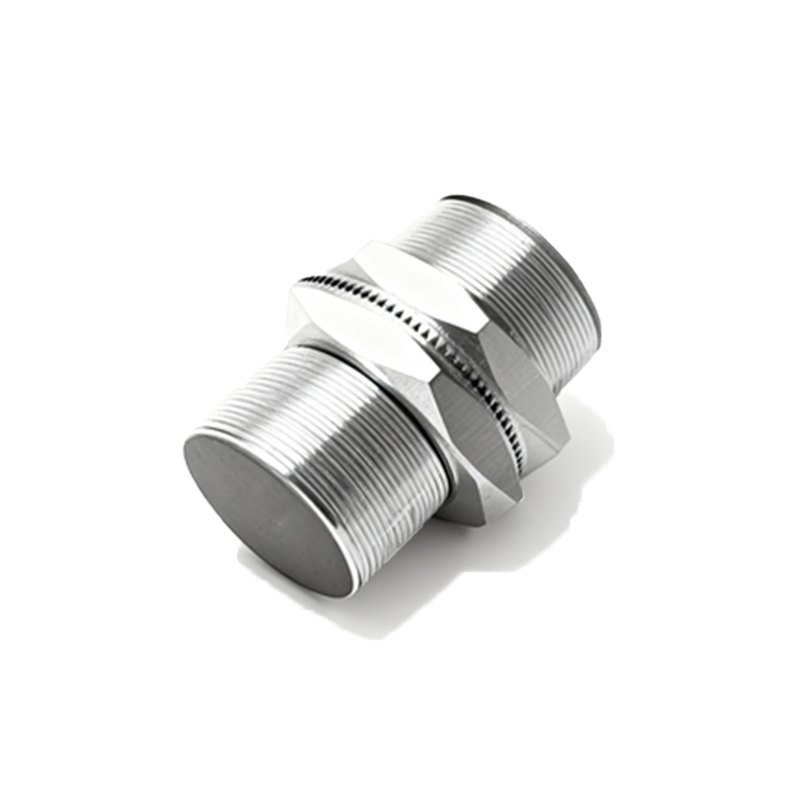
Key advantages of the 4-wire design include improved noise immunity and the ability to source or sink current independently. The dedicated power wires ensure stable voltage for the sensor's internal electronics, minimizing fluctuations that could cause false triggering. Meanwhile, the isolated output wires provide a clean, digital signal—either a voltage pulse or a continuous DC level—when a ferromagnetic target enters the sensor's detection range. Detection distances vary by model, typically ranging from a few millimeters to several centimeters, with factors like target material, size, and magnet strength influencing performance.
Installation and calibration are generally straightforward. Mounting the sensor securely adjacent to the moving target—such as a gear tooth, piston, or conveyor belt fixture—is critical. Users must ensure proper alignment with the magnetic field axis and maintain an air gap within specified limits. Many modern 4-wire Hall sensors feature built-in protection against reverse polarity, short circuits, and electromagnetic interference (EMI), enhancing durability in demanding applications like robotic assembly lines, CNC machinery, or electric vehicle motor control.
When selecting a 4-wire Hall proximity sensor, engineers consider parameters such as operating voltage range, output type (PNP vs. NPN), switching frequency, temperature tolerance, and housing material. Stainless steel or nickel-plated brass housings are common for corrosion resistance. Additionally, some models offer adjustable sensitivity or diagnostic LEDs for real-time status monitoring.
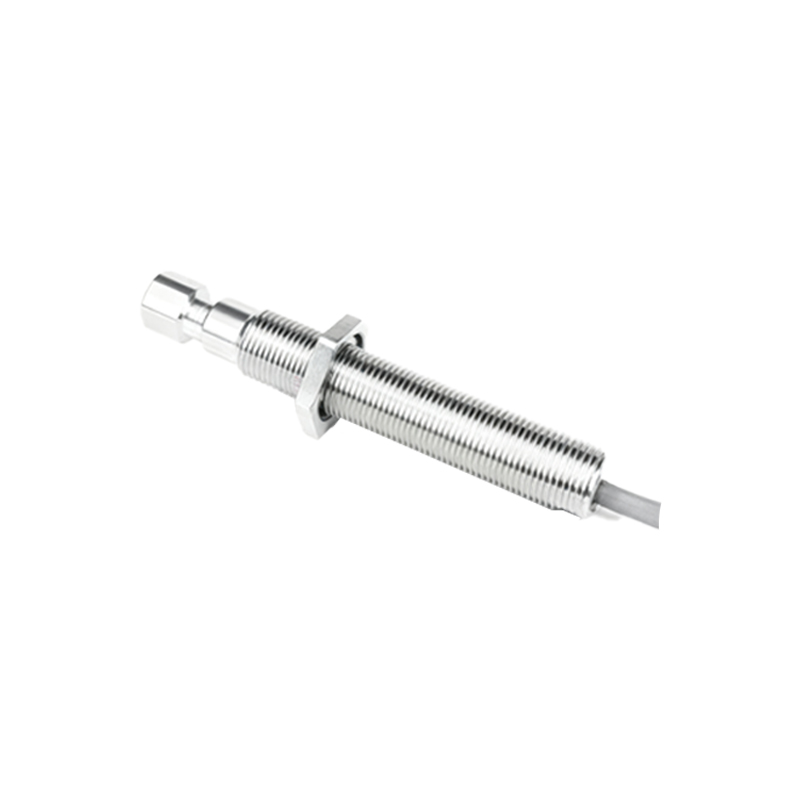
Common applications extend beyond simple position detection. These sensors are integral to speed measurement in rotary encoders, liquid level sensing in tanks, and safety interlocking in machinery guards. In automotive contexts, they monitor wheel speed for anti-lock braking systems (ABS) and detect seatbelt engagement. The non-contact nature ensures virtually infinite mechanical life, as no physical wear occurs between the sensor and target.
Maintenance is minimal but essential. Periodic checks for accumulated metallic debris, verification of output signals with a multimeter, and inspection of cable integrity help prevent unexpected downtime. Compared to 2-wire or 3-wire variants, 4-wire sensors offer superior signal clarity and configuration versatility, justifying their slightly higher cost in precision-critical setups.
As Industry 4.0 and IoT adoption grow, 4-wire Hall effect sensors continue to evolve with features like IO-Link communication for digital parameterization and predictive maintenance data. Their robustness, accuracy, and adaptability solidify their role as a cornerstone in modern sensing solutions, bridging the gap between mechanical motion and electronic control with silent, steadfast efficiency.