Proximity sensors are widely used in industrial automation, consumer electronics, and safety systems to detect the presence or absence of objects without physical contact. A fundamental aspect of their performance is the theoretical detection distance, which refers to the maximum range at which a sensor can reliably identify an object under ideal conditions. Understanding this parameter is crucial for selecting the right sensor for specific applications and ensuring system accuracy and reliability.
The theoretical distance is primarily determined by the sensor's operating principle. Inductive proximity sensors, for instance, generate an electromagnetic field and detect changes caused by metallic objects. Their effective range depends on factors like coil size, oscillation frequency, and the material's conductivity and permeability. Typically, inductive sensors offer shorter detection distances, often ranging from a few millimeters to about 60 millimeters, with larger sensors providing longer ranges. Capacitive sensors, on the other hand, respond to changes in capacitance caused by both metallic and non-metallic materials, including liquids and plastics. Their theoretical distance is influenced by the dielectric constant of the target material and the sensor's electrode design, with common ranges extending up to 40 millimeters. Ultrasonic sensors use sound waves to measure distance, offering longer theoretical ranges—sometimes several meters—based on the speed of sound and the time-of-flight principle. Optical proximity sensors, including infrared and laser types, rely on light reflection or interruption, with distances varying from centimeters to meters depending on the light source intensity and receiver sensitivity.
Environmental factors play a significant role in real-world performance, even though theoretical distance assumes ideal settings. Temperature fluctuations can affect sensor components, such as altering the oscillation in inductive sensors or sound speed in ultrasonic models. Humidity and contamination, like dust or oil, may interfere with optical or capacitive sensor readings, reducing effective range. Electromagnetic interference (EMI) from nearby equipment can also disrupt sensor signals, particularly for inductive and capacitive types. To mitigate these issues, manufacturers often specify derating factors or provide correction curves in datasheets, advising users to adjust theoretical distances based on operating conditions.
Calibration and alignment are essential for achieving theoretical distance in practice. Proper installation ensures the sensor is perpendicular to the target surface, as angular misalignment can shorten the detection range. Regular maintenance, such as cleaning lenses in optical sensors or checking for debris, helps maintain performance. Additionally, target characteristics—like size, shape, and material composition—must align with sensor specifications. For example, a small or thin object might not be detectable at the full theoretical distance of an inductive sensor, while a dark-colored surface could reduce the range of an optical sensor due to lower reflectivity.
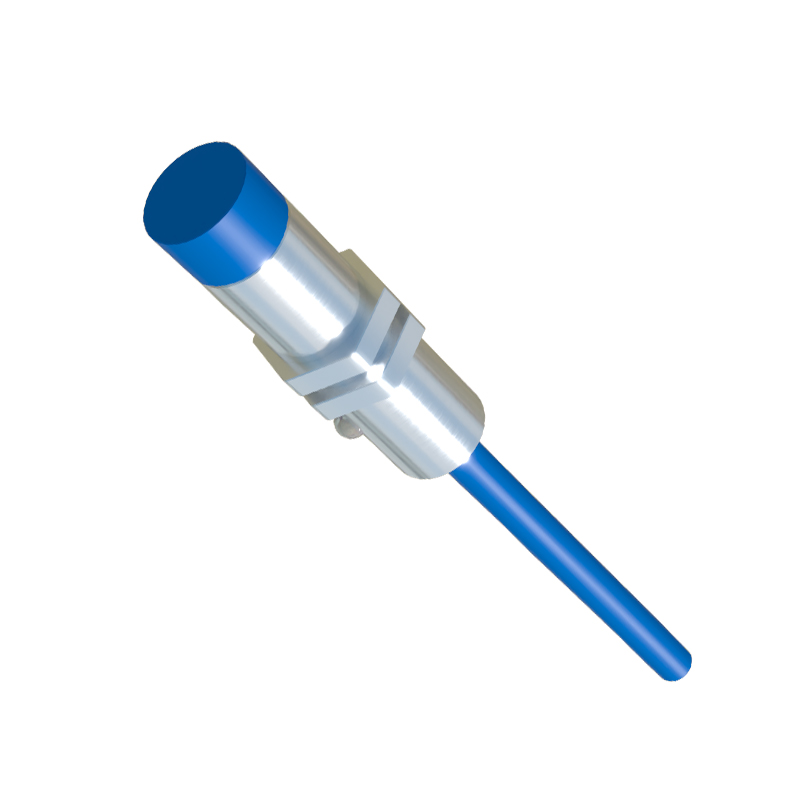
In applications, theoretical distance guides system design by defining safety margins and placement. In automotive parking assist systems, ultrasonic sensors are positioned to cover theoretical ranges that account for vehicle speed and obstacle detection. In manufacturing, inductive sensors monitor conveyor belts, with distances set to avoid false triggers from non-target materials. By comparing theoretical specifications with real-world tests, engineers can optimize sensor selection, balancing cost, range, and environmental resilience.
Advancements in sensor technology continue to refine theoretical distance capabilities. Innovations like multi-frequency ultrasonic sensors or enhanced signal processing algorithms improve accuracy and extend ranges under challenging conditions. As industries adopt smarter automation, understanding the nuances of theoretical distance remains key to leveraging proximity sensors for efficiency and safety.
Overall, the theoretical distance of a proximity sensor serves as a baseline for performance, but practical implementation requires consideration of environmental, mechanical, and target-related variables. By integrating datasheet insights with application-specific testing, users can ensure reliable operation and maximize sensor lifespan.