Proximity sensors have quietly become a cornerstone of modern technology, embedded in devices and systems we interact with daily. Their fundamental purpose—to detect the presence or absence of an object within a defined range without physical contact—has catalyzed a wave of innovation across industries. The development of these sensors is not merely a story of incremental improvement but a narrative of transformative adaptation, driven by demands for greater precision, miniaturization, energy efficiency, and intelligence.
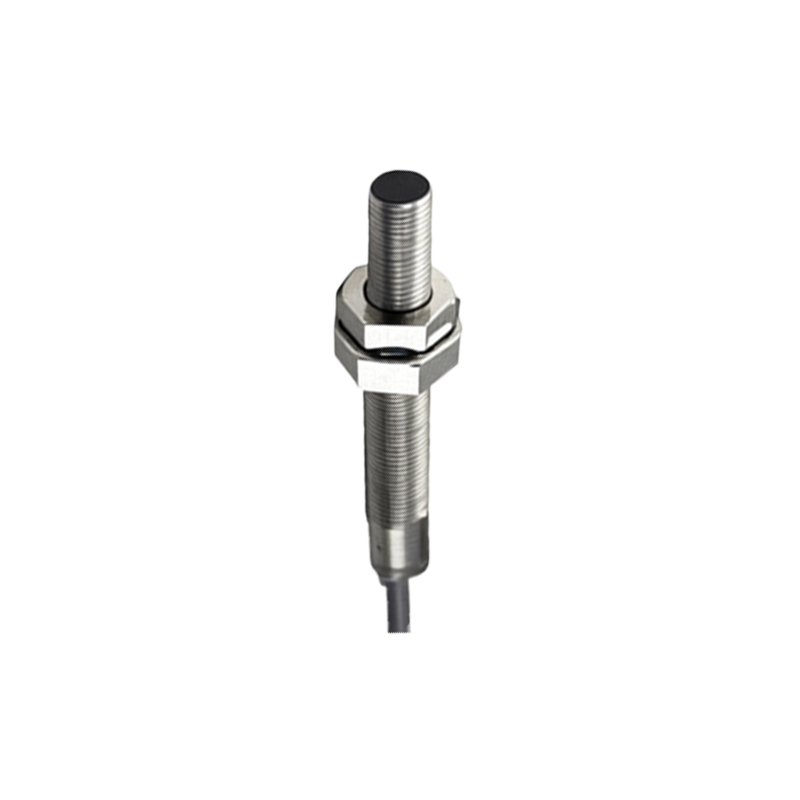
The journey began with basic inductive and capacitive sensors. Inductive sensors, detecting metallic objects, revolutionized manufacturing automation, enabling precise counting, positioning, and machine safety. Capacitive sensors, sensitive to both metallic and non-metallic materials, found early applications in liquid level detection and touch-sensitive buttons. While foundational, these technologies had limitations in range, material specificity, and environmental robustness.
A significant leap forward came with the advent of optical proximity sensors, particularly infrared (IR) based systems. By emitting an IR beam and measuring its reflection, these sensors enabled touchless interfaces. This development was pivotal for the smartphone revolution, allowing devices to deactivate screens during calls to save power and prevent accidental touches. The miniaturization of IR components, including LEDs and photodiodes, was a critical engineering feat, packing sophisticated detection into ever-shrinking form factors.
The current frontier of development is dominated by multi-modal and context-aware sensing. Modern proximity sensors are rarely standalone components. They are integrated into complex sensor hubs alongside ambient light sensors, accelerometers, and gyroscopes. This fusion allows for more sophisticated interpretation of context. For instance, a smartphone can now distinguish between being held to an ear, placed in a pocket, or lying on a table by correlating proximity data with other sensor inputs, leading to more intuitive power and UI management.
Furthermore, the emergence of Time-of-Flight (ToF) sensors represents a quantum leap in capability. Unlike simple IR reflection, ToF sensors measure the time taken for a light signal to return, creating accurate distance mapping. This technology powers advanced features like gesture control in consumer electronics, precise object avoidance in robotics and drones, and enhanced augmented reality experiences by understanding the spatial geometry of a room. The development of efficient, low-power ToF sensors is a key area of research, aiming to bring this high-fidelity sensing to battery-dependent devices.
Material science and signal processing are equally vital drivers of progress. New semiconductor materials and fabrication techniques have led to sensors with higher sensitivity and lower noise. On the software side, advanced algorithms and machine learning models filter out environmental interference—such as sunlight or ambient IR—and can even classify the type of approaching object based on its reflective signature. This intelligence moves sensors from simple "on/off" switches to informative data sources.
The applications continue to expand beyond consumer electronics. In automotive safety, advanced proximity sensor arrays form the bedrock of parking assistance and blind-spot detection systems, evolving towards full perimeter awareness for autonomous driving. In industrial settings, they ensure worker safety around heavy machinery through sophisticated safety-light curtains. In smart home and building automation, they enable energy savings by controlling lighting and HVAC based on occupancy.
Looking ahead, the development trajectory points toward even greater integration, intelligence, and versatility. Researchers are exploring the use of novel wavelengths, like ultraviolet or terahertz, for specialized applications. The convergence of proximity sensing with ultra-wideband (UWB) radio technology offers remarkable precision for indoor positioning. The ultimate goal is to create a seamless, invisible layer of spatial awareness for machines and devices, making interactions more natural, intuitive, and safe. The humble proximity sensor, therefore, stands as a critical enabler in our journey toward a more responsive and interconnected world.