In the world of industrial automation and machine safety, the ability to detect the presence or absence of an object without physical contact is paramount. Among the various technologies enabling this capability, electromagnetic proximity sensors stand out for their reliability, durability, and versatility. These sensors operate on a fundamental principle of electromagnetism, offering solutions where other sensor types might fail due to environmental challenges like dirt, oil, or vibration.
At its core, an electromagnetic proximity sensor generates an oscillating electromagnetic field from its active face or sensing coil. When a metallic object enters this field, eddy currents are induced on the surface of the target. These eddy currents draw energy from the oscillator circuit within the sensor, causing a change in its amplitude. The sensor's internal circuitry detects this amplitude drop and triggers a switching signal—typically opening or closing a solid-state or relay output. This entire process happens almost instantaneously, allowing for high-speed detection in dynamic applications. A key characteristic is that only conductive materials, primarily metals, can cause this reaction. The sensing distance, or nominal range, is specified for a standard target of mild steel and varies with the type of metal; for instance, aluminum or copper may reduce the effective sensing range.
The advantages of using electromagnetic proximity sensors are numerous. Their non-contact nature means no mechanical wear on the sensor or the target, leading to exceptionally long service life. They are inherently robust, often housed in stainless steel or nickel-plated brass bodies, making them resistant to shock, vibration, and harsh industrial environments including coolants and cutting fluids. They are not affected by ambient light, unlike optical sensors, and can detect objects through certain non-metallic materials like plastic or glass thin walls. Furthermore, they provide consistent performance and high switching frequencies, suitable for counting or speed monitoring tasks.
These sensors find applications across virtually every industry. In automotive manufacturing, they count parts on conveyor lines, confirm the position of robotic arms, and monitor spindle rotation. In material handling, they detect the position of metal pallets, control gate operations, and provide end-of-travel limits for actuators. Packaging machinery utilizes them for cap detection on bottles or registration control. A critical safety application is their use as non-contact limit switches in guarding systems, ensuring a door or guard is securely closed before a machine can operate.
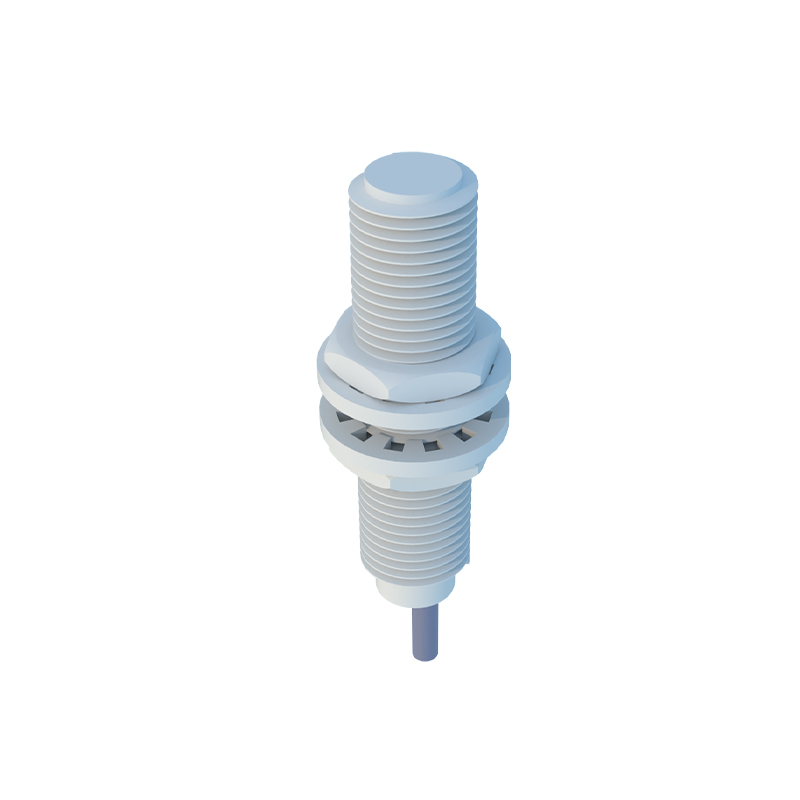
Selecting the right electromagnetic proximity sensor requires careful consideration of several parameters. First, define the sensing distance needed, always considering the reduction factor for non-ferrous metals. The housing style is crucial: cylindrical barrels (e.g., M8, M12, M18, M30 threads) are common, but rectangular or ring-shaped formats exist for specific needs. The output type must match the control system: 2-wire DC sensors simplify wiring but have a residual current, 3-wire DC (PNP or NPN) are the most common, offering clear switching, and 4-wire versions provide both normally open and closed contacts. The operating voltage range (e.g., 10-30V DC) must be compatible. Environmental ratings, particularly the Ingress Protection (IP) code like IP67 or IP69K, indicate resistance to dust and water jets, which is vital for washdown areas in food and beverage plants. Finally, consider special features like weld-field immunity, which prevents false triggering from the strong magnetic fields of resistance welding equipment, or all-metal sensing models that offer the same range for both steel and aluminum.
Installation and maintenance are straightforward but demand attention to detail. Sensors should be mounted securely to minimize vibration effects. A minimum clearance must be maintained between multiple sensors to prevent mutual interference. For flush-mountable models, they can be installed level with a metal surface; non-flush models require a free space around the sensing face for the field to propagate. Regular checks should involve verifying the sensor's output with a target and ensuring the sensing face remains clean of metallic debris, which could cause a permanent "on" state.
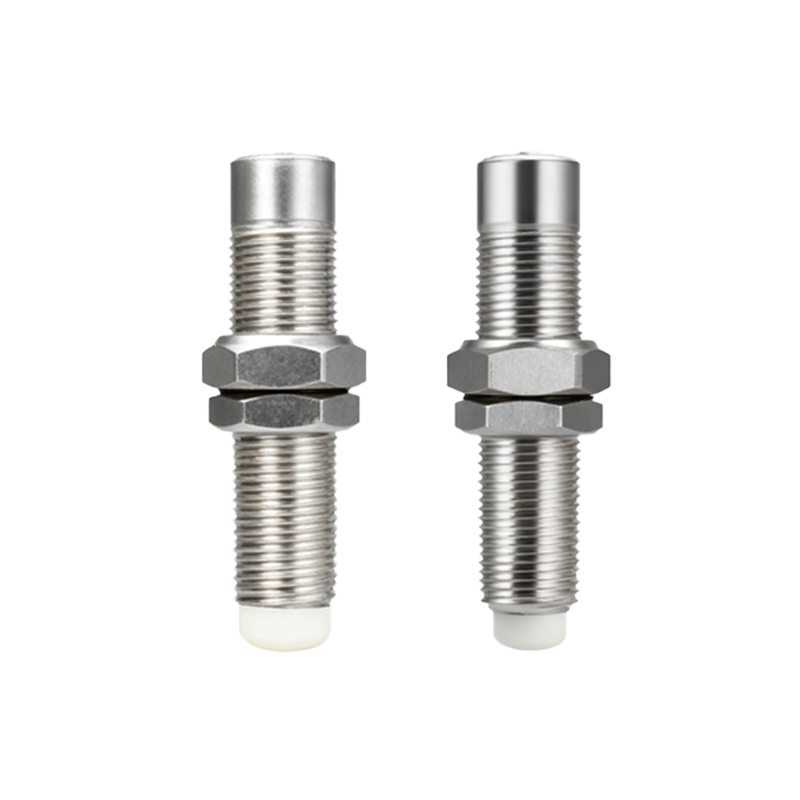
In conclusion, electromagnetic proximity sensors are a foundational component in modern industrial control. Their simple yet effective operating principle, combined with rugged construction, makes them an indispensable tool for engineers designing automated systems that require dependable, maintenance-free object detection. By understanding their characteristics and carefully matching them to the application's requirements, one can ensure optimal performance, enhanced safety, and increased productivity on the factory floor.