In the realm of automation and smart technology, proximity sensors are the silent, unseen sentinels that enable countless devices to interact with the physical world without physical contact. These electronic components detect the presence or absence of an object within a defined range, triggering an output signal. Their ability to perform reliably in harsh environments and provide non-contact detection makes them indispensable across industries from manufacturing to consumer electronics.
The fundamental working principle of a proximity sensor involves emitting a field or beam of electromagnetic radiation, such as infrared light, an electromagnetic field, or ultrasonic sound waves. The sensor then looks for changes or reflections in that field. When an object enters the detection zone, it disturbs the field. The sensor's circuitry detects this disturbance and converts it into an electrical signal that can be used to control machinery, count objects, or provide positional feedback. This non-contact nature eliminates mechanical wear and tear, ensuring high reliability and a long operational life.
Several primary types of proximity sensors dominate the market, each suited to specific materials and applications. Inductive proximity sensors are among the most common. They generate an oscillating electromagnetic field and detect the eddy current losses caused when a metallic object enters this field. Consequently, they are ideal for detecting metals like steel, aluminum, or copper and are extensively used in machine automation for tasks like part positioning, limit switching, and metal detection on conveyor belts. They are not suitable for detecting non-metallic materials.
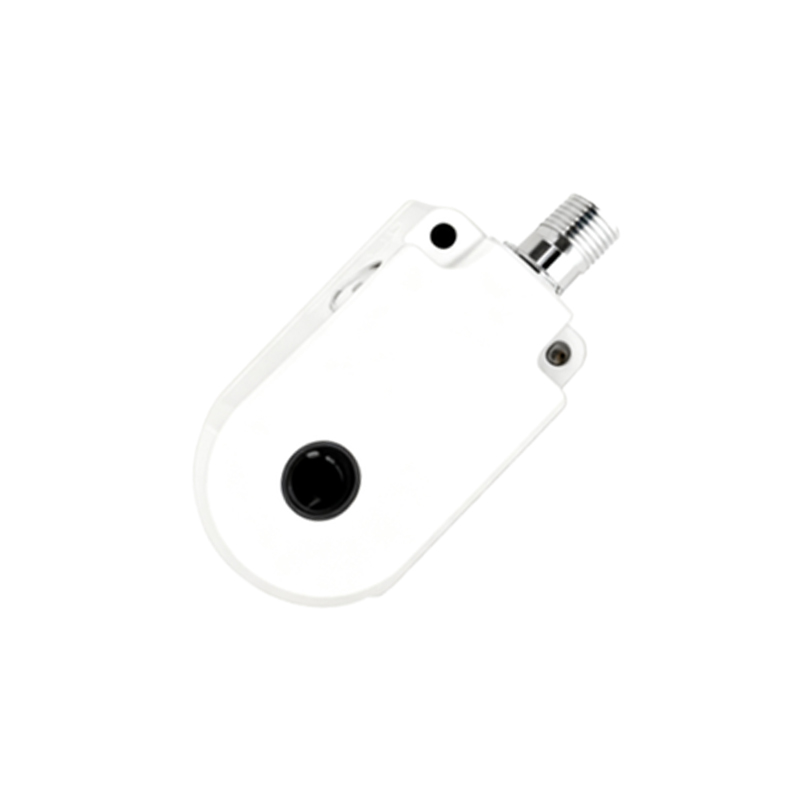
Capacitive proximity sensors, on the other hand, can detect both metallic and non-metallic objects, including liquids, powders, plastics, and wood. They operate by generating an electrostatic field. Any object with a dielectric constant different from air will change the capacitance of the sensing circuit as it approaches. This makes them versatile for applications like liquid level detection in tanks, material handling, and even as touch-sensitive switches.
Photoelectric sensors use light, typically infrared or laser, to detect objects. They consist of an emitter and a receiver. In the through-beam type, the object breaks a continuous light beam between separate emitter and receiver units. In the retro-reflective type, the beam bounces off a reflector back to the receiver, and the object breaks this path. The diffuse type has the emitter and receiver in one housing; it detects light reflected directly from the target object. Photoelectric sensors offer long detection ranges and are excellent for detecting small objects or objects of any material, provided they are not perfectly transparent to the sensor's light wavelength.
Ultrasonic proximity sensors measure the time it takes for a high-frequency sound wave to bounce back from an object. They are highly effective for detecting objects of virtually any material, shape, or color, and are unaffected by dust, smoke, or ambient light. Common uses include distance measurement, level sensing for bulk materials, and obstacle detection in automated guided vehicles (AGVs).
The applications of proximity sensors are vast and growing. In the automotive industry, they are crucial for assembly line robotics, safety interlocks, and parking assistance systems. In consumer electronics, they deactivate a smartphone's touchscreen during a call to prevent accidental inputs. In packaging and material handling, they count bottles, detect fill levels, and control conveyor gates. In the realm of security, they form the basis of many intrusion detection systems.
Selecting the right proximity sensor requires careful consideration of several factors: the target material (metal, plastic, liquid), the required sensing distance, the operating environment (presence of dust, moisture, or temperature extremes), the required output type (digital NPN/PNP or analog), and the response speed needed for the application. Proper installation is also critical, as surrounding metal (for inductive sensors) or environmental noise can affect performance.
As technology advances, proximity sensors are becoming smarter, smaller, and more integrated. The integration of IO-Link communication allows for parameter setting, diagnostics, and process data exchange directly from the sensor, facilitating predictive maintenance and Industry 4.0 initiatives. From simple on/off detection to complex distance profiling, proximity sensors continue to be a foundational technology, enabling smarter, safer, and more efficient automated systems worldwide.