In the realm of industrial automation and precision measurement, AGB laser sensors have established themselves as a cornerstone technology. These sensors utilize laser light to perform non-contact, high-accuracy measurements of distance, position, displacement, and presence. Their operation is based on the principle of emitting a focused laser beam towards a target object. The sensor then analyzes the reflected light—using methods like triangulation, time-of-flight, or phase-shift measurement—to calculate precise dimensional data. This fundamental capability makes them indispensable in environments where physical contact is impossible, undesirable, or could compromise product quality.
The advantages of deploying AGB laser sensors are manifold. Foremost is their exceptional accuracy and resolution, capable of detecting minute changes down to the micrometer level. This is critical in applications like semiconductor manufacturing, precision assembly, and quality control inspections. Secondly, their high-speed response enables real-time monitoring and feedback in dynamic production lines, ensuring process stability and consistency. Unlike mechanical probes or capacitive sensors, laser sensors are immune to target material properties such as color, reflectivity (within specified ranges), and surface texture to a significant degree, especially with advanced models featuring automatic background suppression or teaching functions. Their non-contact nature eliminates wear and tear on the sensor itself and prevents damage to delicate objects, leading to lower maintenance costs and higher system reliability.
Typical applications span a diverse range of industries. In automotive manufacturing, AGB laser sensors are used for gap and flush measurement on vehicle bodies, robotic guidance, and part presence verification. In electronics, they measure component height, coplanarity, and board warpage. The packaging industry relies on them for fill level control, thickness gauging, and label positioning. Furthermore, they play a vital role in logistics for parcel dimensioning and in metalworking for thickness monitoring and weld seam tracking. The robustness of many AGB sensor models, often featuring IP67 or higher protection ratings, allows them to perform reliably in harsh conditions with exposure to dust, moisture, and vibration.
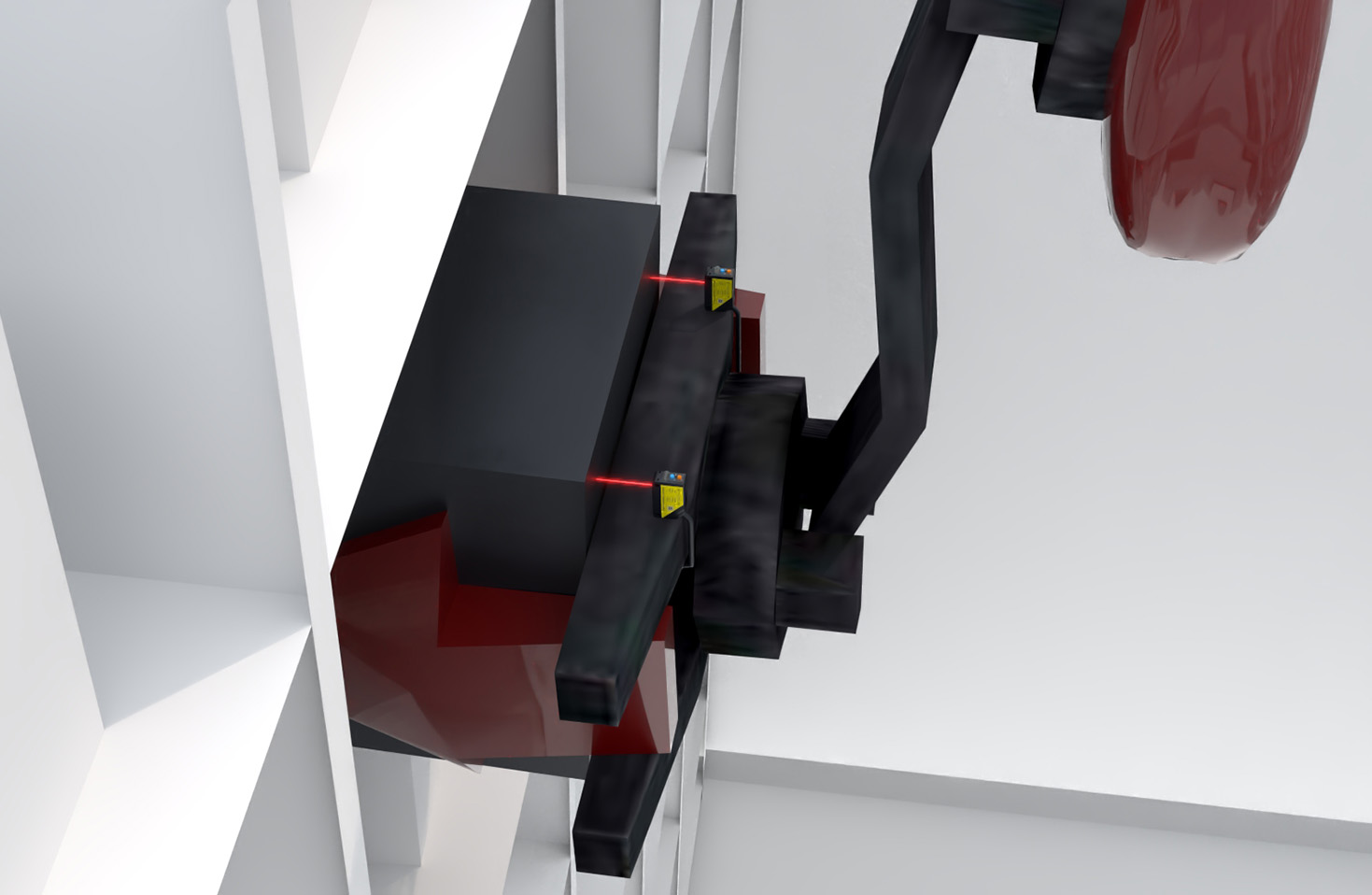
Selecting the appropriate AGB laser sensor requires careful consideration of several key parameters. The required measuring range and stand-off distance must align with the physical setup of the application. Resolution and linearity specifications determine the achievable precision. The type of output—analog (4-20mA, 0-10V), digital (RS-422, Ethernet), or switching (PNP/NPN)—must integrate seamlessly with the existing control system, such as a PLC. Environmental factors like ambient light interference, temperature fluctuations, and the presence of dust or steam can influence sensor performance and may necessitate models with specialized filters or housings. Modern AGB sensors often come with intuitive software for easy configuration, allowing users to set measurement windows, thresholds, and filtering parameters quickly.
Looking ahead, the evolution of AGB laser sensor technology continues. Integration with Industrial Internet of Things (IIoT) platforms is becoming more common, enabling predictive maintenance, data analytics, and centralized management of sensor networks. Miniaturization trends allow these sensors to fit into increasingly compact machinery. Enhanced algorithms are improving performance on challenging surfaces, such as transparent glass or shiny metals. As Industry 4.0 drives demand for smarter, more connected, and more flexible manufacturing systems, the role of precise, reliable, and versatile measurement tools like AGB laser sensors will only become more pronounced. They are not merely components but enablers of higher quality, efficiency, and automation intelligence.
