In the landscape of modern measurement and detection technology, laser sensor instruments stand out for their unparalleled precision, speed, and versatility. These devices utilize the coherent and monochromatic properties of laser light to perform a wide array of tasks, from gauging minute distances to detecting the subtlest of defects. Their integration into industrial and scientific processes has revolutionized quality control, automation, and research, offering solutions where traditional methods fall short.
At the core of every laser sensor is the principle of emitting a focused beam of light and analyzing its interaction with a target. The most common operational methods include triangulation, time-of-flight (ToF), and interferometry. In triangulation sensors, a laser diode projects a spot onto the target surface. The reflected light is focused onto a position-sensitive detector, such as a CCD or CMOS array. The position of the light spot on this detector shifts proportionally to the distance of the target, allowing for highly accurate distance and height measurements. This method excels in short to medium-range applications requiring micron-level resolution.
Time-of-flight sensors, in contrast, measure distance by calculating the time it takes for a laser pulse to travel to the target and back. Given the constant speed of light, this time interval directly correlates to distance. ToF sensors are ideal for longer ranges, from several meters to hundreds of meters, and are widely used in applications like LiDAR for autonomous vehicles, warehouse robotics navigation, and bulk level monitoring. While offering slightly lower resolution than triangulation over short distances, they provide excellent performance for large-scale mapping and presence detection.
Interferometric sensors represent the pinnacle of precision, capable of measuring displacements at the nanometer scale. They work by splitting a laser beam into a reference path and a measurement path. The beam reflected from the target recombines with the reference beam, creating an interference pattern. Changes in the target's position alter this pattern, allowing for exquisitely sensitive measurements. These instruments are indispensable in semiconductor manufacturing, precision machining, and scientific research laboratories.
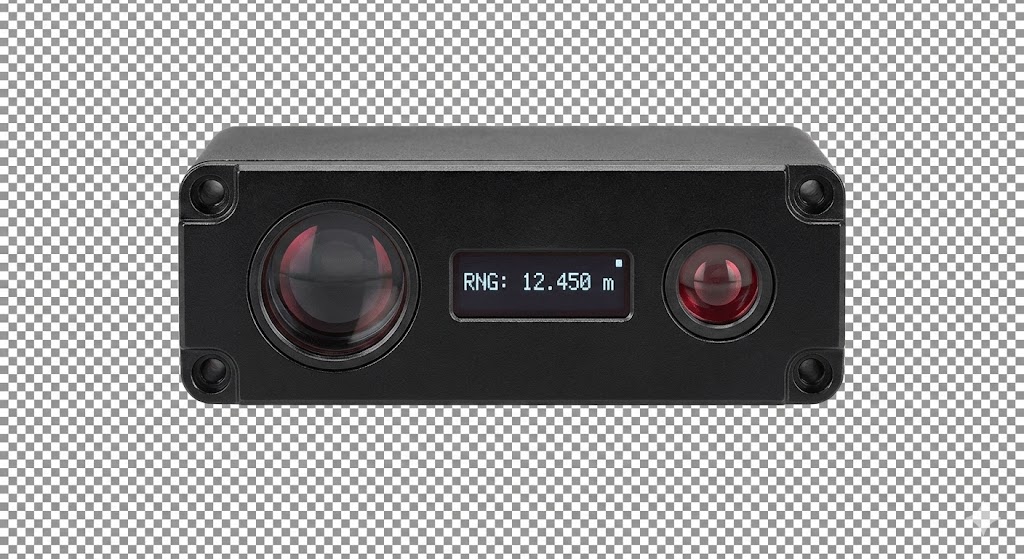
The market offers a diverse range of laser sensor types tailored to specific needs. Common variants include laser distance sensors, laser displacement sensors, laser profile scanners (or line lasers), and laser micrometers. Laser displacement sensors, often based on triangulation, are workhorses for non-contact inspection of part dimensions, thickness, and vibration. Laser profile scanners project a line instead of a dot, rapidly capturing a 2D cross-sectional profile of an object for 3D contouring, weld seam inspection, or volume calculation. Laser micrometers utilize parallel laser beams to measure the diameter of wires, fibers, or small mechanical parts with extreme accuracy.
The advantages of employing laser sensor instruments are compelling. Their non-contact nature eliminates wear and tear on both the sensor and the target, making them perfect for measuring delicate, hot, or moving objects. They provide exceptionally high resolution and repeatability, ensuring consistent data for critical processes. Furthermore, their fast response times enable real-time, in-line inspection in high-speed production environments, such as automotive assembly lines or electronics manufacturing.

Industrial applications are vast and growing. In automotive manufacturing, laser sensors meticulously check panel gaps, inspect weld quality, and guide robots for precise assembly. In the electronics industry, they measure component coplanarity, solder paste height, and PCB warpage. The food and pharmaceutical sectors use them for fill-level control, package integrity checks, and label positioning. Beyond manufacturing, they are crucial in civil engineering for monitoring structural deformation, in agriculture for yield estimation, and in logistics for pallet dimensioning and automated guided vehicle (AGV) safety.
Selecting the right laser sensor requires careful consideration of several parameters: required measurement range, resolution, accuracy, target surface properties (color, reflectivity, material), environmental conditions (ambient light, dust, temperature), and necessary data output speed. For instance, a highly reflective metallic surface may require a sensor with automatic gain control to prevent signal saturation, while a dark, absorbent surface might need a more powerful laser source.
In conclusion, laser sensor instruments are fundamental enabling technologies for the Fourth Industrial Revolution. They provide the "eyes" for automated systems, delivering the precise, reliable, and instantaneous data needed for smart manufacturing, quality assurance, and advanced research. As laser technology continues to advance, becoming more compact, robust, and cost-effective, its adoption across an even broader spectrum of industries is inevitable, driving further innovations in efficiency and capability.