In the world of automation and smart technology, sensors act as the essential digital senses. Among the most ubiquitous and critical are distance and proximity sensors. These devices detect the presence or absence of an object within a specific range and measure the exact distance to it, all without any physical contact. Their ability to provide precise, non-invasive detection makes them indispensable across countless industries, from manufacturing floors to consumer smartphones.
At their core, these sensors operate by emitting a signal—be it light, sound, or an electromagnetic field—and then analyzing the signal that returns or is altered by a nearby object. The fundamental difference between a proximity sensor and a distance (or ranging) sensor often lies in their output. A simple proximity sensor typically provides a binary output: an object is either "near" or "not near," often triggering a switch-like action. A distance sensor, however, provides continuous data, reporting the exact measured gap between the sensor and the object in millimeters, centimeters, or meters.
Several technologies enable this magic, each with its own strengths and ideal applications. Inductive proximity sensors are workhorses in industrial settings. They generate an electromagnetic field and detect changes caused by metallic objects entering that field. They are incredibly robust, resistant to dirt and moisture, and perfect for detecting machine parts, position verification on assembly lines, or counting metallic products. However, they only work with metals.
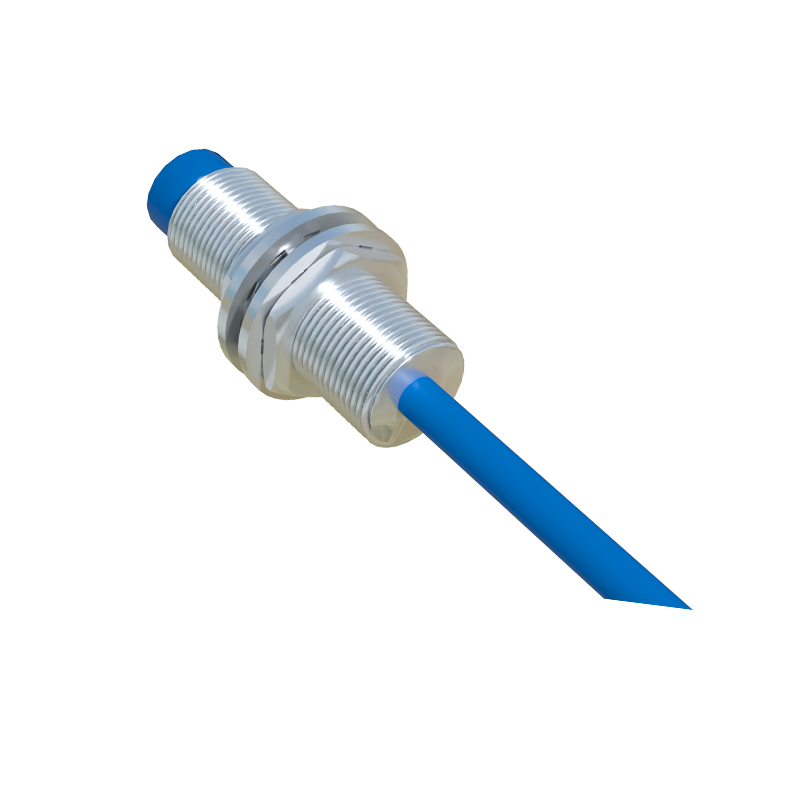
For non-metallic objects, capacitive proximity sensors step in. They can detect almost any material—plastic, wood, liquid, or even a human hand—by sensing changes in capacitance. This makes them suitable for level detection in tanks (e.g., monitoring liquid or granulate levels), touch-sensitive interfaces, and material handling systems.
When precise distance measurement is required, optical sensors dominate. The most common types are infrared (IR) sensors and laser sensors. An IR sensor often uses a method called triangulation; it emits an infrared beam, and the reflection hits a position-sensitive detector. The shift in the reflected beam's position is used to calculate the distance. These are common in devices like automatic towel dispensers, obstacle detection in robots, and simple ranging applications. Laser distance sensors, particularly those using Time-of-Flight (ToF) or laser triangulation principles, offer high accuracy over longer ranges. ToF sensors measure the time it takes for a laser pulse to bounce back, providing extremely fast and precise measurements used in surveying, drone navigation, and advanced industrial automation.
Ultrasonic sensors form another major category. They operate like sonar, emitting high-frequency sound waves and calculating distance based on the echo's return time. They are excellent for detecting objects regardless of color, transparency, or material, and they perform well in challenging environments with dust or vapor. You'll find them in parking assist systems, tank level monitoring, and robotic navigation where optical sensors might struggle.
The applications of these sensors are vast and growing. In automotive systems, they are the eyes of parking aids, blind-spot monitoring, and automatic braking systems. In consumer electronics, a miniature IR proximity sensor in your phone turns off the screen during a call to save power and prevent accidental touches. In smart homes, they enable touchless faucets, automatic doors, and security systems that detect movement. Industrial automation relies on them for precise robot guidance, conveyor belt control, quality inspection, and ensuring worker safety by creating non-contact safety barriers around dangerous machinery.
Choosing the right sensor depends on a careful analysis of the requirements: What is the target material? What is the required sensing range and accuracy? What are the environmental conditions (dust, light, humidity)? Is a simple on/off detection sufficient, or is continuous distance data needed? Answering these questions guides engineers to the optimal technology.
As technology advances, these sensors are becoming smaller, smarter, more energy-efficient, and more integrated. The fusion of sensor data with artificial intelligence and the Internet of Things (IoT) is creating even more intelligent systems. For instance, a network of proximity sensors in a warehouse can track inventory in real-time, while distance sensors on an agricultural drone can map terrain and assess crop health.
In conclusion, distance and proximity sensors are silent enablers of the modern automated world. By bridging the physical and digital realms, they provide the critical data needed for systems to interact intelligently and safely with their environment. Their continued evolution will undoubtedly drive further innovation in how machines perceive and respond to the world around them.