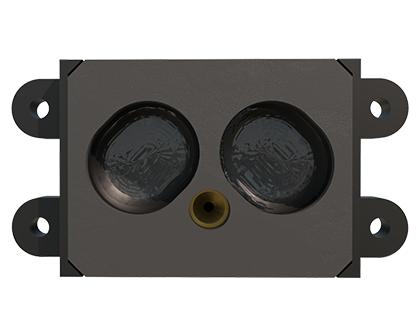
Laser sensor fusion represents a pivotal advancement in perception technology, integrating data from multiple laser-based sensors to create a comprehensive and accurate environmental model. Unlike single-sensor systems, fusion architectures combine inputs from LiDAR (Light Detection and Ranging), laser rangefinders, and sometimes complementary sensors like cameras or radar. The core principle lies in leveraging the strengths of each component—such as the high precision and direct depth measurement of LiDAR—while mitigating individual weaknesses like susceptibility to weather or limited field of view.
The technical process begins with data acquisition, where each laser sensor captures point clouds or distance measurements. Calibration is critical, ensuring spatial and temporal alignment between all sensors. Sophisticated algorithms then perform data association, correlating points or features from different sources. This is followed by the fusion core, which operates at various levels: data-level, feature-level, or decision-level. Data-level fusion, often preferred for laser systems, merges raw point clouds to create a denser, more complete 3D representation. Feature-level fusion extracts common elements like edges or corners before combination, while decision-level fusion allows each sensor to make independent interpretations before a final consolidated output.
Filtering algorithms, particularly Kalman Filters and their non-linear variants like the Extended Kalman Filter (EKF) or Unscented Kalman Filter (UKF), are workhorses in this domain. They predict object states and recursively update these predictions with new sensor observations, effectively reducing noise and uncertainty. More recently, probabilistic techniques and deep learning models are being employed to handle complex data association challenges in dynamic environments.
The applications are transformative. In autonomous vehicles, fused laser systems provide robust 360-degree perception, enabling precise object detection, tracking, and free-space mapping. This redundancy is vital for safety-critical systems. In industrial automation and robotics, fused laser sensors guide precise manipulation, bin-picking, and quality inspection on assembly lines, improving accuracy beyond the capability of any single sensor. For unmanned aerial vehicles (UAVs) and drones, this technology facilitates intricate navigation, obstacle avoidance, and terrain mapping in GPS-denied environments.
Smart infrastructure and security systems also benefit greatly. Perimeter protection systems use fused laser curtains and scanners for intrusion detection with extremely low false alarm rates. In agriculture, fused LiDAR and spectral sensors enable detailed crop health monitoring and yield prediction.
However, implementing laser sensor fusion is not without challenges. The computational load for processing and fusing high-density point cloud data in real-time is significant, demanding powerful processors. Sensor calibration must be maintained despite vibrations and temperature changes. Environmental conditions like heavy rain, fog, or dust can scatter laser beams, degrading performance. Furthermore, the cost of high-quality laser sensors remains a barrier for mass-market adoption in some sectors.
Future developments are focused on overcoming these hurdles. The trend is towards solid-state LiDAR with no moving parts, offering higher reliability and lower cost. Edge computing is being integrated to handle data processing closer to the sensors, reducing latency. Advanced machine learning techniques, especially deep learning for point cloud processing, are enhancing object classification and scene understanding directly from fused data. The evolution towards multi-modal fusion, seamlessly combining laser data with camera images and millimeter-wave radar, promises a new era of perception systems that are as reliable and adaptable as human vision.
In conclusion, laser sensor fusion is more than a simple data combination; it is a sophisticated paradigm that creates a perceptual capability greater than the sum of its parts. By providing a richer, more reliable, and precise understanding of the environment, it serves as a foundational technology driving autonomy and intelligence across mobility, industrial, and environmental applications. Its continued evolution is intrinsically linked to the progress of intelligent systems worldwide.