In the world of automation and smart technology, the ability to detect the presence or absence of an object without physical contact is fundamental. This is the core function of a proximity sensor, a versatile and critical component in countless industrial, commercial, and consumer applications. Unlike limit switches that require direct contact, proximity sensors offer a non-invasive, wear-free, and highly reliable method of object detection, making them indispensable for modern control systems.
At its essence, a proximity sensor emits an electromagnetic field or a beam of radiation and looks for changes in the field or return signal. The object being detected is often referred to as the sensor's "target." The specific technology employed determines the sensor's capabilities, range, and ideal use cases. The most prevalent types include inductive, capacitive, ultrasonic, and photoelectric sensors.
Inductive proximity sensors are arguably the most common in industrial settings. They generate an oscillating electromagnetic field. When a metallic target enters this field, it induces eddy currents within the target, which causes a change in the oscillation amplitude. This change is detected by the sensor's circuitry, triggering an output signal. These sensors are exceptionally robust, ideal for detecting metals in harsh environments like machine tools, assembly lines, and automotive manufacturing. They are not suitable for non-metallic materials.
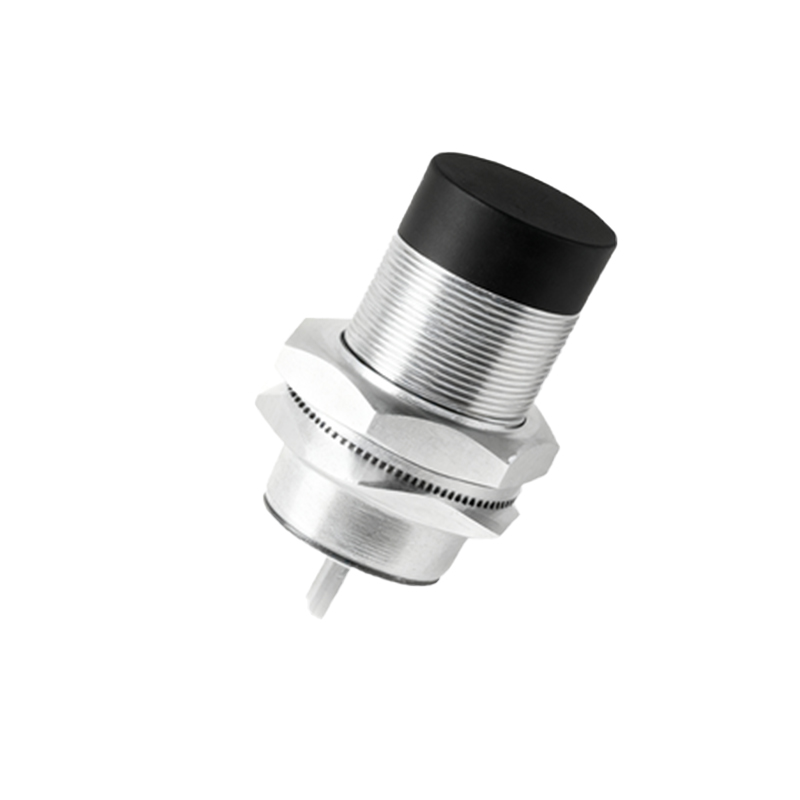
For non-metallic targets—such as plastic, wood, glass, liquids, or granular materials—capacitive proximity sensors are the go-to choice. They function similarly to inductive sensors but generate an electrostatic field. Any object with a dielectric constant different from air (which is nearly all materials) will alter this field when it approaches, leading to detection. This makes them perfect for applications like liquid level sensing, material handling of plastics, or detecting filled containers on a conveyor belt.
Photoelectric sensors operate on a different principle, using a light source (often LED-based infrared, visible red, or laser) and a receiver. They come in three main configurations. Through-beam sensors have separate emitter and receiver units; an object is detected when it breaks the light beam. Retro-reflective sensors use a single unit and a reflector, detecting an object when it interrupts the beam's return path. Diffuse or proximity-mode sensors have the emitter and receiver in one housing and detect the light reflected directly off the target's surface. Photoelectric sensors offer the longest sensing ranges and can detect virtually any material, but they can be affected by environmental factors like dust, fog, or ambient light.
Ultrasonic sensors use sound waves beyond the human hearing range. They emit high-frequency sound pulses and measure the time it takes for the echo to return. By calculating this time-of-flight, they can determine both the presence and the distance to an object. This makes them excellent for precise distance measurement, level control of bulk solids or liquids, and detecting transparent or oddly shaped objects that might confuse photoelectric sensors. They are generally unaffected by color, transparency, or material composition.
Selecting the right proximity sensor requires careful consideration of several factors. First, identify the target material: metal, non-metal, liquid, or transparent object. Next, consider the required sensing distance or range, ensuring to account for the sensor's rated operating distance with a safety margin. The operating environment is crucial; factors like temperature extremes, presence of water, oils, chemicals, or heavy vibration will dictate the required housing material (e.g., stainless steel, PBT plastic) and ingress protection (IP) rating. Finally, the electrical output type must match the control system—common options include NPN/PNP transistor outputs (3-wire), analog current/voltage outputs for distance measurement, or simple 2-wire AC/DC configurations.
From ensuring robotic arms pick up components correctly to activating a faucet in a public restroom, from counting bottles on a high-speed filler to preventing elevator doors from closing on a person, proximity sensors work silently and efficiently in the background. Their evolution continues with miniaturization, increased intelligence through IO-Link communication for diagnostics and parameter setting, and enhanced resistance to environmental interference. Understanding their types, principles, and selection criteria is the first step toward designing more efficient, reliable, and intelligent automated systems that form the backbone of contemporary industry and daily convenience.