In the world of industrial automation and precision control, proximity switch measurement sensors stand as fundamental components. These devices, often simply called proximity sensors, are designed to detect the presence or absence of an object within a specific range without any physical contact. This non-contact operation is their defining characteristic, leading to high reliability, long service life, and minimal maintenance requirements. Unlike mechanical limit switches, they have no moving parts to wear out, making them ideal for harsh environments with dust, moisture, or vibration.
The core principle behind most industrial proximity sensors is electromagnetic induction. Inductive proximity sensors are the most common type. They generate an oscillating electromagnetic field from a coil in the sensing face. When a metallic object enters this field, eddy currents are induced in the target, which causes a change in the oscillation amplitude. This change is detected by the sensor's internal circuitry, which then triggers a solid-state output switch. The effective range, or sensing distance, is a critical specification and is typically defined for a standard target material, like mild steel. It's important to note that different metals affect the sensing distance; for instance, aluminum and stainless steel typically reduce the effective range compared to steel.
Another major category is the capacitive proximity sensor. These can detect both metallic and non-metallic materials, such as liquids, plastics, glass, and wood. They work by generating an electrostatic field. Any object that enters this field changes the capacitance of the system, and the sensor detects this change. This makes them versatile for applications like liquid level detection, material handling of non-metals, or presence detection of packaged goods. However, they can be more susceptible to environmental factors like humidity.
Photoelectric sensors, while sometimes categorized separately, also function as non-contact proximity devices. They use a beam of light (visible, infrared, or laser) to detect objects. The object interrupts or reflects the light beam, which is then detected by a receiver. These are excellent for long-range detection and can sense virtually any material, but their performance can be affected by ambient light, color, and surface finish of the target.
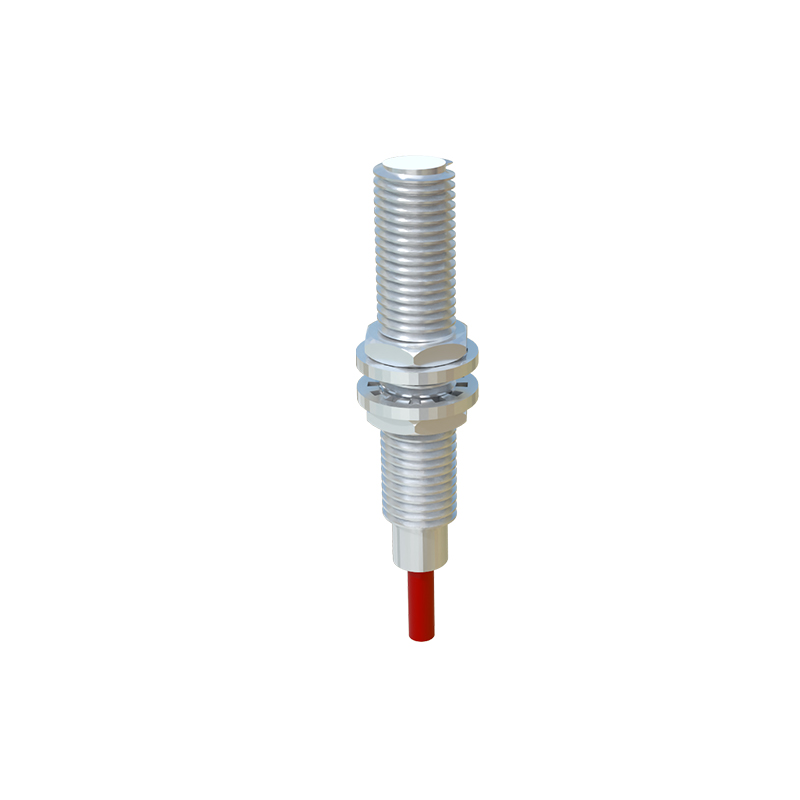
The output from a proximity sensor is typically a discrete on/off signal. Common output types include NPN (sinking) and PNP (sourcing) transistor configurations for DC sensors, and relay or solid-state outputs for AC sensors. The choice depends on the control system's input requirements (e.g., PLC input card type). Two-wire AC/DC sensors also exist, simplifying wiring but often with a small residual current when off.
Applications for proximity switch measurement sensors are vast. On automated assembly lines, they count parts, verify positioning, and control robotic arms. In machine tools, they serve as end-of-travel limit switches for axes. They monitor fill levels in tanks, detect broken tools in machining centers, and ensure safety by confirming guard doors are closed. In the packaging industry, they ensure correct product placement and count items on conveyors. Their robustness allows them to function in demanding settings like automotive manufacturing, food and beverage processing (with appropriate housing ratings like IP67), and material handling systems.
Selecting the right sensor requires careful consideration of several parameters. First, identify the target material: metal, plastic, liquid, etc. This determines whether an inductive, capacitive, or photoelectric sensor is needed. Next, define the required sensing distance, adding a safety factor (often 20-30%) to account for mechanical tolerances and temperature variations. The sensor's housing size and shape (barrel, rectangular, ring-shaped) must fit the installation space. Environmental conditions are crucial: consider temperature extremes, potential for washdowns (requiring high IP ratings like IP69K), exposure to chemicals, or welding spatter. The electrical characteristics—operating voltage (e.g., 10-30V DC, 90-250V AC), output type (NPN/PNP), and current rating—must match the control system. Finally, for inductive sensors, the switching frequency (how fast it can detect objects passing by) is vital for high-speed applications.
Installation is straightforward but must follow guidelines. Metallic objects surrounding the sensing face can reduce the effective range; manufacturers specify minimum distances for flush-mounted and non-flush-mounted styles. Proper wiring according to the datasheet is essential to avoid damage. Regular maintenance is minimal but should include periodic checks for physical damage, buildup of debris on the sensing face, and verification of the output signal.
In summary, proximity switch measurement sensors are indispensable for modern industrial automation. Their ability to provide reliable, non-contact detection translates into increased efficiency, reduced downtime, and enhanced process control. By understanding their operating principles, types, and key selection criteria, engineers and technicians can effectively integrate these powerful devices into virtually any control system, ensuring precise and dependable operation for years to come.