Photoelectric proximity sensors have become indispensable components across numerous industrial sectors, offering non-contact detection capabilities that enhance efficiency, safety, and automation. These sensors operate by emitting a beam of light, typically infrared, visible red, or laser, and detecting changes in the received light signal caused by the presence or absence of a target object. Their fundamental principle allows for reliable operation in diverse and demanding environments.
A primary application lies in manufacturing and assembly lines. Here, sensors perform precise object detection for counting, positioning, and sorting tasks. For instance, on a bottling line, a through-beam sensor, where the emitter and receiver are separate units, can detect each bottle passing through its beam, ensuring accurate fill levels and cap placement. In packaging machinery, diffuse reflective sensors, which house both emitter and receiver in one unit, identify the presence of packaging materials, triggering the sealing or labeling process. This prevents jams and maintains high throughput.
Material handling and logistics heavily rely on these sensors for automation. In automated storage and retrieval systems (AS/RS), retro-reflective sensors, which use a reflector, monitor the position of shuttles and cranes, ensuring precise movement within aisles. Conveyor belt systems employ sensors to detect parcel sizes, control sorting gates, and verify load presence, optimizing warehouse flow. Forklifts and automated guided vehicles (AGVs) often use sensors for obstacle detection and pallet positioning, preventing collisions and enabling accurate load pickup.
The automotive industry integrates photoelectric sensors at virtually every production stage. They verify the correct placement of components like windshields, doors, and engines on assembly robots. In paint shops, sensors ensure vehicle bodies are correctly positioned for robotic sprayers. Quality control checks, such as confirming the installation of brake pads or the presence of fluid in reservoirs, are automated using compact, precise sensors that withstand vibrations and contaminants.
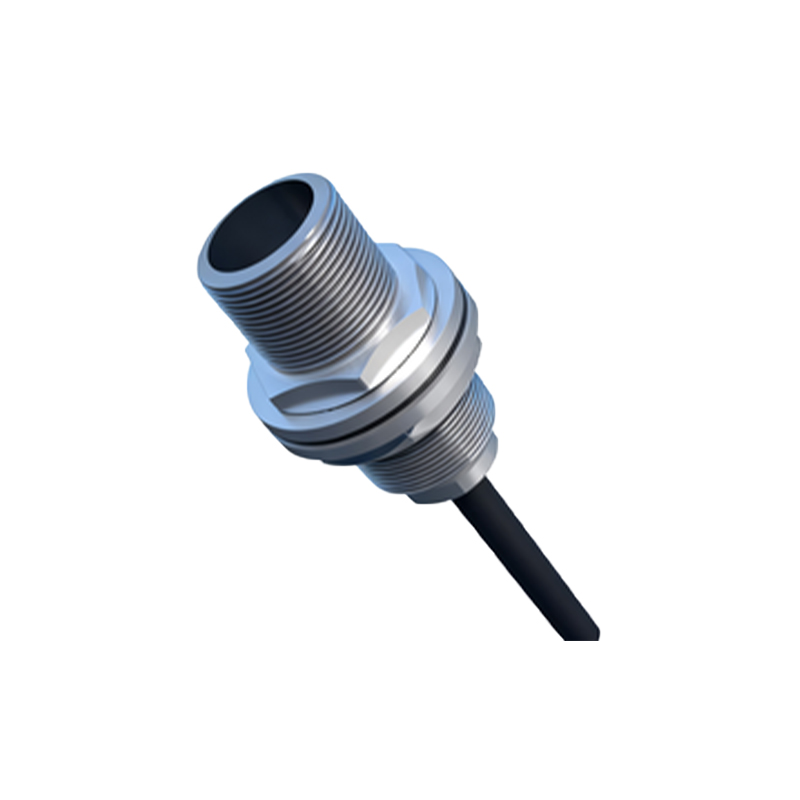
Beyond traditional manufacturing, these sensors enable advanced safety systems. Light curtains, which are arrays of photoelectric beams, create invisible protective barriers around hazardous machinery like presses, robotic arms, or milling machines. If a beam is broken by a worker's hand or body, the system immediately halts the machine, preventing serious injury. Similarly, in elevator doors, sensors prevent closure when an object or person is detected in the doorway.
Emerging applications are found in smart agriculture and food processing. Sensors monitor levels of grains in silos or detect fruits on sorting lines based on color or size using specialized models. In clean environments like pharmaceutical production, sensors with stainless-steel housings perform contactless detection of vials and syringes, maintaining sterile conditions. Even consumer electronics utilize miniature photoelectric sensors for features like screen proximity detection in smartphones, which turns off the display during calls.
The choice of sensor type—through-beam, retro-reflective, or diffuse—depends on factors like required sensing distance, target material, environmental conditions (dust, fog, light interference), and installation constraints. Modern sensors offer advanced features like background suppression, which ignores objects beyond a set distance, and analog outputs for measuring distance or detecting partial transparency.
In conclusion, the versatility, reliability, and precision of photoelectric proximity sensors make them critical enablers of modern industrial automation. From ensuring the smooth operation of high-speed production lines to safeguarding human workers and enabling complex robotic tasks, their applications continue to expand as industries pursue greater intelligence, flexibility, and efficiency in their operations. Their non-contact nature minimizes wear and tear, reduces maintenance needs, and provides solutions where physical contact is impossible or undesirable.