In the world of automation, electronics, and smart devices, you will frequently encounter the term "proximity sensor." However, in technical documentation, circuit diagrams, parts lists, and engineering discussions, it is almost universally abbreviated. The standard and most widely accepted abbreviation for a proximity sensor is Prox Sensor or simply Prox.
The shorthand "Prox" is efficient and unambiguous within technical contexts. It derives naturally from the first syllable of "proximity," making it intuitive for engineers, technicians, and procurement specialists. You will see this abbreviation on factory floor plans, in sensor catalogs (e.g., "Inductive Prox Sensor," "Capacitive Prox"), and in machine programming code. For instance, an input signal triggered by such a device might be labeledPROX_1 orPS01 in a PLC ladder logic diagram.
Understanding this abbreviation is key to navigating technical fields. But what exactly does a prox sensor do? At its core, a proximity sensor is a non-contact device that detects the presence or absence of an object within a specific range without any physical touch. It does this by emitting an electromagnetic field, beam, or radiation (like infrared light) and then looking for changes in the field or return signal. The primary output is a simple switch signal: on or off.
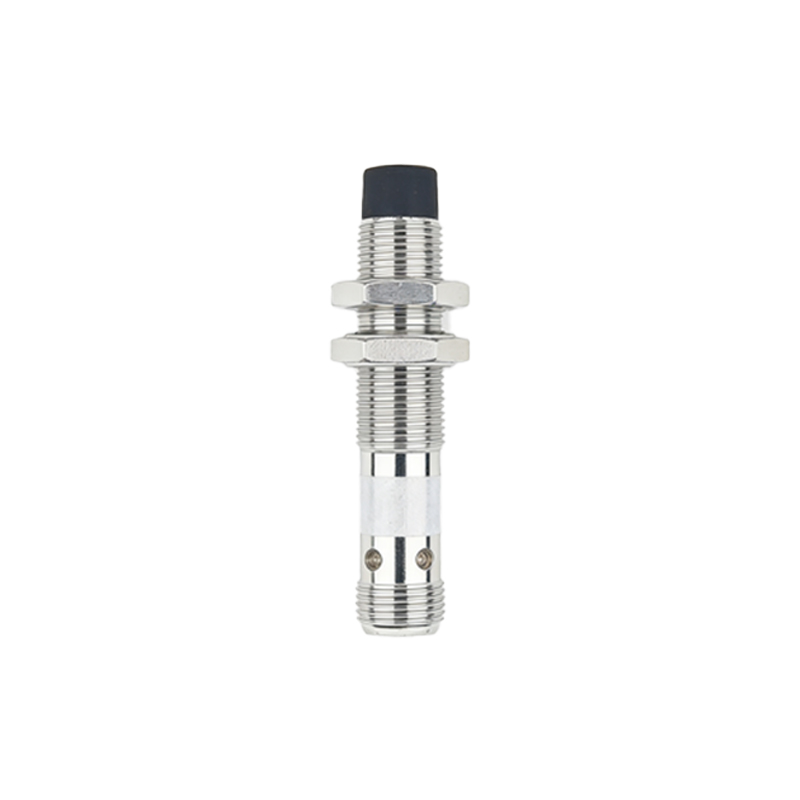
This fundamental functionality makes "prox" sensors incredibly versatile. They are the silent workhorses in countless applications. In automotive manufacturing, inductive prox sensors verify that a metal part is correctly positioned before a welding robot fires. On your smartphone, a miniature infrared prox sensor detects when your face is near the screen during a call, turning off the display to save power and prevent accidental touches. In the packaging industry, capacitive prox sensors can detect levels of liquid inside non-metallic containers through the container wall.
The abbreviation "prox" often comes prefixed with a letter indicating the sensing technology, which is crucial for selection. The main types include:
Inductive Prox Sensors (Ind. Prox): Detect metallic objects only. Highly reliable and robust for industrial environments.
Capacitive Prox Sensors (Cap. Prox): Can detect both metallic and non-metallic materials (plastic, wood, liquid, granules). Used for level detection and material presence.
Ultrasonic Prox Sensors (U/S Prox): Use sound waves to detect objects and measure distance, effective for many materials and in challenging conditions like dust or fog.
Photoelectric Prox Sensors (Photo Prox or PE): Use a beam of light (often infrared) and are excellent for long-range detection and sensing small objects.
Knowing the abbreviation "prox" and its common prefixes streamlines communication and procurement. When searching for a sensor online or in a catalog, using "inductive prox sensor 12mm" will yield far more targeted results than a full, generic phrase. It signals to vendors and colleagues that you have specific technical requirements.
The importance of these devices cannot be overstated. They enable precision, safety, and efficiency. On an assembly line, they ensure components are present before a critical operation, preventing costly machine damage or defective products. In safety systems, a prox sensor can act as a guard monitor, ensuring a protective door is closed before a machine starts. Their non-contact nature means no wear and tear from physical interaction, leading to long service life and minimal maintenance.
In summary, "Prox Sensor" or "Prox" is the universal shorthand for a proximity sensor. This simple abbreviation opens the door to a vast category of essential detection technology. From the phone in your pocket to the most advanced automated factory, prox sensors provide the critical "eyes" that machines need to interact with the physical world intelligently and reliably. Recognizing the term and its common variants is a fundamental step for anyone involved in technology, design, maintenance, or automation.