In the intricate dance of modern automation and smart systems, the role of sensors has evolved far beyond simple detection. A distinct and critical category has emerged: sensors designed not merely to sense, but to directly enable or constitute an output based on proximity. These are the gatekeepers of action, the components that translate the intangible presence of an object into a tangible, usable signal or mechanical response. This article delves into the world of these "proximity output sensors," exploring their principles, types, and the transformative impact they have across industries.
At their core, proximity sensors detect the presence or absence of an object within a defined range without physical contact. However, the conventional model involves the sensor sending a low-power signal to a separate controller or processor, which then decides on an action. The innovation lies in sensors that integrate the output stage more intimately. Their primary function is to provide a direct, often binary, output signal—like a switched voltage, a current loop change, or even a physical movement—triggered specifically by proximity. This directness reduces latency, simplifies system architecture, and enhances reliability by minimizing intermediate components.
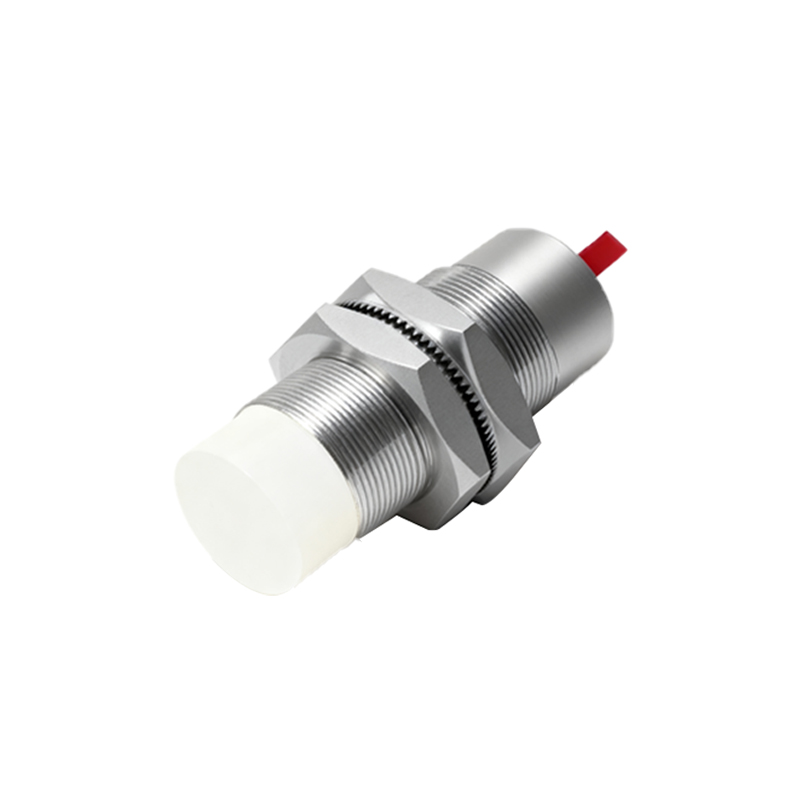
Several technologies form the backbone of these devices. Inductive proximity sensors are stalwarts in industrial settings. They generate an electromagnetic field and detect eddy current losses caused by metallic objects entering this field. Their integrated solid-state switching output, typically in the form of a PNP or NPN transistor, can directly control relays, PLC inputs, or indicator lamps. This makes them perfect for high-speed counting, position verification on conveyor belts, or as safety interlocks on machine guards.
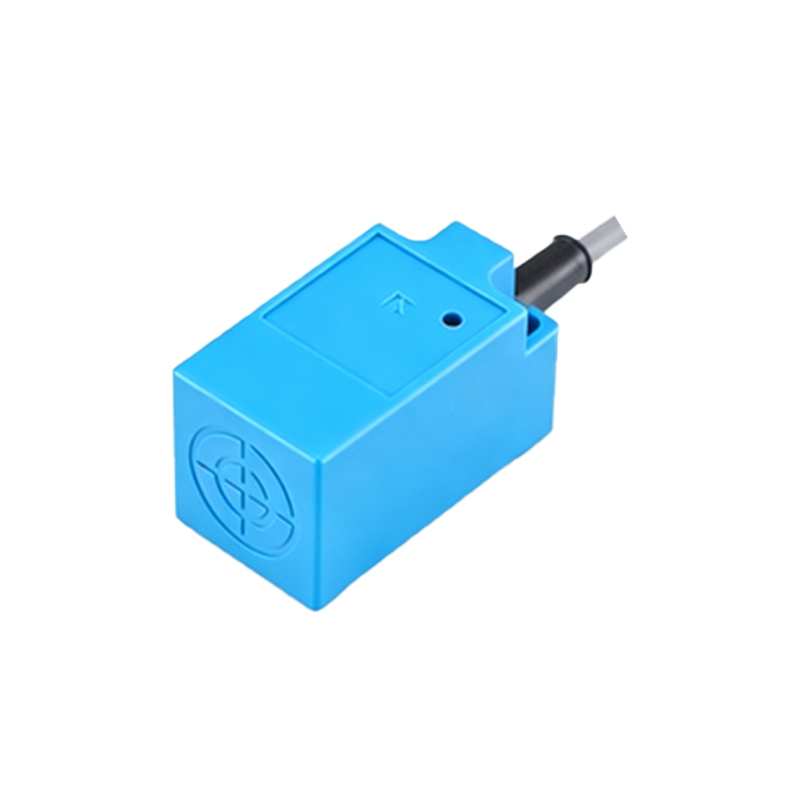
Capacitive sensors operate on a similar principle but respond to both metallic and non-metallic materials by detecting changes in capacitance. Their integrated output can directly control processes involving liquids, plastics, or granular materials. For instance, a capacitive sensor with a relay output can directly start or stop a pump when a fluid reaches a certain level in a non-metallic tank, acting as a self-contained level controller.
Photoelectric sensors, using beams of light, offer longer detection ranges. Models with built-in amplifier logic provide a direct output—often termed "teach-in" or programmable logic—that can be configured to switch on either the presence or the absence of light, enabling direct control of gates, doors, or sorting mechanisms. Ultrasonic sensors, which measure distance using sound waves, frequently come with analog outputs (0-10V, 4-20mA) that are directly proportional to the measured distance. This analog signal can be fed directly into a variable frequency drive to control motor speed based on the proximity of a stack of materials, creating a simple, closed-loop system.
Perhaps the most literal manifestation of a "proximity output sensor" is in the realm of Reed switches and Hall-effect sensors used in position detection. A magnet's proximity directly closes a Reed switch, completing a circuit to power a light or alarm. Similarly, a Hall-effect sensor's digital output changes state with magnetic field strength, directly controlling brushless DC motor commutation.
The advantages of this integrated approach are manifold. System design becomes leaner, with fewer components to specify, wire, and maintain. Response times are faster because the decision-making is embedded within the sensor itself. This is critical in safety applications, such as light curtains, where the detection of an intrusion must instantly output a "stop" signal to machinery without waiting for a central PLC cycle. Furthermore, robustness increases; a sensor with a robust, amplified output is less susceptible to electrical noise over long cable runs than a tiny raw signal from a basic sensing element.
Applications are ubiquitous. In automotive assembly, an inductive sensor confirms a door is present and its direct output triggers the riveting tool. In consumer electronics, a capacitive proximity sensor near an earphone speaker directly mutes the display during a call. In smart packaging, a printed conductive ink sensor can output a simple closed-circuit signal when a product is removed from its shelf. In agriculture, a capacitive soil moisture sensor with a relay output can directly actuate a solenoid valve for irrigation.
However, selection requires careful consideration. The nature of the target material, required sensing distance, environmental conditions (dust, moisture, temperature), and the electrical characteristics of the output (voltage, current, AC/DC) must all align. An inductive sensor will not detect plastic, and a sensor with a low-current DC output cannot directly power a heavy AC motor starter—it would still require an intermediary relay. Understanding the load the sensor's output must drive is paramount.
Looking ahead, the convergence of sensing and output is being pushed further by IO-Link and other smart sensor protocols. These sensors provide detailed diagnostic data and remote configurability while still offering the traditional direct binary or analog output for critical control functions. They represent the next step: intelligent proximity output sensors that not only act directly but also communicate their health and