In the realm of modern automation and measurement technology, sensors act as the critical interface between the physical world and digital systems. Among the vast array of sensing technologies, electronic sensors and laser sensors stand out as two dominant and fundamentally different approaches. Understanding their distinct operating principles, capabilities, and ideal applications is essential for engineers, designers, and technicians to select the optimal solution for any given task.
Electronic sensors encompass a broad category of devices that convert a physical phenomenon—such as temperature, pressure, proximity, or magnetic field—into an electrical signal. This conversion is typically achieved through changes in resistance, capacitance, inductance, or voltage. Common types include thermocouples for temperature, strain gauges for force, inductive proximity sensors for metal detection, and capacitive sensors for level or presence detection. Their operation is often based on direct physical contact or close-range interaction with the target material. The output is usually an analog voltage or current, or a digital signal, which is then processed by a control system. A key advantage of many electronic sensors is their ability to be integrated directly onto printed circuit boards (PCBs), enabling compact and cost-effective designs for embedded systems. They are generally robust for in-contact measurements and can be very reliable in controlled environments.
Laser sensors, on the other hand, belong to the family of optical sensors. They operate by emitting a focused beam of coherent light—a laser—towards a target. The sensor then analyzes the properties of the reflected light to gather information. The most common measurement principles are triangulation for distance and profile, time-of-flight for long-range distance, and laser Doppler vibrometry for velocity. Because they use light, laser sensors are inherently non-contact. This is a transformative characteristic, allowing for measurements of hot, fragile, moving, or otherwise inaccessible objects without physical interaction, thus eliminating wear and risk of contamination or damage. They excel at providing extremely high resolution and accuracy for dimensional measurements, edge detection, and precise positioning.
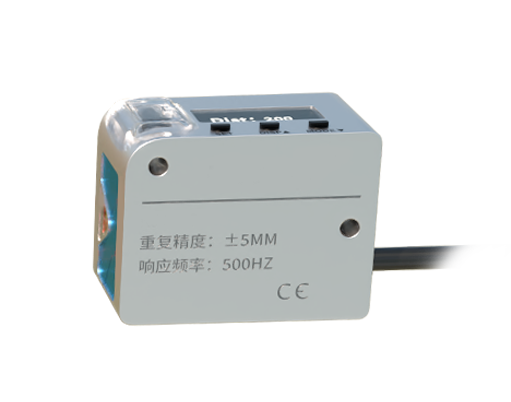
The choice between these technologies hinges on specific application requirements. Electronic sensors, particularly proximity and pressure types, are the workhorses of industrial automation. They are ideal for simple presence/absence detection, counting objects on a conveyor, monitoring fluid levels in tanks, or ensuring a door is closed. Their strengths lie in lower cost per unit, simplicity, and durability in harsh environments where oil, dust, or vibration might be present—provided the sensing element is suitably protected. They can also measure parameters like temperature or pressure that laser sensors typically cannot.

Laser sensors shine in applications demanding high precision, speed, and non-contact operation. They are indispensable in quality control for measuring tiny component dimensions, checking surface profiles, or detecting minute defects. In logistics, they accurately measure package dimensions for volumetric weighing. In semiconductor manufacturing, they precisely align wafers. Their focused beam allows them to detect very small objects or measure in tight spaces. However, they can be more sensitive to environmental factors such as ambient light, dust, steam, or the reflectivity and color of the target surface, which may require careful installation and calibration.
In practice, these technologies are not always mutually exclusive; they often complement each other within a single system. For instance, an inductive electronic sensor might detect the arrival of a metal part on a production line, triggering a laser sensor to then perform a high-accuracy thickness measurement. The electronic sensor handles the robust, binary detection task, while the laser handles the precise metrology.
Ultimately, the decision is application-driven. For robust, cost-effective detection and measurement of basic parameters with possible physical contact, electronic sensors are often the preferred choice. For high-precision, non-contact dimensional analysis, profiling, or long-range measurement where contact is impossible or undesirable, laser sensors provide unparalleled capabilities. As technology advances, both fields continue to evolve, with electronic sensors becoming smarter with integrated diagnostics and laser sensors becoming more compact and resilient, further expanding the horizons of automated sensing and control.