Proximity sensors are fundamental components in modern automation and control systems. Their primary function is to detect the presence or absence of an object within a specified range without any physical contact. The measurement process is the core of their operation, determining their accuracy, reliability, and suitability for various industrial and consumer applications. Understanding how these sensors perform measurements requires a look into their underlying technologies and operational principles.
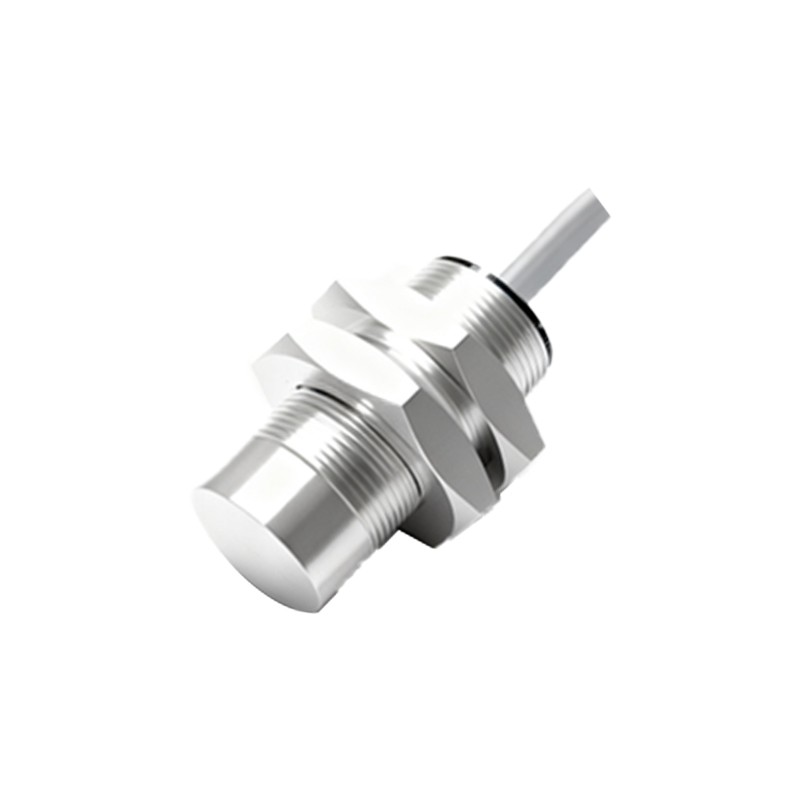
The most common types of proximity sensors include inductive, capacitive, ultrasonic, and photoelectric sensors. Each type employs a distinct physical principle for measurement. Inductive sensors generate an electromagnetic field and detect changes caused by metallic objects entering this field. The measurement is based on the damping of oscillation amplitude. The sensor's electronics monitor the oscillation circuit; when a metal object approaches, eddy currents are induced in the object, which dampens the oscillation. The sensor measures this damping effect and triggers a switching signal at a predetermined threshold. The measurable distance, or sensing range, is highly dependent on the target material's properties, such as its conductivity and permeability.
Capacitive sensors, on the other hand, can detect both metallic and non-metallic objects like liquids, plastics, or wood. They function by generating an electrostatic field. The measurement principle revolves around capacitance change. The sensor and the target act as two plates of a capacitor. As the target approaches, the capacitance of the system increases. The sensor's circuitry measures this change in capacitance. When it exceeds a set level, the output state changes. This makes them ideal for level detection in tanks or presence detection of materials through non-metallic container walls.
Ultrasonic sensors measure distance by calculating the time-of-flight of sound waves. They emit high-frequency sound pulses and then listen for the echo reflected from a target object. The core measurement is the time interval between the emitted pulse and the received echo. Since the speed of sound in air is known (and often compensated for temperature variations), the sensor's processor can accurately calculate the distance to the object using the formula: Distance = (Speed of Sound × Time of Flight) / 2. This technology allows for precise distance measurement over longer ranges and is effective on a wide variety of surfaces, regardless of color or material.
Photoelectric sensors use light beams for detection. The measurement involves interpreting the status of a received light signal. In a through-beam setup, the measurement is binary: the beam is either broken or received. In a reflective or diffuse mode, the sensor measures the intensity of the light reflected from the target. A decrease or increase in this intensity beyond a programmed threshold indicates the target's presence or specific position. Advanced versions can perform analog measurement of the reflected light intensity, providing data proportional to distance or surface characteristics.
Several critical factors influence the accuracy and repeatability of proximity sensor measurements. The first is the target characteristics. For inductive sensors, the target material and size are paramount. A standard sensing distance is specified for mild steel; for other metals, a correction factor must be applied. For capacitive sensors, the dielectric constant of the target material and environmental humidity are significant. The second factor is the sensor's installation and environment. Electrical noise, temperature extremes, and the presence of other sensors can interfere with measurements. Proper shielding, mounting, and maintaining a clean sensing face are essential for reliable operation. Thirdly, mechanical alignment is crucial, especially for ultrasonic and photoelectric types where the angle of incidence affects the signal strength.
Calibration and setup are vital steps in ensuring precise measurement. Most modern sensors feature teach-in functions or potentiometers for setting the sensing range or switching point. For analog output sensors, scaling the output signal (e.g., 4-20 mA or 0-10 V) to represent the actual measurement range is a standard procedure. Regular verification against known references helps maintain long-term measurement integrity.
In practical applications, proximity sensor measurements enable countless functions. On assembly lines, they precisely count products, verify component placement, and control robotic arm positions. In automotive manufacturing, inductive sensors measure crankshaft position and gear tooth detection. Ultrasonic sensors measure roll diameter in paper mills or control crane height. Capacitive sensors measure fluid levels in food processing or detect fill levels in bottles. The choice of sensor technology directly hinges on the specific measurement requirements: required range, target material, environmental conditions, and needed output (digital switch or analog value).
In conclusion, proximity sensor measurement is not a singular action but a sophisticated process defined by the chosen technology's physical principles. From electromagnetic field distortion to sound wave reflection and light beam modulation, each method translates a physical phenomenon into a reliable electrical signal. Successful implementation demands a thorough understanding of these principles, careful selection based on application parameters, and adherence to installation best practices. This ensures that the measured data—the simple presence or precise distance of an object—becomes a trustworthy foundation for automated system control and decision-making.