In modern industrial automation, achieving precise measurement and control is paramount. Laser edge detection sensors have emerged as critical components in this landscape, offering unparalleled accuracy in identifying the position, presence, or dimensions of an object's edge. Unlike traditional mechanical or optical methods, these sensors utilize a focused laser beam to perform non-contact measurements, making them ideal for applications where physical contact could damage the product or where high-speed operation is required.
The fundamental operating principle involves projecting a laser line or spot onto the target surface. A high-resolution receiver, typically a CMOS or CCD array, captures the reflected light. Sophisticated onboard algorithms then analyze the light pattern's intensity distribution. The precise point where the light intensity changes dramatically—indicating the transition from the object to the background or another surface—is identified as the edge. This data is processed in real-time to provide a highly accurate digital or analog output signal.
Key advantages of laser edge sensors drive their widespread adoption. First is their exceptional resolution, often down to the micron level, which is essential for industries like semiconductor manufacturing, precision machining, and electronics assembly. Second, their non-contact nature eliminates wear and tear, ensures long-term stability, and prevents contamination or deformation of sensitive materials like thin films, foils, or delicate components. Third, they perform reliably in challenging environments, capable of detecting edges on shiny, transparent, or low-contrast surfaces that often confound conventional vision systems. Many models incorporate background suppression technology to ignore irrelevant objects beyond the set focal point.
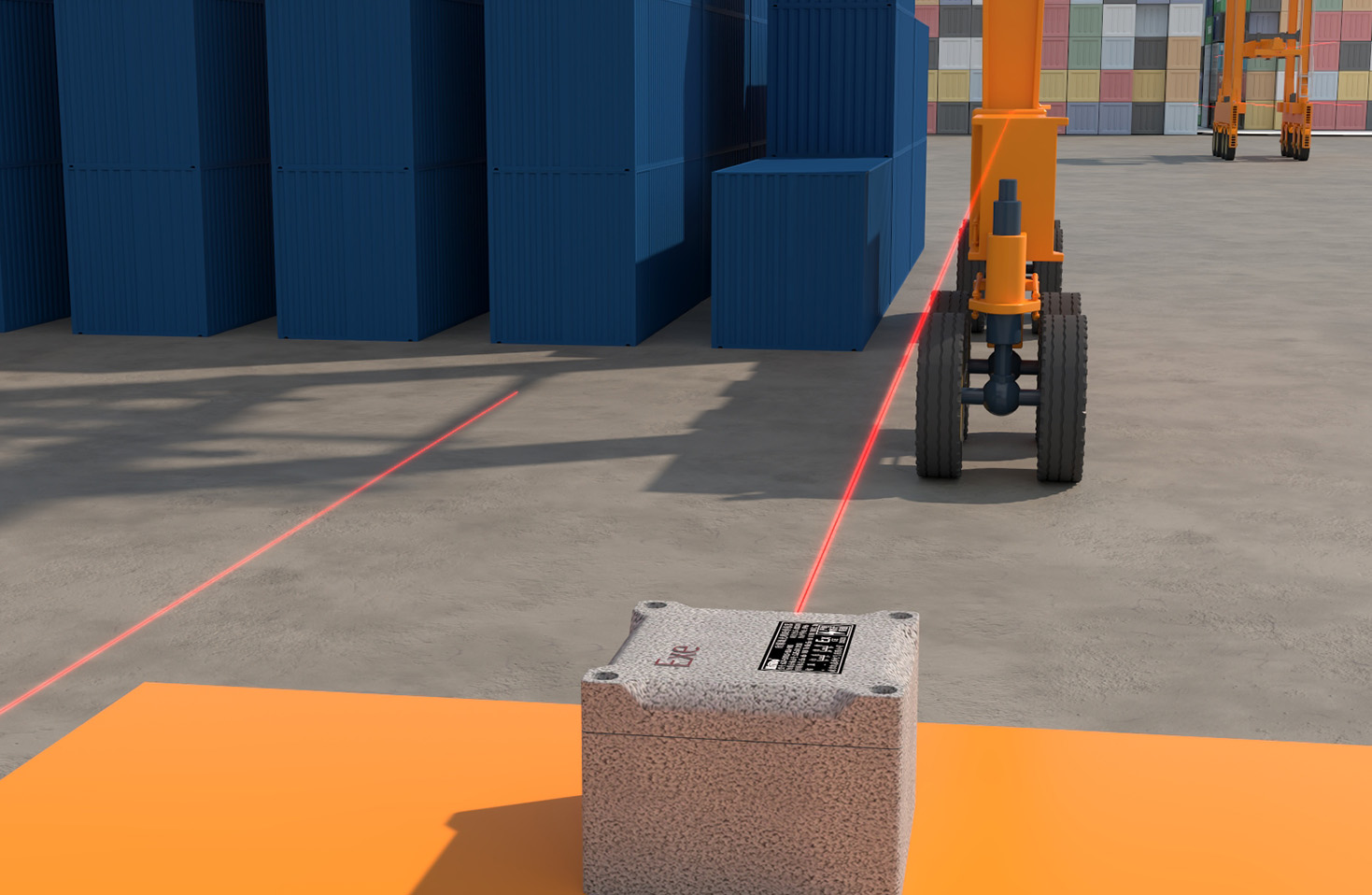
Typical applications are diverse and span multiple sectors. In web guiding systems for paper, plastic, or metal rolling mills, these sensors continuously monitor the edge position of moving materials, providing feedback for automatic alignment and preventing costly misalignment or breaks. In robotic pick-and-place operations, they ensure the gripper approaches the component at the exact correct position. They are indispensable in print registration control, glass and wafer inspection, lumber sizing, and tire manufacturing. The ability to provide continuous, real-time data makes them integral to closed-loop control systems, enhancing overall production efficiency and yield.
Selecting the appropriate laser edge detection sensor requires careful consideration of several parameters. The required measurement range and stand-off distance must align with the machine design. The size and material of the target object dictate the necessary laser spot size and wavelength; for instance, blue lasers are often more effective on red or organic materials. Environmental factors like ambient light, dust, vibration, and temperature ranges are critical for choosing a sensor with suitable housing and ingress protection (IP) ratings. Finally, the required output interface—whether analog voltage/current, digital IO, or industrial fieldbus protocols like PROFINET or EtherNet/IP—must integrate seamlessly with the existing control architecture.
Installation and calibration are straightforward but vital for optimal performance. The sensor must be mounted securely to minimize vibration. The laser line should be perpendicular to the edge being detected to ensure a sharp intensity transition. Most modern sensors feature intuitive teach-in functions, allowing operators to easily set the reference edge point via a button or software command. Regular maintenance primarily involves keeping the lens clean to prevent signal attenuation.

The future of laser edge detection is intertwined with Industry 4.0 trends. Integration with smart factory networks allows for predictive maintenance, remote monitoring, and data analytics. Advancements in miniaturization, faster processing speeds, and enhanced algorithms for even more challenging surfaces are ongoing. As demand for higher precision and flexibility in manufacturing grows, these sensors will continue to evolve as a cornerstone technology for quality control and automated guidance.

In conclusion, laser edge detection sensors represent a mature yet continuously advancing field of photoelectric sensing. By delivering micron-level accuracy in a robust, non-contact package, they solve complex measurement challenges across countless industries. Their role in enhancing automation, reducing waste, and ensuring consistent product quality solidifies their position as an essential tool in the modern industrial toolkit.