In the realm of industrial automation and precision engineering, the demand for accurate angular measurement is paramount. Laser angle sensors have emerged as a critical technology, offering non-contact, high-resolution detection of rotational position and angular displacement. Unlike traditional mechanical encoders or potentiometers, these sensors utilize laser beams to achieve exceptional accuracy, often down to micro-radian levels, making them indispensable in applications where minute angular changes have significant consequences.
The core operating principle of a laser angle sensor is based on optical triangulation or interferometry. A laser diode emits a coherent beam of light that strikes a target surface or a specially designed reflector. The reflected light is then captured by a sensitive photodetector array. Any angular change in the target causes a measurable shift in the position of the laser spot on the detector. Sophisticated onboard electronics process this positional data in real-time, calculating the precise angle of the target relative to the sensor's reference axis. This method eliminates mechanical wear, hysteresis, and backlash associated with physical contact, ensuring long-term stability and repeatability.

Key advantages of laser-based angular sensing are numerous. The non-contact nature prevents any loading or distortion of the measured object, which is crucial for delicate mechanisms or high-speed rotating components. They provide an extremely high response speed, capable of tracking rapid angular vibrations or oscillations. Furthermore, their resolution and accuracy are typically superior to capacitive or magnetic sensors, especially over small angular ranges. Modern laser angle sensors are also designed to be robust, with versions featuring integrated compensation for ambient temperature fluctuations and built-in diagnostics for reliable operation in harsh industrial environments.
The applications for laser angle sensors are vast and growing. In semiconductor manufacturing, they are used for wafer alignment and stage positioning. Within robotics, they ensure precise joint angle feedback for articulated arms, enabling complex movements with sub-degree accuracy. In aerospace and defense, these sensors contribute to the calibration of inertial navigation systems and the alignment of optical communication platforms. They are also found in scientific research, such as in telescope mirror alignment and particle accelerator beam steering, where the utmost precision is non-negotiable.
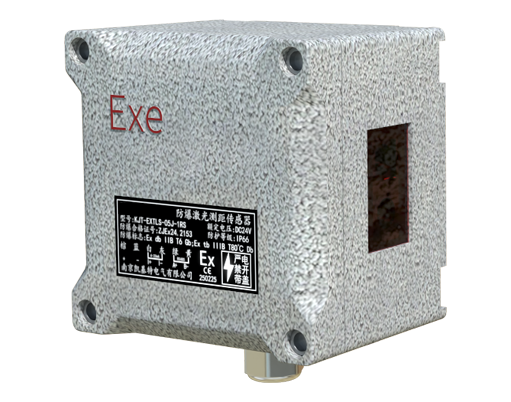
When selecting a laser angle sensor, several technical specifications must be considered. The measurement range, which can be from a few arc-seconds to several degrees, should match the application. Resolution and linearity error are critical for precision tasks. The stand-off distance—the optimal working distance between the sensor and target—and the required spot size on the target are also vital parameters. Interface options, such as analog voltage outputs, digital protocols like SPI or EtherCAT, and compatibility with industrial networks, determine how easily the sensor integrates into a larger control system.
Installation and environmental factors play a significant role in performance. Ensuring a stable mounting platform free from vibrations is essential. The target surface properties, such as reflectivity, color, and texture, can affect the signal quality; some sensors require specific retro-reflective targets for optimal operation. While modern sensors are designed to mitigate the effects of ambient light, avoiding direct high-intensity light on the detector is generally recommended. Regular calibration against a known standard may be necessary for the most critical applications to maintain specified accuracy over time.
Looking ahead, the evolution of laser angle sensors is geared towards even smaller form factors, lower power consumption, and enhanced smart features. Integration with wireless communication and the Industrial Internet of Things (IIoT) will allow for easier data collection and predictive maintenance. Advances in laser source technology and detector sensitivity will continue to push the boundaries of achievable resolution and speed.
In conclusion, laser angle sensors represent a sophisticated fusion of optics, electronics, and software, delivering unparalleled accuracy for angular measurement. Their ability to provide reliable, non-contact feedback makes them a cornerstone technology for advancing automation, improving product quality, and enabling new capabilities in research and manufacturing. As industries strive for greater precision and efficiency, the role of the laser angle sensor will only become more central to technological progress.