Proximity sensors have evolved from simple industrial components to sophisticated enablers of modern technology. Their core function—detecting the presence or absence of an object without physical contact—remains constant, but the application landscapes are continually expanding. This exploration delves into several compelling case designs, highlighting the engineering considerations and real-world benefits.
In the realm of consumer electronics, a primary case study is the smartphone. The integration of an infrared (IR) proximity sensor near the earpiece is a masterclass in minimalist, user-centric design. When a user answers a call and brings the phone to their ear, the sensor detects the nearby mass and signals the system to disable the touchscreen display. This prevents accidental cheek-presses from muting the call or launching apps, while simultaneously conserving battery power. The design challenge here involves precise sensor placement behind a dark, IR-transparent window in the bezel, ensuring reliable detection through various environmental lighting conditions and with different skin tones and hair types. Advanced algorithms filter out ambient light noise, making the interaction seamless and foolproof.
Another transformative application is in automated sanitary systems. Modern public restrooms increasingly feature touchless faucets, soap dispensers, and hand dryers, all powered by capacitive or ultrasonic proximity sensors. The design case focuses on hygiene, durability, and power management. For a touchless faucet, the sensor must have a well-defined and consistent detection zone to activate the water flow only when hands are present in the correct position, avoiding false triggers from passing shadows or splashes. These units are often battery-powered, necessitating ultra-low-power sensor circuits that "sleep" until awakened by a preliminary detection event. The housing must be waterproof, resistant to chemical cleaners, and aesthetically unobtrusive, blending into the sink's design while providing clear visual cues for the activation area.
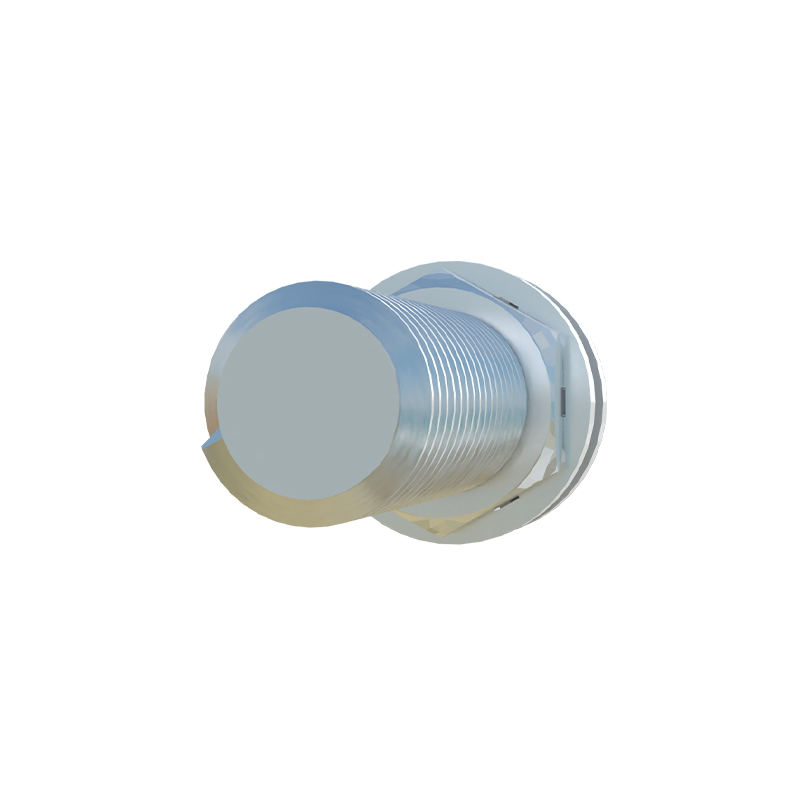
Industrial automation presents a rugged and demanding environment for sensor case design. Consider a conveyor belt system in a packaging facility that sorts boxes by size. Inductive proximity sensors, which detect metallic objects, are mounted along the line. The case design is paramount: it must be constructed from robust materials like nickel-plated brass or stainless steel to withstand vibration, mechanical impacts, and exposure to dust, oil, and coolant. The form factor is often cylindrical or block-shaped with integrated mounting threads or brackets for easy installation and adjustment. Key considerations include the sensor's sensing range, its resistance to electromagnetic interference from nearby motors, and the type of electrical output (e.g., NPN or PNP) that interfaces with the programmable logic controller (PLC). A well-designed industrial sensor case ensures years of reliable operation with minimal maintenance, directly impacting production uptime.
A more nuanced case emerges in smart home security. Door and window alert systems often incorporate magnetic reed switches, but advanced systems use miniature passive infrared (PIR) or microwave proximity sensors to detect approach or loitering. The design objective is discretion, environmental discrimination, and low false-alarm rates. A PIR sensor designed for a porch light, for example, is housed in a weatherproof casing that also contains a Fresnel lens. This lens fragments the detection field into multiple zones, allowing the sensor to distinguish between a small animal moving quickly and a person walking slowly. The housing must manage internal heat from the electronics to prevent self-triggering while being aesthetically acceptable for residential installation. Integration with wireless networks adds another layer, requiring internal space for antenna design without compromising sensor performance.
Finally, the automotive industry offers a critical safety-focused case: parking assistance systems. Ultrasonic proximity sensors embedded in the front and rear bumpers provide distance feedback to the driver. The case design here is exceptionally challenging. The sensor must be mounted flush with or behind the bumper fascia, which is often painted plastic. The fascia material must be carefully selected and tested to allow ultrasonic waves to pass through with minimal attenuation. The sensor housing itself is sealed against water, road salt, and extreme temperature fluctuations from -40°C to 85°C. Furthermore, the system's software must filter out noise from rain, wind, and other ultrasonic sources. The successful design is invisible to the user but provides vital auditory and visual cues that prevent collisions.
Each of these cases underscores that effective proximity sensor design is never just about the sensor element itself. It is a holistic exercise encompassing mechanical enclosure, environmental sealing, electrical interfacing, signal processing algorithms, power constraints, and user experience. The material choice, from plastics for consumer devices to hardened metals for factories, is dictated by the operating environment. The form factor is driven by space constraints and installation needs. Ultimately, the most successful designs are those where the sophisticated sensor technology becomes invisible, enabling intuitive, efficient, and safe interactions between humans and machines.