LiDAR (Light Detection and Ranging) technology is revolutionizing orchard management, offering unprecedented precision in tree health monitoring, yield estimation, and canopy analysis. For growers and agritech professionals considering this investment, understanding the pricing landscape for orchard-specific LiDAR sensors is crucial. The cost is not a single figure but a spectrum influenced by sensor capabilities, integration requirements, and intended application scale.
The core determinant of price is the sensor's specification. Basic 2D LiDAR sensors, suitable for simple row profiling and obstacle detection on autonomous platforms, represent the entry-level tier. These units typically range from $1,000 to $5,000. They offer limited range and lower data density but are cost-effective for specific automation tasks. The mid-range market is dominated by 3D LiDAR sensors, which are the workhorses for detailed canopy mapping and biomass estimation. Prices here vary widely from $10,000 to $50,000. Factors causing this variance include scanning frequency (Hz), range (crucial for tall-tree orchards), angular resolution (which dictates detail level), and resistance to environmental factors like dust, moisture, and vibration. High-end, survey-grade mobile or drone-mounted LiDAR systems, capable of generating centimeter-accurate 3D models of entire orchards, can command prices from $50,000 to well over $150,000. These systems often include integrated GNSS/IMU for precise geotagging and are used for large-scale precision agriculture research and high-value crop management.
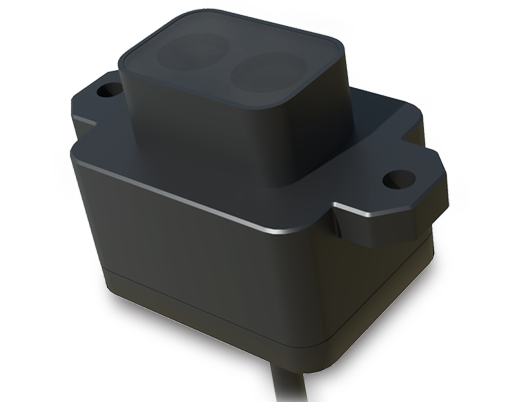
Beyond the sensor unit itself, total cost of ownership must be considered. Integration costs are significant. Mounting a LiDAR sensor on an existing tractor, sprayer, or autonomous ground vehicle requires hardware adapters, protective enclosures, and power solutions. Software is another major component. The raw point cloud data is useless without processing software to translate it into actionable insights like canopy volume, leaf area index, or fruit count. Some manufacturers bundle basic software, while advanced analytics platforms require annual subscriptions or significant upfront fees, adding $2,000 to $20,000 to the project. For drone-based systems, the aircraft and pilot certification are additional substantial investments. Furthermore, calibration, maintenance, and potential repair costs should be factored into the long-term budget.
The application directly dictates the necessary investment. For a small or medium-sized orchard focusing on variable-rate spraying, a mid-range 3D LiDAR integrated into a sprayer might offer the best return on investment (ROI). The initial outlay of $20,000-$40,000 can be offset by reduced chemical usage and improved efficacy. Large commercial orchards or research institutions aiming for phenotyping and yield prediction across hundreds of acres may justify the expense of a drone-mounted system. The high-resolution data can inform pruning, irrigation, and harvest strategies, optimizing overall productivity. Conversely, a farmer exploring basic automation for a small plot might start with a low-cost 2D sensor to navigate rows autonomously.
When evaluating suppliers, key players like Velodyne (now part of Ouster), Hesai, and SICK offer industrial-grade sensors often adapted for agricultural use. Specialized agritech companies like Arable or Trella Technologies provide more turnkey solutions where the sensor, software, and sometimes platform are bundled, simplifying adoption but often at a premium. It is advisable to request detailed quotes that include hardware, software licenses, integration support, and training. Demonstrating ROI is essential; calculate potential savings from input reduction, labor efficiency, and yield increase against the total system cost.
In conclusion, orchard LiDAR sensor pricing is a function of precision, scale, and completeness of solution. While entry points exist around a few thousand dollars, a robust system for professional use typically requires an investment of tens of thousands. The decision should be driven by a clear operational goal, a thorough evaluation of total costs, and a realistic projection of the agronomic and economic benefits this powerful precision farming tool can deliver.