In the world of industrial automation and electronic design, proximity sensors are indispensable components. They detect the presence or absence of an object without physical contact, enabling countless automated processes. While much attention is given to their sensing technology—inductive, capacitive, photoelectric, or ultrasonic—the output stage of a proximity sensor is equally critical. It is the output that translates the sensor's detection event into a usable signal for control systems like PLCs (Programmable Logic Controllers), relays, or microcontrollers. Understanding the different types of proximity sensor outputs is essential for selecting the right sensor and ensuring reliable system integration.
The most fundamental distinction in sensor outputs lies between digital (discrete) and analog signals. Digital outputs provide a simple on/off signal. When a target object is within the sensor's sensing range, the output switches state. This binary signal is ideal for applications requiring basic detection: counting objects on a conveyor, determining if a door is open or closed, or signaling the end of a linear actuator's travel. The primary types of digital outputs are NPN (sinking) and PNP (sourcing), which define how the sensor interfaces with the load and power supply. In a typical 3-wire DC sensor, the configuration is crucial. An NPN output switches the negative or ground side of the load, meaning the load is connected between the positive supply and the sensor's output wire. When activated, the NPN transistor connects the output to ground, completing the circuit. Conversely, a PNP output switches the positive side. The load is connected between the sensor's output and ground, and the PNP transistor provides positive voltage to the load when activated. Choosing between NPN and PNP often depends on regional conventions and the input specifications of the connected control device.
Beyond the basic NPN/PNP switch, digital outputs come in different contact forms. A normally open (NO) output is inactive (open circuit) when no target is present and becomes active (closes the circuit) upon detection. A normally closed (NC) output behaves in the opposite manner. Some advanced sensors offer configurable or programmable outputs, allowing users to select between NO and NC behavior via a switch or software. Another important digital output type is the push-pull or complementary output. This design incorporates both NPN and PNP transistors, allowing the output to actively source current (like PNP) and sink current (like NPN). This versatility makes push-pull outputs compatible with a wider range of input circuits, simplifying wiring and inventory.
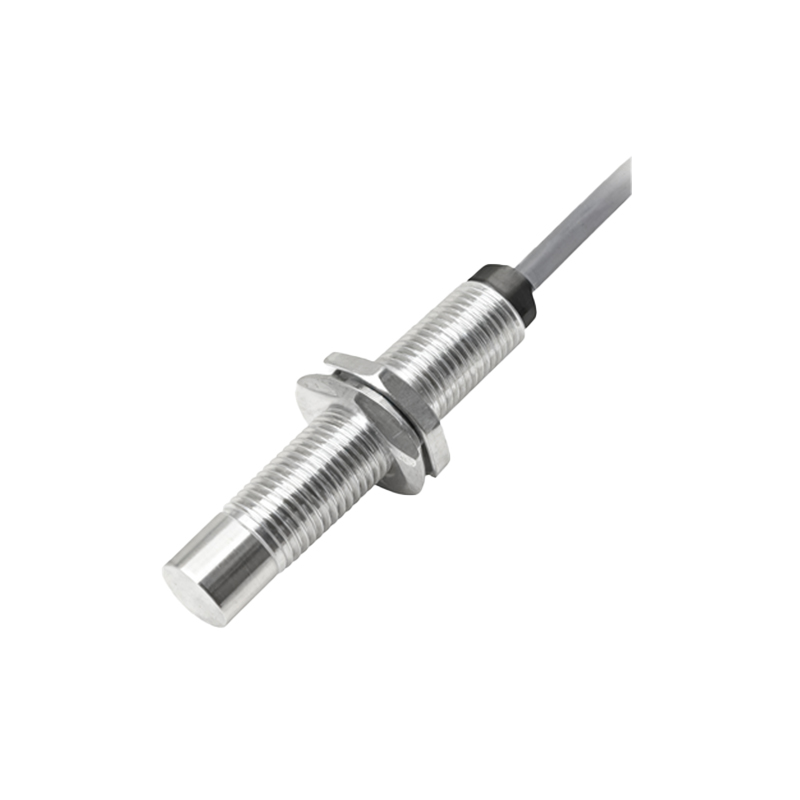
For applications requiring more information than mere presence, analog outputs are the solution. Instead of a simple on/off switch, an analog output provides a continuously variable signal whose magnitude is proportional to the distance between the sensor and the target. Common analog signal standards include 0-10V DC, 0-5V DC, and 4-20 mA current loops. A voltage output like 0-10V is straightforward: at the minimum sensing distance, the output might be 10V, and at the maximum, it might be 0V, or vice versa. The 4-20 mA current loop is highly prized in industrial environments for its noise immunity and ability to carry signals over long distances. The "live zero" of 4 mA allows the system to distinguish between a valid zero measurement and a broken wire (0 mA). Analog-output proximity sensors are used for precision positioning, monitoring material thickness, controlling tension in web processes, or measuring subtle displacements.
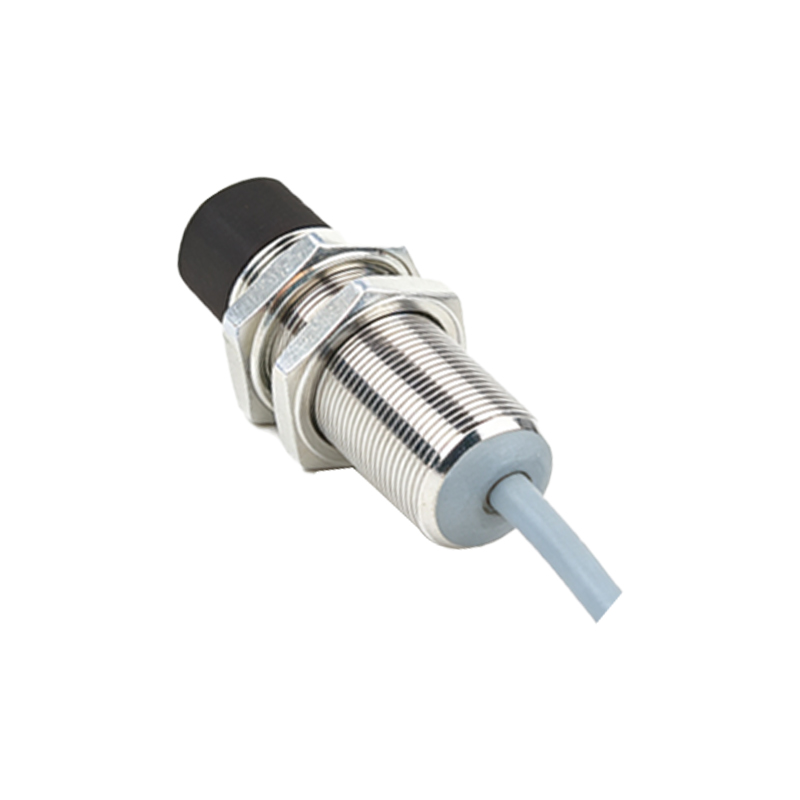
In addition to voltage and current, some sensors provide specialized outputs. IO-Link is a growing standard for point-to-point serial communication. A sensor with an IO-Link output can transmit not just a switched or analog value, but a wealth of digital data, including device parameters, operating status, diagnostic information, and precise measured values. This enables smart factory functionalities like predictive maintenance, remote configuration, and detailed process monitoring. For high-speed or specific network applications, sensors may also offer outputs like PWM (Pulse Width Modulation), where the duty cycle of a square wave conveys information, or interfaces for fieldbus networks (e.g., PROFINET, EtherNet/IP).
Selecting the correct output involves several considerations. First, match the output type to the application need: use digital for detection tasks and analog for measurement or proportional control. Second, ensure electrical compatibility with the control input. Verify voltage levels, current sourcing/sinking requirements, and signal types. Third, consider the operating environment. For electrically noisy settings, a 4-20 mA current loop or a digitally encoded protocol like IO-Link offers superior reliability. Finally, factor in future needs. A sensor with a configurable or IO-Link output may offer greater flexibility for system changes or data collection initiatives. Properly understanding and specifying the proximity sensor output is the final, vital step in turning a simple detection event