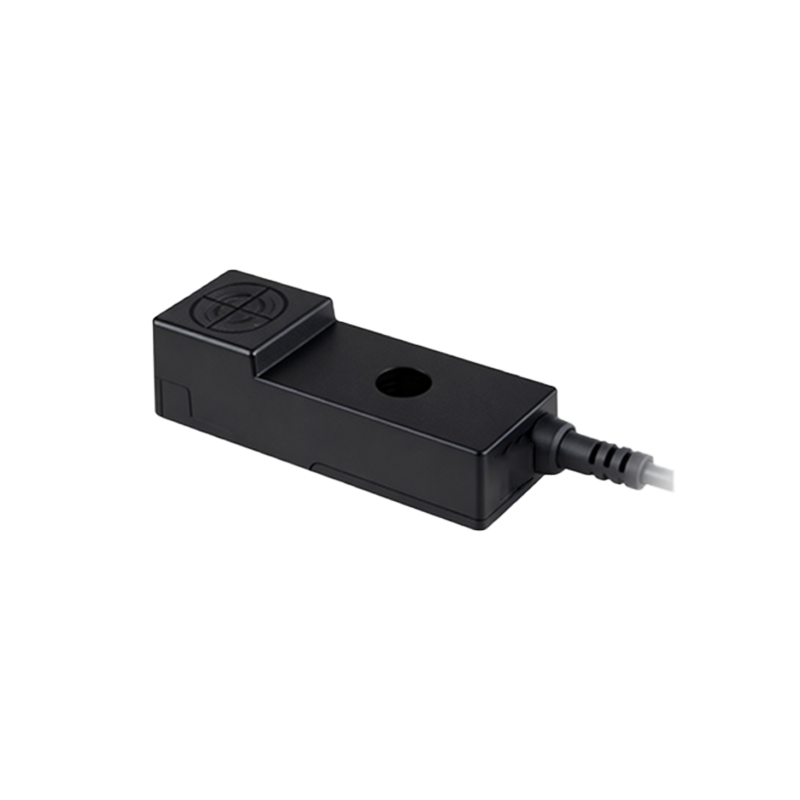
Proximity sensors are a cornerstone of modern automation, silently performing critical tasks across countless industries. Unlike traditional mechanical switches, they detect the presence or absence of an object without physical contact. This non-contact operation eliminates wear and tear, ensures high reliability, and enables incredibly fast response times. The choice of sensor type is paramount, as it directly impacts performance, cost, and suitability for a specific environment. The primary forms of proximity sensors are categorized based on their underlying detection technology, each with distinct principles, advantages, and ideal use cases.
Inductive proximity sensors are the workhorses of industrial environments, particularly in manufacturing. They generate an electromagnetic field and detect changes caused by conductive metals entering this field. Their core strength lies in robustness. They are exceptionally resistant to environmental challenges like dust, dirt, oil, and coolant splashes, making them perfect for harsh machine tool applications, robotic end-effectors, and metal part detection on assembly lines. However, their limitation is clear: they only detect metallic objects, typically ferrous metals like steel and iron with the longest sensing range, and non-ferrous metals like aluminum or copper with a reduced range.
In contrast, capacitive proximity sensors offer a broader detection capability. They function by measuring changes in capacitance, which can be altered by the presence of any material—metal, plastic, wood, glass, liquids, or even granular substances. This makes them incredibly versatile. Common applications include liquid level detection in tanks, monitoring the fill level of non-metallic bins or hoppers, and detecting the presence of paper, wood, or plastic products. They can even sense through certain non-metallic container walls. A key consideration is their sensitivity to environmental factors like humidity and temperature, which may require calibration.
Ultrasonic proximity sensors operate on a principle similar to sonar. They emit high-frequency sound waves and calculate the distance to a target by measuring the time taken for the echo to return. This technology enables them to detect objects of virtually any material, shape, or color, and they are largely unaffected by surface properties. Their ability to provide precise distance measurement, not just presence detection, is a major advantage. You will find them in applications such as parking assist systems, bulk material level sensing in silos, collision avoidance on automated guided vehicles (AGVs), and even in consumer electronics like smartphones. They can be challenged by extremely soft materials that absorb sound or by turbulent air conditions.
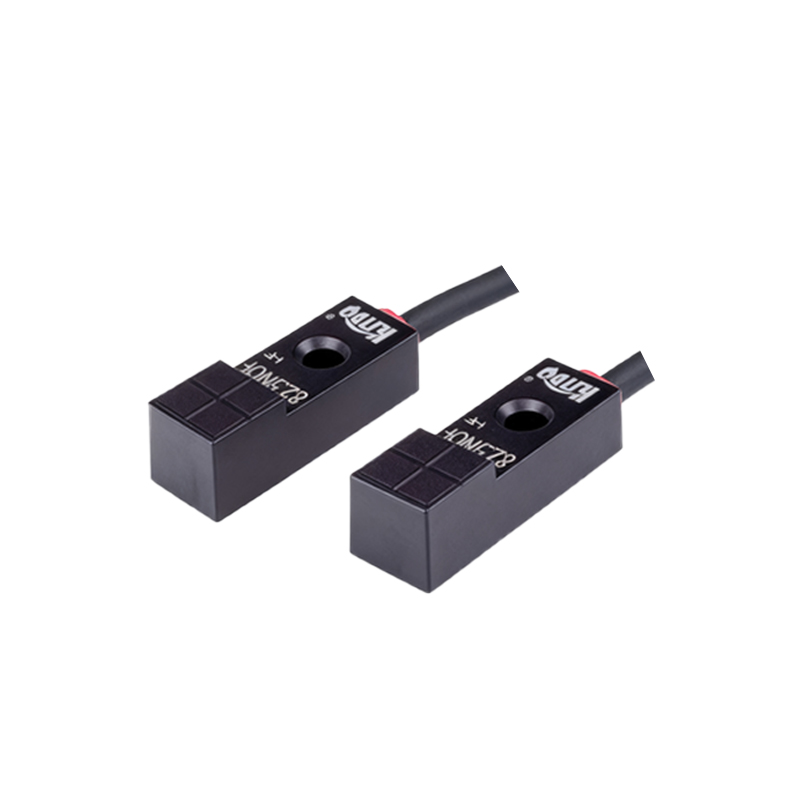
Photoelectric sensors, another major category, use light beams for detection. They come in several key configurations. Through-beam sensors, with separate emitter and receiver units, offer the longest range and highest reliability, breaking a light beam to detect an object. Retro-reflective sensors use a single unit and a reflector, where detection occurs when the object interrupts the reflected beam. Diffuse or reflective sensors detect the light reflected directly off the target itself. Photoelectric sensors excel at detecting small objects, offer very long sensing ranges, and can be used for color differentiation or contrast detection. They are ubiquitous in packaging machinery, conveyor line counting, and door safety curtains. Their performance can be affected by ambient light, dust, fog, or the color and reflectivity of the target object.
Finally, magnetic proximity sensors, often called reed switches or Hall-effect sensors, detect the presence of a permanent magnet. Reed switches are simple, cost-effective devices with contacts that close in the presence of a magnetic field. Hall-effect sensors are solid-state and provide a digital or analog output proportional to magnetic field strength. These sensors are renowned for their extreme reliability, low power consumption, and ability to operate in sealed environments. Their classic applications include detecting the position of doors and windows in security systems, as end-of-travel limit switches in cylinders, and in speed sensing for rotating shafts.
Selecting the correct proximity sensor form requires a careful analysis of the application parameters. Engineers must consider the target material, required sensing distance, environmental conditions (IP rating, temperature, contaminants), output type needed (PNP/NPN, analog, IO-Link), response speed, and installation constraints. For instance, an inductive sensor is the default for detecting a steel gear tooth in an oily gearbox, while a capacitive sensor is ideal for monitoring plastic pellet levels in a hopper, and an ultrasonic sensor is best for measuring the distance to a liquid surface in a large, open tank. Understanding the fundamental strengths and limitations of each sensor type is the first and most critical step in designing efficient, reliable, and cost-effective automated systems.