Laser sensors with normally open (NO) contacts are fundamental components in modern industrial automation systems. These devices operate by emitting a focused beam of light toward a target object. When the beam is uninterrupted, the sensor's output circuit remains open, meaning no electrical signal is transmitted. Upon detection—typically when an object interrupts the laser beam—the internal switching mechanism changes state, closing the circuit and allowing current to flow, thereby sending a signal to a controller like a PLC (Programmable Logic Controller). This simple yet reliable "open on no detection, closed on detection" logic forms the basis for countless automated processes.
The primary advantage of using a normally open configuration lies in its inherent safety design. In many safety-critical applications, an open circuit is interpreted as a "normal" or "safe" state. If a wire breaks or the sensor loses power, the circuit remains open, which can be programmed to trigger a machine shutdown or an alarm. This fail-safe characteristic is crucial in preventing accidents in automated production lines, robotic cells, and material handling systems. For instance, a NO laser sensor guarding a hazardous area will only complete its circuit and allow machinery to operate when the beam is clear, ensuring no person or object is in the danger zone.
Selecting the right normally open laser sensor requires careful consideration of several technical parameters. Sensing range is paramount; while some compact models work effectively at a few centimeters, others can accurately detect objects over distances of several hundred meters. The size of the detectable object and the required beam spot size are also critical. Furthermore, environmental factors such as ambient light, dust, fog, or vibration can significantly impact performance. Many industrial-grade NO laser sensors are housed in rugged enclosures with high Ingress Protection (IP) ratings to withstand harsh conditions. They also feature adjustable sensitivity to ignore background interference and may offer complementary outputs, like a normally closed (NC) signal from the same unit for added flexibility in circuit design.
Typical applications for normally open laser sensors are vast and varied. In packaging machinery, they are used for precise object counting, label detection, and fill-level control. On assembly lines, they provide accurate positioning for robotic arms, verify component presence, and inspect for part alignment. In automated warehousing, these sensors manage inventory by detecting the presence of pallets on racks or guiding automated guided vehicles (AGVs) along their paths. Their non-contact nature ensures no wear and tear on the sensor or the target, leading to minimal maintenance and high long-term reliability.
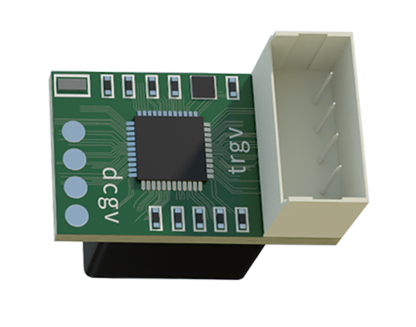
Integration into a control system is straightforward. The output of the NO laser sensor is typically connected to a digital input module on a PLC. When the beam is broken and the contacts close, the PLC input registers a "high" or "1" signal. Programmers then use this signal to initiate actions—starting a conveyor, indexing a machine, or recording a count. It is essential to ensure the sensor's output type (e.g., NPN or PNP transistor) is compatible with the PLC input specifications. Proper alignment during installation is critical, often facilitated by built-in indicator LEDs that show both power status and output state.
In summary, normally open laser sensors provide a robust, fail-safe detection solution essential for industrial automation. Their principle of operation—maintaining an open circuit until an object is detected—offers a logical and safe approach to machine control. By understanding their operating logic, key selection criteria, and integration methods, engineers and technicians can effectively deploy these sensors to enhance efficiency, safety, and reliability in a wide array of automated applications. As technology advances, features like background suppression, ultra-precise timing, and IO-Link communication are becoming standard, further expanding their capabilities in the smart factory landscape.
