What is a Photoelectric Sensor?
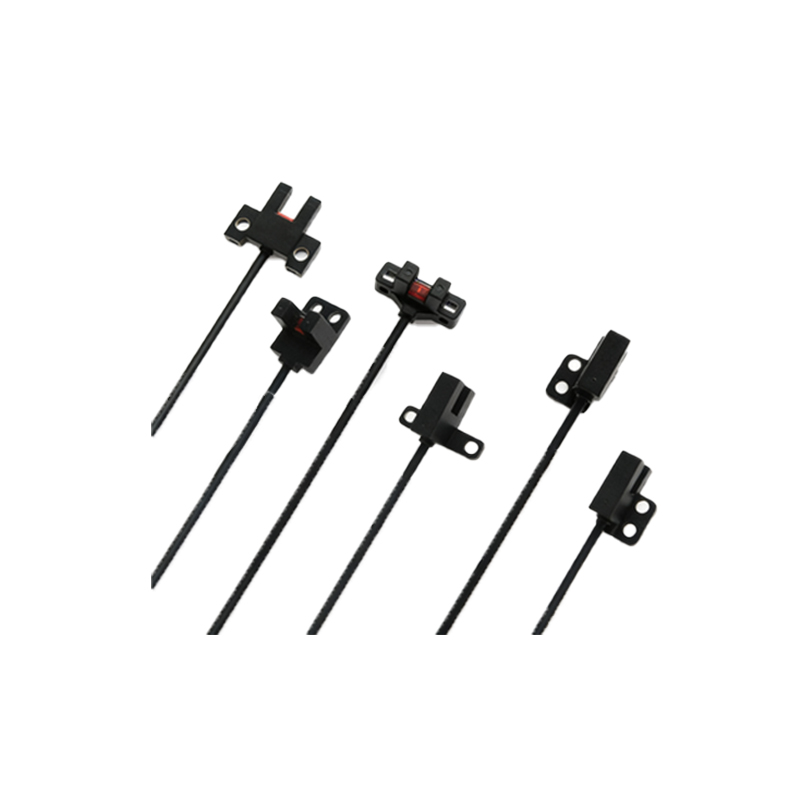
Photoelectric sensors are non-contact electronic devices used to detect the presence, absence, or distance of an object by emitting a beam of light, typically from a light source such as an LED or laser diode, and analyzing the reflected or interrupted light signal. These sensors are widely employed in industrial automation, packaging, material handling, and safety systems due to their high reliability, long sensing range, and immunity to physical wear.
Core Components and Light Sources
A typical photoelectric sensor consists of a transmitter (light source), a receiver (photodetector), and a control circuit that processes the received signal. The most common light sources include infrared LEDs for general-purpose applications, visible red LEDs for alignment ease, and laser diodes for precision sensing over long distances. The receiver is usually a photodiode or phototransistor that converts light intensity into an electrical signal.
Basic Operating Principle
The fundamental principle relies on the modulation of light. The transmitter emits a pulsed or continuous light beam. When an object enters the sensor’s detection zone, it either interrupts the direct beam (through-beam mode) or reflects part of the beam back to the receiver (retroreflective or diffuse mode). The receiver detects the change in light intensity and triggers an output signal, such as a relay, transistor, or analog voltage.
Three Main Detection Modes
Through-Beam Mode
This mode uses separate transmitter and receiver units placed opposite each other. The light beam travels directly from the transmitter to the receiver. When an object blocks the beam, the receiver detects a loss of light, indicating the object’s presence. This mode offers the longest sensing range (up to 100 meters) and highest immunity to ambient light and contamination, making it ideal for dusty environments.
Retroreflective Mode
In this configuration, the transmitter and receiver are housed in a single unit, and a reflector is placed opposite the sensor. The light beam is aimed at the reflector, which returns it to the receiver. An object passing between the sensor and reflector interrupts the light path, triggering detection. This mode simplifies wiring and installation, with typical ranges up to 15 meters, but requires careful alignment to avoid false triggers from shiny surfaces.
Diffuse Mode
Here, both transmitter and receiver are in the same enclosure, and no separate reflector is needed. The sensor emits light that scatters off the target object, and the receiver detects the reflected light. The sensing range depends on the object’s reflectivity and color, typically from a few centimeters to 2 meters. This mode is cost-effective for short-range applications but is sensitive to background reflections and object surface properties.
Advanced Techniques: Background Suppression and Laser Triangulation
For high-precision applications, modern photoelectric sensors use background suppression technology, which measures the angle of reflected light using a position-sensitive detector (PSD) or CCD array. This allows the sensor to distinguish between a target object and a background surface, even at close distances. Laser-based sensors employ triangulation to calculate the exact distance to an object by measuring the displacement of the reflected light spot on the detector.
Key Performance Factors and Considerations
When selecting a photoelectric sensor, engineers must consider factors such as sensing range, response time (typically microseconds to milliseconds), ambient light interference (suppressed by modulated light), temperature drift, and ingress protection (IP rating) for harsh environments. Proper alignment, mounting, and periodic cleaning of lenses are essential for maintaining long-term reliability.
Applications in Industry
Photoelectric sensors are ubiquitous in factory automation. They detect parts on conveyor belts, verify product presence in packaging machines, monitor liquid levels in transparent containers, and ensure safety by guarding robotic workcells. Their non-contact nature and high switching frequency make them indispensable for modern manufacturing lines.