What Is an On-Type Reflective Photoelectric Sensor?
An on-type reflective photoelectric sensor, often referred to as a diffuse reflective sensor, is a key component in modern industrial automation systems. Unlike through-beam sensors that require separate emitter and receiver units, this sensor combines both the light source and detector in a single housing. It detects objects by emitting a beam of light, typically infrared or visible red, and measuring the reflected light from the target surface. When the object is present, the reflected light intensity changes, triggering an output signal. This design simplifies installation and reduces wiring complexity, making it ideal for space-constrained applications in manufacturing lines, packaging machines, and material handling systems.
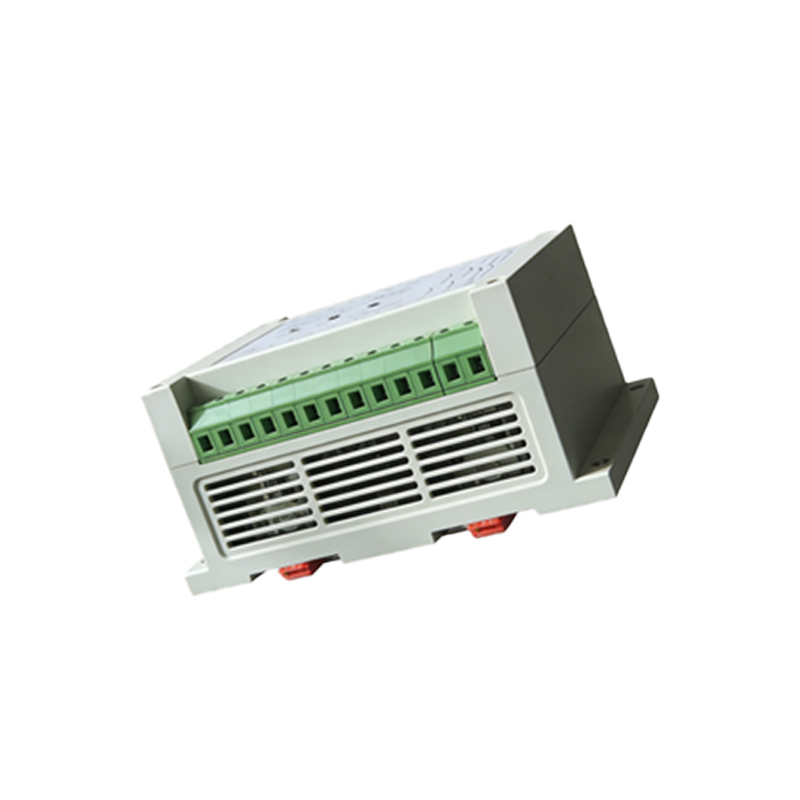
How Does It Work?
The operational principle of an on-type reflective sensor relies on the optical properties of the target object. The sensor emits a modulated light pulse from its LED. When the light hits an object, part of it is reflected back to the photodetector. The sensor continuously monitors the reflected light level. A stable background, such as a non-reflective surface, ensures no false triggers. The detection distance depends on factors like the reflectivity of the object, its color, and surface texture. For example, a white matte surface reflects more light than a black glossy one, so the sensing range varies. Many modern sensors include a potentiometer for sensitivity adjustment, allowing fine-tuning in challenging environments with dust or ambient light interference.
Key Applications in Industry
On-type reflective sensors are widely used in conveyor systems to detect product presence or absence. In packaging lines, they trigger labels or seal actions when a box passes. They also serve in level detection for transparent bottles or liquid containers, where the sensor adjusts to low reflectivity. In robotics, these sensors provide end-effector feedback for grip detection. Their single-unit design excels in areas with limited space, such as inside machinery cabinets or on robotic arms. Additionally, they are common in elevator door safety systems, preventing closure when an object is detected. For outdoor applications, models with high ambient light immunity are preferred.
Advantages Over Other Sensor Types
Compared to through-beam sensors, on-type reflective sensors offer easier alignment and lower installation costs since no separate receiver is needed. They are also more compact, reducing mounting hardware. However, they have a shorter detection range, typically up to 1 meter, and are more susceptible to object color and surface variations. Against retro-reflective sensors, they require no reflector, which simplifies setup in dirty environments. For applications with highly reflective backgrounds, background suppression models can be used to avoid false detection. These sensors are also cost-effective for general-purpose detection, offering a good balance between performance and price.
Selection Criteria for Engineers
When choosing an on-type reflective sensor, engineers must consider several parameters. First, the sensing distance must match the application, accounting for worst-case reflectivity. Second, the light source wavelength, often 880 nm infrared for long range or 660 nm visible for alignment ease. Third, output type: NPN or PNP for sinking/sourcing, or analog output for distance measurement. Fourth, environmental ratings, such as IP67 for washdown areas or metal housing for high-temperature zones. Fifth, response time, as high-speed applications require fast switching, e.g., 1 kHz. Finally, consider the background suppression feature if the background has similar reflectivity to the target.
Installation and Troubleshooting Tips
Proper mounting is critical. Align the sensor perpendicular to the target surface to maximize reflected light. Avoid direct exposure to sunlight or bright artificial light, which can cause false triggers. Use a dark, non-reflective background, like black anodized aluminum, to improve detection stability. If the sensor fails to detect, check for dust on the lens, adjust the sensitivity potentiometer, or test with a standard reflectivity target (e.g., white paper at 90% reflectivity). For intermittent detection, verify the power supply voltage and ripple. Many sensors include an LED indicator for output status, aiding quick diagnosis. In dynamic applications, ensure the object dwell time exceeds the sensor’s response time.
Future Trends and Innovations
The evolution of on-type reflective sensors includes integration with IO-Link communication for real-time diagnostics and parameter setting. Advanced models now feature background suppression using triangulation principles, enabling detection of objects regardless of color. Smart sensors with embedded microprocessors can adapt to changing conditions, such as dust accumulation. In Industry 4.0, these sensors are becoming nodes in digital networks, providing data for predictive maintenance. Additionally, new materials like sapphire lenses enhance durability in harsh environments. As automation demands increase, miniaturization and energy efficiency remain key drivers, with sensors consuming less than 10 mA.