In the automated world of modern industry, the ability to detect the presence or absence of an object without physical contact is fundamental. This critical task is performed reliably and efficiently by electronic proximity sensors. These non-contact devices have become indispensable components across manufacturing, automotive, packaging, and countless other sectors, enabling precise control, enhancing safety, and improving operational efficiency.
At its core, an electronic proximity sensor detects the approach of a target object within its sensing range. It does this by emitting an electromagnetic field or a beam of radiation, such as infrared light, and then looking for changes in the field or return signal. The key advantage is the complete absence of mechanical contact, which eliminates wear and tear on both the sensor and the target, leading to exceptional longevity and reliability. Unlike mechanical limit switches, proximity sensors offer high switching rates, resistance to environmental contaminants like oil and dust, and the ability to detect a wide variety of materials.
The operational principle divides the most common types of electronic proximity sensors into three main categories: inductive, capacitive, and photoelectric.
Inductive proximity sensors are the workhorses for detecting metallic objects. They generate an oscillating electromagnetic field from a coil in the sensing face. When a ferrous or non-ferrous metal target enters this field, it induces eddy currents on the metal's surface. This causes a change in the oscillation amplitude, which is detected by the sensor's circuitry, triggering a solid-state output switch. Inductive sensors are robust, immune to non-metallic substances, and ideal for harsh industrial environments. Typical applications include counting metal parts, determining the position of a machine tool, or detecting the end of a hydraulic cylinder stroke.
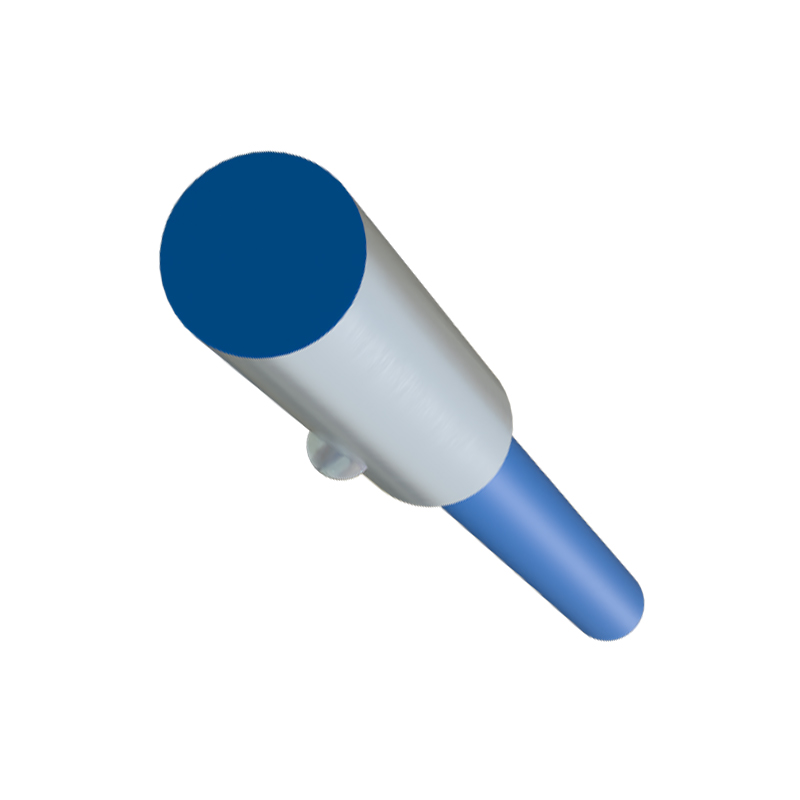
Capacitive proximity sensors, on the other hand, can detect both metallic and non-metallic materials, including liquids, powders, plastics, and wood. They function by generating an electrostatic field. Any object that enters this field alters the capacitance between the sensor's electrodes. The sensor's circuit monitors this change in capacitance and triggers an output when a preset threshold is reached. This makes capacitive sensors highly versatile for tasks like monitoring fill levels in tanks or silos, detecting glass or plastic bottles on a conveyor, or sensing the presence of wood or cardboard.
Photoelectric sensors operate on a completely different principle, using light beams to detect objects. They consist of a light emitter (usually an LED) and a receiver. When the emitted light beam is interrupted or reflected by a target object, the change in light intensity at the receiver is converted into an electrical output signal. Photoelectric sensors offer the longest sensing ranges and are excellent for detecting objects of almost any material, provided they are not perfectly transparent. Common configurations include through-beam (where the emitter and receiver are separate units), retro-reflective (using a reflector), and diffuse (reflective), where the sensor uses light reflected directly from the target.

When selecting an electronic proximity sensor for an application, several key parameters must be considered. The sensing range, or the maximum distance at which the sensor can reliably detect a standard target, is primary. The target material directly influences the choice between inductive, capacitive, or photoelectric types. Environmental factors such as temperature extremes, presence of washdown chemicals, or heavy vibration also dictate the required housing material and protection rating (e.g., IP67). Finally, the output configuration—whether it's a simple two-wire AC/DC switch, a three-wire NPN (sinking) or PNP (sourcing) transistor output, or an analog output proportional to distance—must be compatible with the control system, typically a Programmable Logic Controller (PLC).
The applications are virtually limitless. On an automotive assembly line, inductive sensors verify the presence of engine blocks. In a food packaging plant, capacitive sensors ensure liquid levels are correct before capping. In a warehouse, photoelectric sensors count boxes on a high-speed conveyor. Beyond industrial automation, they are found in consumer devices—the screen of a smartphone turning off when held to the ear is a classic example of a capacitive proximity sensor at work.
In conclusion, electronic proximity sensors are the silent, unseen guardians of automation. By providing accurate, wear-free, and rapid object detection, they form the essential sensory layer that allows machines to interact intelligently with their physical environment. Their continued evolution, with trends toward miniaturization, integrated IO-Link communication for diagnostics, and enhanced sensing capabilities, ensures they will remain a cornerstone of efficient and smart industrial systems for the foreseeable future.