Understanding the Fundamentals of D82 Diffuse Reflection Sensors
Diffuse reflection photoelectric sensors, specifically the D82 series, are pivotal in modern industrial automation. These sensors operate by emitting a beam of light, typically infrared or visible red, toward a target object. The light reflects off the object's surface and returns to the sensor's receiver. Unlike through-beam or retro-reflective sensors, diffuse reflection sensors do not require a separate reflector or receiver unit, simplifying installation in tight spaces. The D82 model is engineered for reliable detection of objects with varying colors, textures, and materials, making it ideal for packaging lines, conveyor systems, and material handling. Its key advantage lies in its ability to detect objects at close ranges (typically 10-100 mm) without precise alignment, reducing downtime and maintenance costs.
Technical Specifications and Performance of D82 Sensors
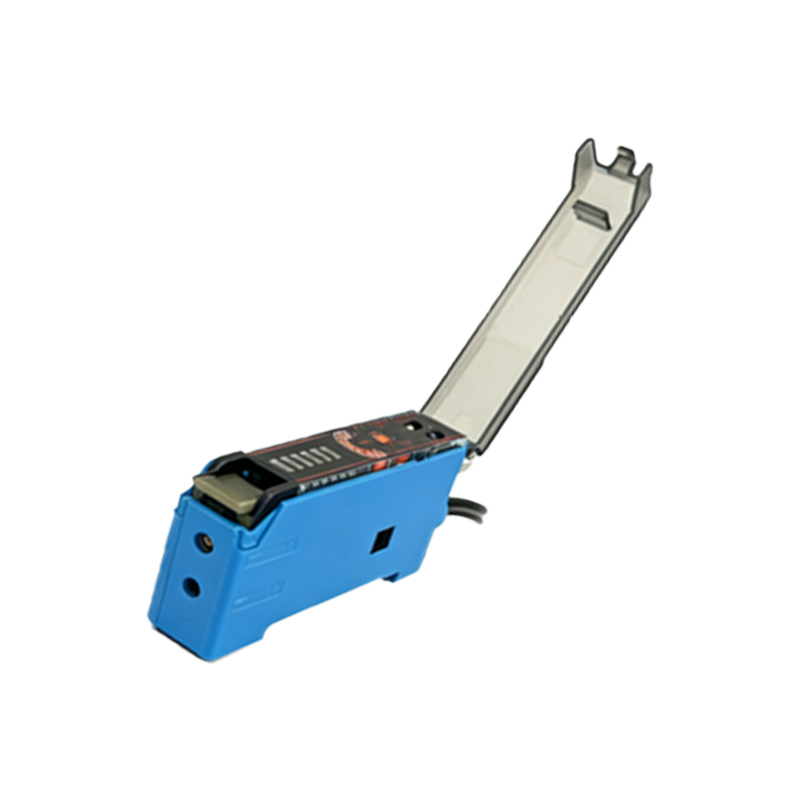
The D82 diffuse reflection sensor offers advanced features tailored for challenging environments. It operates on a 10-30V DC power supply, with a response time of less than 1 ms to ensure high-speed detection. The sensing distance varies based on target reflectivity; for example, a white paper target may be detected up to 80 mm, while a black rubber object may be limited to 30 mm. This variability is due to the sensor's reliance on the amount of reflected light. The D82 incorporates a potentiometer for sensitivity adjustment, allowing fine-tuning for specific surfaces. Additionally, it features a compact housing rated IP67 for dust and water ingress protection, suitable for harsh industrial floors. Output options include NPN or PNP configurations, with a maximum load current of 100 mA, ensuring compatibility with PLCs and controllers.
Installation and Calibration Best Practices
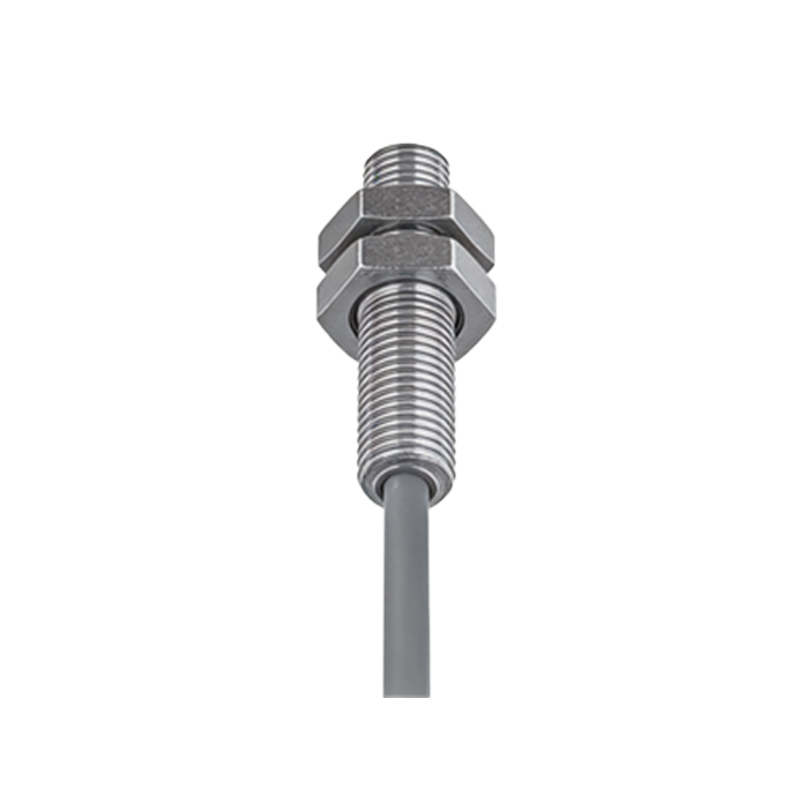
Proper installation of the D82 sensor maximizes its efficiency. Mount the sensor at a 90-degree angle to the target surface to minimize signal loss from angular reflections. Use the provided mounting bracket to secure it firmly, avoiding vibrations that could distort readings. For calibration, start with the sensitivity pot set to mid-range. Place a representative object at the desired detection point, then adjust the pot until the output LED illuminates consistently. Test with non-standard targets, such as glossy or dark surfaces, to verify reliability. Avoid direct exposure to high ambient light, as it may cause false triggers. For dynamic applications, incorporate a delay filter to prevent noise from fast-moving objects.
Common Challenges and Troubleshooting Techniques
Despite its robustness, the D82 may encounter issues like false triggering or missed detections. False triggers often stem from background interference, such as shiny surfaces behind the target. Mitigate this by reducing sensitivity or using a background suppression lens. Missed detections on dark or matte objects can be addressed by increasing sensitivity, but ensure not to saturate the receiver. Electrical noise from motors or inverters may cause erratic behavior; shielded cables and ferrite cores help suppress it. If the sensor fails to respond, check the power supply voltage and connection integrity. Regular cleaning of the lens with a soft cloth prevents dust buildup that reduces detection range.
Applications and Industry Use Cases
The D82 diffuse reflection sensor excels in discrete manufacturing. In packaging, it detects transparent or opaque containers at high speeds for labeling and filling. In automotive assembly, it verifies the presence of components like gaskets or clips in tight spaces. The sensor's compact size allows integration into robotic grippers for part orientation. In logistics, it monitors conveyor belt occupancy to prevent jams. Its non-contact operation reduces wear, extending service life in high-cycle environments. For wet or dusty environments, such as food processing, the IP67 rating ensures consistent performance. The D82's versatility makes it a cost-effective choice for both OEMs and retrofitting existing lines.
Comparison with Other Photoelectric Sensor Types
When comparing the D82 to through-beam or retro-reflective sensors, key differences emerge. Through-beam sensors offer longer ranges (up to 30 m) but require two units and precise alignment, increasing installation complexity. Retro-reflective sensors use a reflector, enabling detection of transparent objects, but they struggle with highly reflective targets that mimic the reflector. The D82's diffuse mode simplifies wiring and space constraints, though its range is shorter (typically under 100 mm). For applications requiring detection of dark or glossy surfaces, a polarized diffuse sensor variant may be needed. However, the D82's balance of cost, simplicity, and reliability makes it the preferred choice for short-range, multi-surface tasks.
Maintenance and Long-Term Reliability
To ensure the D82 sensor's longevity, schedule periodic inspections. Clean the lens with isopropyl alcohol and a lint-free cloth to remove oil or debris. Verify sensitivity settings after any system changes, such as new conveyor belts or target materials. Check cable bends for stress fractures, especially near moving parts. Store spare sensors in anti-static bags to protect electronics. The D82's solid-state design typically delivers over 50,000 hours of operation under normal conditions. Record calibration parameters in a maintenance log to streamline troubleshooting. By following these practices, you can maintain near-zero downtime in critical automation processes.