In the realm of industrial automation and machinery, the ability to detect the presence or absence of an object without physical contact is paramount. Among the various technologies enabling this capability, plastic cylindrical proximity sensors have carved out a significant and growing niche. These robust, versatile devices offer a reliable solution for countless detection tasks across diverse environments, from food processing plants to automotive assembly lines.
Unlike their metal-housed counterparts, plastic cylindrical proximity sensors utilize high-performance engineering polymers such as PBT (Polybutylene Terephthalate) or PPS (Polyphenylene Sulfide) for their housing. This fundamental material choice bestows several distinct advantages. Foremost is exceptional corrosion resistance. These sensors are inherently immune to rust and can withstand exposure to a wide range of chemicals, coolants, and washdown procedures common in aggressive industrial settings. This makes them ideal for applications in the chemical industry, pharmaceutical manufacturing, and food & beverage production, where hygiene and resistance to cleaning agents are critical. Furthermore, the plastic housing provides excellent electrical insulation, enhancing safety in applications where short-circuit risks must be minimized.
The operational principle of these sensors remains aligned with standard inductive proximity technology. Inside the cylindrical plastic body resides an oscillator circuit that generates a high-frequency electromagnetic field at the active sensing face. When a metallic target object enters this field, eddy currents are induced on the target's surface. This causes a change in the oscillation amplitude within the sensor, which is detected by a threshold circuit. This circuit then triggers a solid-state switch, changing the output state (typically PNP or NPN) to signal the object's presence. It is crucial to note that standard inductive sensors, including plastic-bodied ones, are designed to detect ferrous and non-ferrous metals; they are not suitable for detecting non-metallic materials.
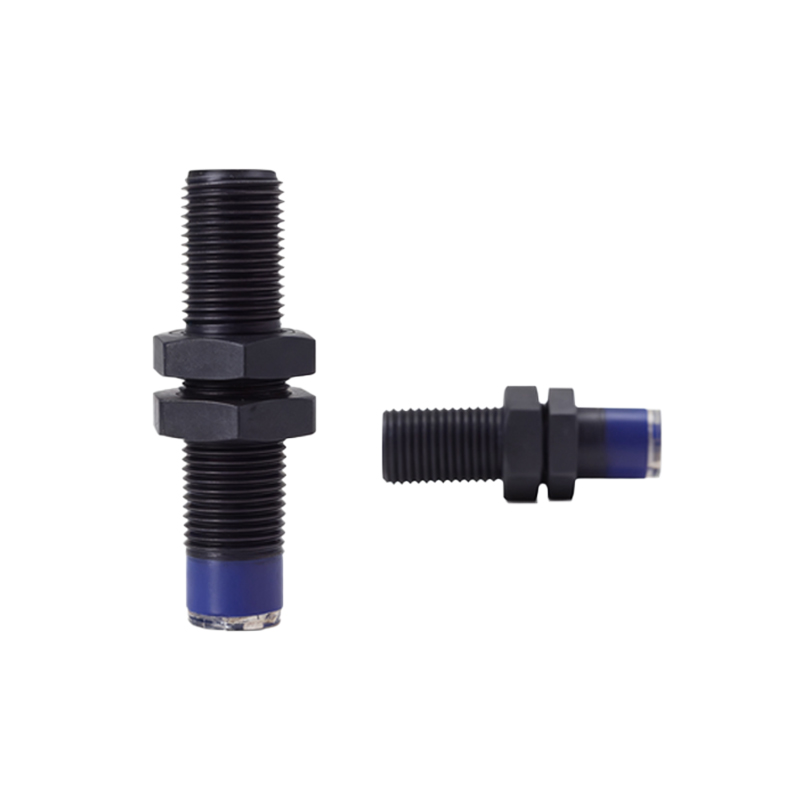
The cylindrical form factor, with standard diameters like M8, M12, M18, and M30, offers practical benefits. Their shape facilitates easy installation into drilled holes using locknuts, providing a secure and flush-mounting option that protects the sensor from mechanical damage. Many models feature LED indicators for visual status confirmation, aiding in setup and troubleshooting. Key performance specifications to consider include sensing distance, which is typically rated for a standard iron target and is non-adjustable, repeat accuracy, response frequency (how quickly they can detect objects passing by), and environmental ratings like IP67 or IP69K for protection against dust and high-pressure water jets.
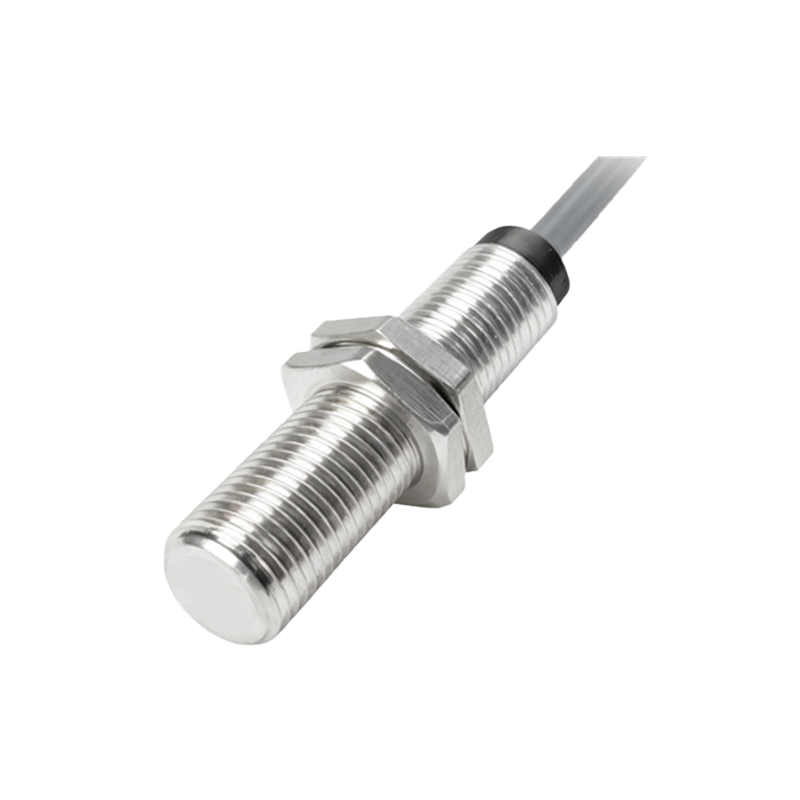
The application spectrum for plastic cylindrical proximity sensors is remarkably broad. In packaging machinery, they reliably detect the presence of metal components, caps, or cans on high-speed conveyor lines. Within automotive manufacturing, they are used for position sensing of robotic arms, end-effector confirmation, and part verification. Their washdown capability makes them perfect for dairy processing equipment, bottling lines, and anywhere frequent sanitation is required. They also serve vital roles in material handling systems, machine tools for tool positioning, and assembly automation for verifying part placement.
Selecting the right sensor involves careful consideration of several factors. The operating environment dictates the required ingress protection (IP) rating. The nature of the target material (steel, aluminum, brass) and the required sensing distance are primary technical determinants. Electrical characteristics, such as the output type (e.g., PNP normally open) and voltage range (commonly 10-30V DC), must be compatible with the control system. Finally, physical constraints like required cylinder diameter and cable or connector style play a decisive role in integration.
In summary, plastic cylindrical proximity sensors represent a fusion of durable material science and proven inductive sensing technology. Their resistance to harsh conditions, electrical safety, and mechanical robustness make them an indispensable component in modern industrial automation. By providing non-contact, wear-free detection of metallic objects, they enhance system reliability, reduce maintenance costs, and enable more efficient, sophisticated machine control across a multitude of demanding industries.