In the intricate world of automation and smart technology, the ability to detect the presence or absence of an object without physical contact is fundamental. Among the various solutions available, short-range proximity sensors stand out as critical components for precise, reliable, and non-invasive detection over minimal distances. Typically operating within a range from a few millimeters up to about 30 millimeters, these compact devices are engineered for accuracy in tight spaces where larger sensors would be impractical.
The core technology behind these sensors varies, each type suited to specific environmental conditions and target materials. Inductive proximity sensors are perhaps the most common for industrial applications. They generate an electromagnetic field and detect changes caused by metallic objects entering this field. Robust, resistant to dirt and moisture, and capable of high-speed switching, they are indispensable in metal machining, assembly lines, and robotic positioning systems. However, their limitation is clear: they only detect metals.
For applications requiring detection of any material—be it plastic, wood, liquid, or glass—capacitive proximity sensors are the go-to choice. These sensors function by measuring changes in capacitance, which occurs when any object disturbs the electrostatic field between the sensor's electrodes. This makes them perfect for level detection in tanks (liquids or granules), material handling, and even touch-sensitive interfaces. Their sensitivity can often be adjusted, a feature that allows engineers to fine-tune them to ignore certain background materials.
Another pivotal technology is the photoelectric sensor, which uses a light beam—often infrared, visible red, or laser. For short-range applications, the diffuse or reflective mode is frequently employed, where the sensor emits light and detects what is reflected back from the target object. These sensors excel at detecting small objects, offer very fast response times, and can work with virtually any material that reflects light. They are widely used in packaging, electronics manufacturing, and automated door systems.
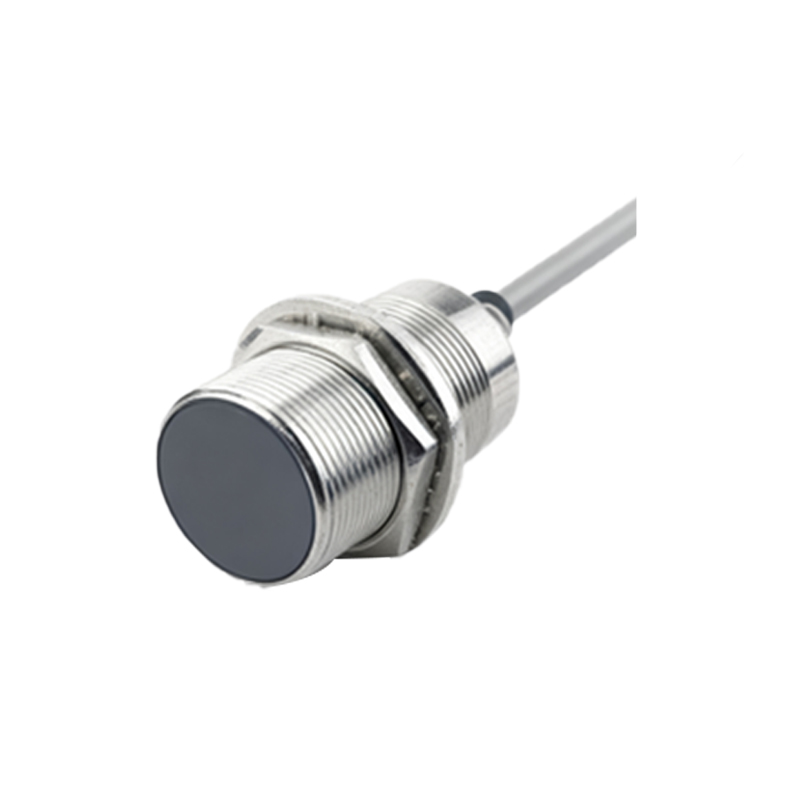
Selecting the right short-range proximity sensor requires a careful analysis of several key parameters beyond just the sensing technology. The sensing distance, or nominal range, is paramount and must be chosen with a safety margin, considering factors like target size, material, and installation tolerances. The electrical output type—whether NPN or PNP, normally open or normally closed—must be compatible with the control system's input module (e.g., PLC). Environmental resilience is another critical factor; sensors in washdown areas or outdoor settings may need high Ingress Protection (IP) ratings (like IP67 or IP69K) to withstand water, dust, and chemicals.
Furthermore, the physical housing size and shape (barrel, rectangular, slot) must fit the mechanical constraints of the application. For instance, a tiny, cylindrical inductive sensor might be threaded into a machine tool to monitor spindle position, while a flat, rectangular capacitive sensor could be embedded behind a plastic control panel.
The applications of these miniature workhorses are vast and growing. In consumer electronics, they deactivate touchscreens when a phone is held to the ear. In automotive manufacturing, they verify the correct placement of components on a fast-moving assembly line. In pharmaceutical packaging, they ensure every blister pack has a tablet in each cavity. In collaborative robotics, they provide essential safety feedback, allowing robots to slow down or stop when a human hand comes too close.
The evolution of short-range sensing continues, driven by trends like miniaturization and the Industrial Internet of Things (IIoT). Modern sensors are becoming smaller yet smarter, often incorporating IO-Link communication. This digital protocol allows for bidirectional data exchange, enabling remote configuration, real-time diagnostics (like monitoring signal strength or internal temperature), and simplified replacement without manual recalibration. This shift towards intelligent sensors is reducing downtime and enhancing predictive maintenance strategies.
In conclusion, short-range proximity sensors are far from simple on/off switches. They are sophisticated, application-specific devices that form the sensory foundation of modern automated systems. A successful implementation hinges on a thorough understanding of the target object, the operating environment, and the precise functional requirement. By carefully matching the sensor's technology and specifications to the task at hand, engineers and designers can achieve unparalleled levels of reliability, efficiency, and safety in their machinery and products.