Understanding Reflector Size and Sensor Performance
In industrial automation, photoelectric sensors rely heavily on the reflector to ensure stable detection. The size of the reflector directly influences the sensor’s operating range, response time, and reliability. A larger reflector typically provides a stronger return signal, allowing for longer sensing distances and better tolerance to misalignment. However, oversizing can lead to unnecessary costs and space constraints. Therefore, selecting the correct reflector size is critical for optimizing system performance.
Key Factors Influencing Reflector Size Selection
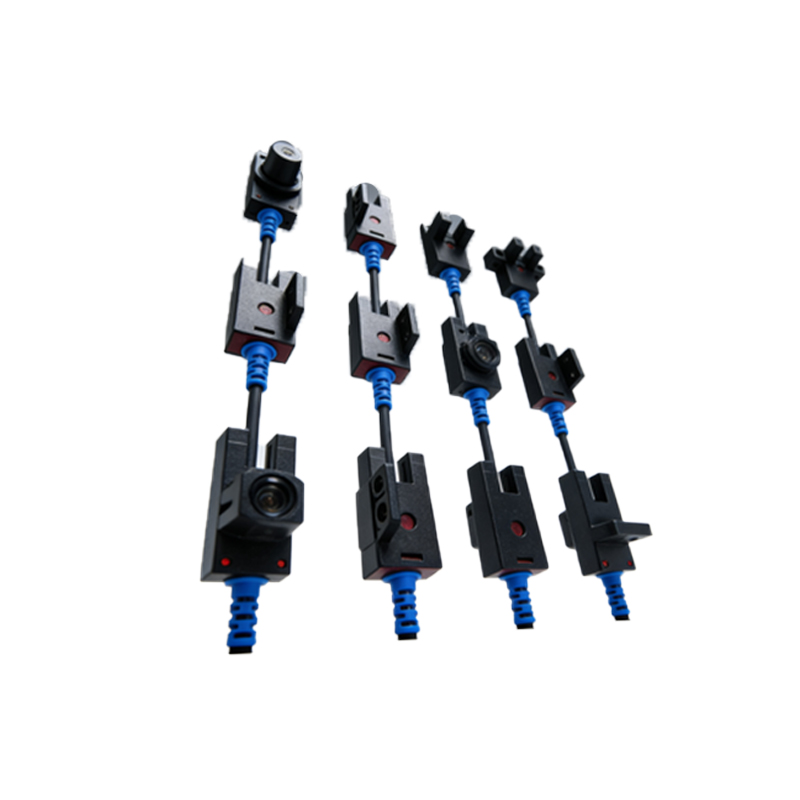
When choosing a reflector, several factors must be considered: the sensor’s maximum detection distance, the beam angle, the environment (e.g., dust, moisture), and the required sensitivity. For example, a sensor designed for a 10-meter range may require a reflector with a diameter of at least 50 mm to achieve full performance. In contrast, a smaller reflector, such as a 20 mm one, might be sufficient for short-range applications (e.g., 2-3 meters). Always consult the sensor datasheet to match the reflector size with the specified range.
Common Reflector Sizes and Their Applications
Typical reflector sizes in the industry include 20 mm, 30 mm, 50 mm, 80 mm, and 100 mm diameters. A 20 mm reflector is ideal for compact machinery or confined spaces, such as in assembly lines for small components. A 50 mm reflector is widely used for general-purpose applications, like conveyor belt detection. Larger reflectors (80 mm or 100 mm) are recommended for long-range sensing, outdoor use, or dusty environments where signal attenuation is a concern. For high-precision tasks, consider micro-reflectors with specific shapes, such as rectangular or cylindrical.
Impact of Misalignment on Reflector Size
Misalignment between the sensor and reflector is a common issue in industrial settings. A larger reflector can compensate for minor angular deviations, ensuring consistent detection. For instance, if the sensor is mounted at an angle of up to 5 degrees, a 50 mm reflector may maintain performance where a 20 mm one would fail. Conversely, for precisely aligned systems, a smaller reflector reduces the risk of false triggers from adjacent objects. Always test the system under real conditions to verify alignment tolerance.
Environmental Considerations for Reflector Size
In harsh environments, such as those with heavy dust, fog, or vibration, a larger reflector is advantageous. The increased surface area helps collect more reflected light, overcoming signal degradation. For example, in a mining conveyor system, an 80 mm reflector is often used to maintain a reliable signal despite airborne particles. In clean, indoor settings with stable conditions, a smaller reflector is sufficient and more cost-effective. Additionally, ensure the reflector material (e.g., plastic vs. glass) matches the environment’s chemical and temperature requirements.
Practical Recommendations for Engineers
To select the optimal reflector size, start by reviewing the sensor’s technical specification for the recommended reflector diameter. If the application involves variable distances or angles, opt for a size that provides a 20-30% margin beyond the minimum requirement. For multi-sensor setups, standardize on one reflector size to simplify inventory and installation. Finally, conduct a field test with the chosen reflector to confirm the sensor’s output stability. Remember, a well-chosen reflector size enhances both system reliability and cost efficiency.