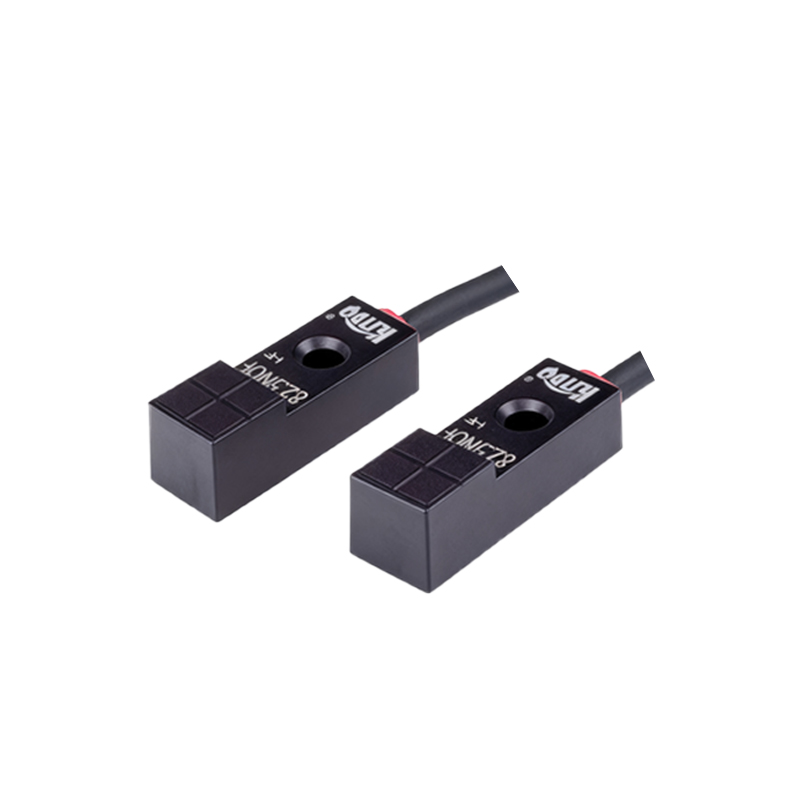
Proximity sensors designed specifically for detecting ferrous metals are fundamental components in modern industrial automation and machinery. These devices, often referred to as inductive proximity sensors, operate on a non-contact principle, offering reliability, durability, and precision in harsh environments where mechanical switches would fail. Their core function is to detect the presence or absence of ferrous objects—primarily iron and steel—without any physical contact, triggering an electrical signal for control systems.
The underlying technology is based on the principle of electromagnetic induction. Inside the sensor, an oscillator generates a high-frequency alternating magnetic field that emanates from the active face. When a ferrous metal object enters this field, eddy currents are induced on the surface of the object. This causes a measurable change in the oscillation amplitude within the sensor's coil. An evaluation circuit detects this change and switches the sensor's output state accordingly, typically from "off" to "on." Once the target object moves away, the oscillation resumes its normal state, and the output reverts.
This technology offers distinct advantages. First, the non-contact nature eliminates mechanical wear and tear, leading to an exceptionally long operational life. There is no physical force exchanged, making them ideal for high-speed counting or positioning applications. Second, they are remarkably robust. Sealed against dust, moisture, oils, and coolants, these sensors perform consistently in demanding settings like machine tools, automotive assembly lines, and material handling systems. Their insensitivity to surface conditions—whether the target is dirty, oily, or painted—further enhances reliability. Third, they provide high switching frequency and repeat accuracy, enabling precise control in automated processes.
Several key specifications define a sensor's suitability for an application. The sensing distance, or nominal range, is critical. It varies based on the sensor's size and design but is typically standardized for a reference target of mild steel. It's crucial to note that the effective sensing range can differ for other ferrous metals; for instance, stainless steel may reduce the range due to its lower permeability. The size and shape of the target also influence performance; a target smaller than the sensor's face or too thin may not be detected reliably. Environmental factors like extreme temperatures or strong adjacent electromagnetic fields must also be considered during selection and installation.
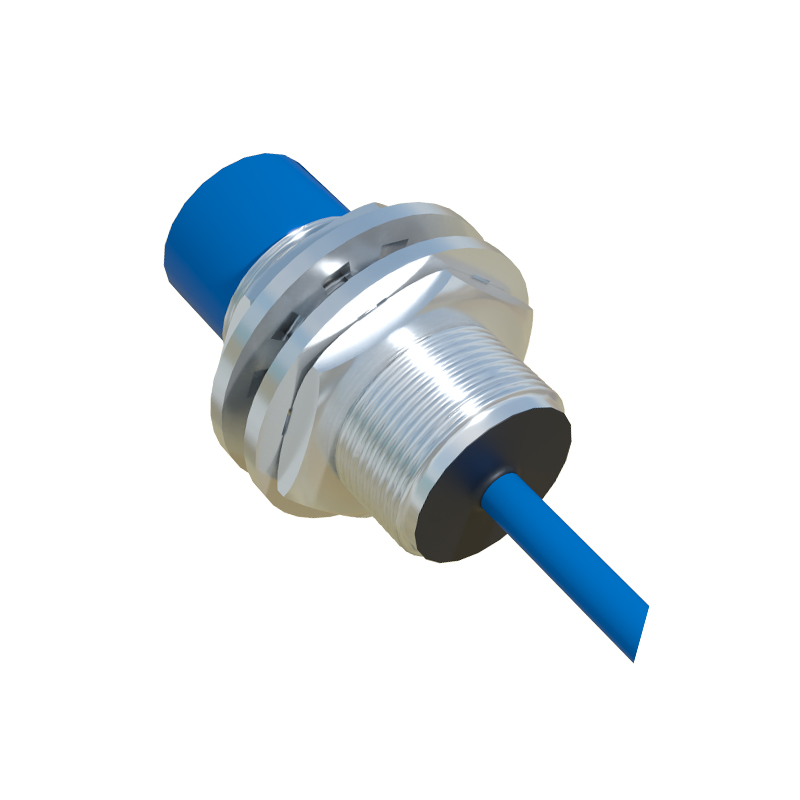
Installation is straightforward but requires attention to detail. For cylindrical sensors, flush-mounting (embedding the sensor in a metal bracket) is possible with certain models, while non-flush mount types offer longer ranges but require a clear lateral space free of surrounding metal to avoid false triggering. Proper alignment and securing are essential for consistent operation. Wiring typically follows standard conventions: brown wire for DC positive, blue for DC negative or common, and black (or another color) for the switched output signal. Always consult the manufacturer's datasheet for precise electrical connections and specifications.
The applications for ferrous metal proximity sensors are vast and integral to Industry 4.0 and smart manufacturing. They are ubiquitous as end-position detectors for cylinders, confirming whether a pneumatic or hydraulic piston has fully extended or retracted. In conveyor systems, they count metal parts, control sorting gates, and detect jams. On CNC machine tools, they serve as tool presence detectors and workpiece position verifiers. In the automotive sector, they monitor robotic weld gun positions and verify component placement. Their role in safety interlocks, such as confirming a guard door is closed before machine start-up, is also paramount.
When selecting a sensor, engineers must evaluate the specific needs of the application. Key questions include: What is the required sensing distance? What is the size and material of the target object? What is the electrical output type needed (PNP/NPN, NO/NC)? What are the environmental conditions (IP rating, temperature range)? What is the required switching frequency? Answering these ensures optimal performance and system integration.
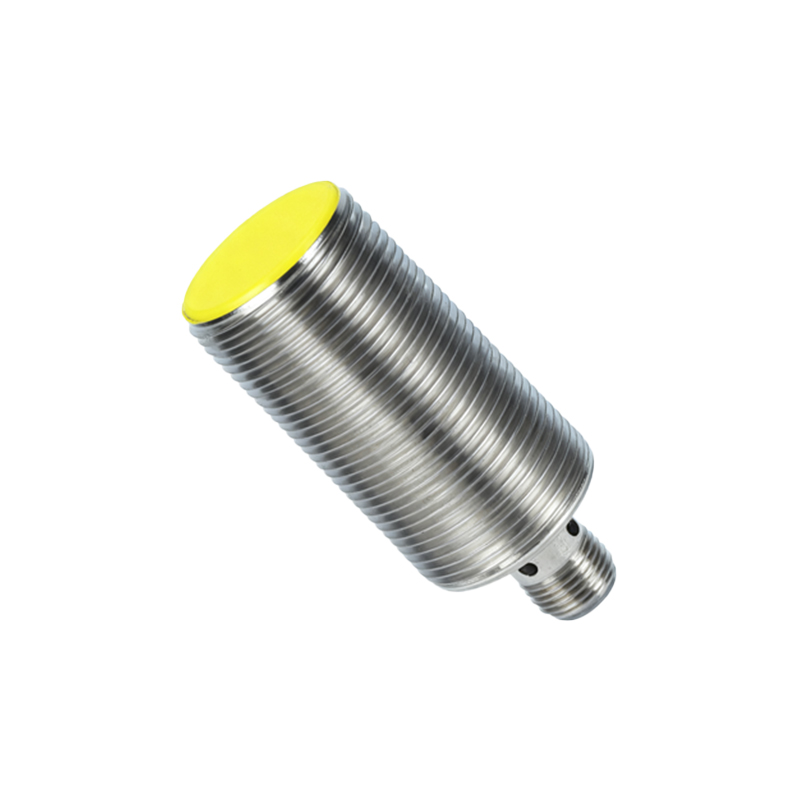
In summary, proximity sensors for ferrous metals are indispensable, high-performance tools in automation. Their ability to provide reliable, wear-free detection in challenging conditions makes them a cornerstone of efficient, safe, and intelligent industrial operations. By understanding their operating principle, key features, and application criteria, technicians and engineers can effectively implement these sensors to enhance system robustness and productivity.