Understanding Photoelectric Sensor Fundamentals
The quest to determine which photoelectric sensor is the best begins with a solid understanding of their core operating principles. At their heart, these sensors use a light emitter, typically an LED or laser diode, and a receiver to detect the presence, absence, or distance of an object. The key performance metrics that define "good" in an industrial context include sensing range, response time, environmental immunity, and reliability. The three primary types—through-beam, retro-reflective, and diffuse—each have distinct advantages. Through-beam sensors, with separate emitter and receiver units, offer the longest range and highest reliability for detection. Retro-reflective types use a reflector and are excellent for medium-range applications where aligning two separate units is impractical. Diffuse sensors, where the emitter and receiver are in the same housing and detect light reflected directly from the target, are ideal for short-range detection and are highly dependent on the target's color and surface properties.
Critical Selection Criteria for Optimal Performance
Selecting the best photoelectric sensor is never a one-size-fits-all decision; it is a calculated choice based on specific application parameters. First, consider the sensing distance required. A through-beam sensor might be the best for detecting a large object several meters away on a conveyor, while a small, precise diffuse sensor is superior for close-range positioning. Second, evaluate the target characteristics. A shiny, metallic object may require a polarized retro-reflective sensor to avoid false triggers, whereas a dark, absorbent material might need a high-powered, background suppression diffuse sensor. Third, the operating environment is paramount. Harsh conditions with dust, moisture, or vibration demand sensors with high IP (Ingress Protection) ratings, such as IP67 or IP69K. For environments with heavy washdowns in food and beverage or pharmaceutical industries, stainless-steel housings and robust sealing are non-negotiable features of a good sensor.
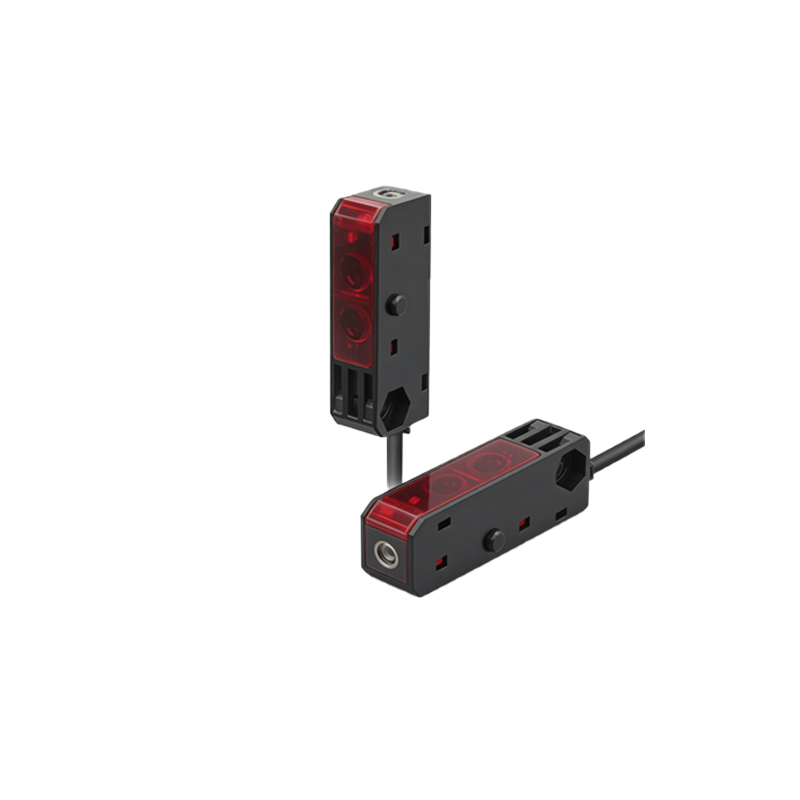
Advanced Technologies Enhancing Usability
Modern photoelectric sensors incorporate advanced technologies that significantly enhance their usability and performance, making some models stand out as exceptionally good. Background suppression technology, for instance, allows diffuse sensors to ignore objects beyond a set distance, providing precise detection regardless of color or surface. Fiber optic versions, which use flexible light guides, are excellent for sensing in extremely hot, cold, or space-constrained environments, as the sensitive electronics can be remotely located. Laser-based sensors offer extremely small, precise spot sizes for detecting tiny parts or precise edge detection. Furthermore, the integration of IO-Link communication transforms a simple sensor into a smart device, enabling remote parameter setting, condition monitoring, and diagnostic data access, which drastically reduces downtime and simplifies maintenance.
Application-Specific Recommendations
The best photoelectric sensor is ultimately defined by its application. For long-range, high-reliability object detection in material handling or packaging, a robust through-beam sensor from a reputable brand like Banner, Sick, or Omron is often the top choice. In automated assembly lines where small parts of varying colors need to be detected at close range, a convergent mode or fixed-field background suppression diffuse sensor provides consistent performance. For detecting transparent objects like glass or plastic bottles, a through-beam sensor with high-frequency modulated light is uniquely effective, as standard sensors might fail. In logistics and warehousing for parcel dimensioning or presence verification on high-speed sorters, laser distance-measuring sensors or array sensors offer the speed and accuracy required.
Balancing Cost, Durability, and Support
Beyond pure technical specifications, the definition of a "good" photoelectric sensor encompasses total cost of ownership, durability, and manufacturer support. A slightly more expensive sensor from a leading manufacturer with a global support network, extensive documentation, and a proven mean time between failures (MTBF) often proves more cost-effective than a cheaper alternative that fails prematurely. Look for sensors with features like built-in diagnostics (e.g., signal strength indicators via LED), easy mounting options, and tool-free configuration. The availability of complementary accessories—brackets, guards, fiber optic cables—also contributes to a sensor's overall usability and value proposition in a real-world industrial setting.