Introduction to Photoelectric Sensor Fundamentals
Photoelectric sensors are indispensable components in modern industrial automation, providing non-contact detection of objects based on the modulation of light. Their operation hinges on a simple yet powerful principle: a light emitter, typically an LED or laser diode, projects a beam that is either received directly, reflected off a target, or interrupted. The receiver, a phototransistor or photodiode, converts the received light intensity into an electrical signal. This fundamental mechanism allows for the detection of presence, absence, position, color, and distance with high speed and precision. The reliability of an entire automated system often rests on the correct selection and implementation of these sensors, making adherence to rigorous design standards not merely a recommendation but a critical necessity for operational safety, efficiency, and longevity.
Key Performance Parameters and Specifications
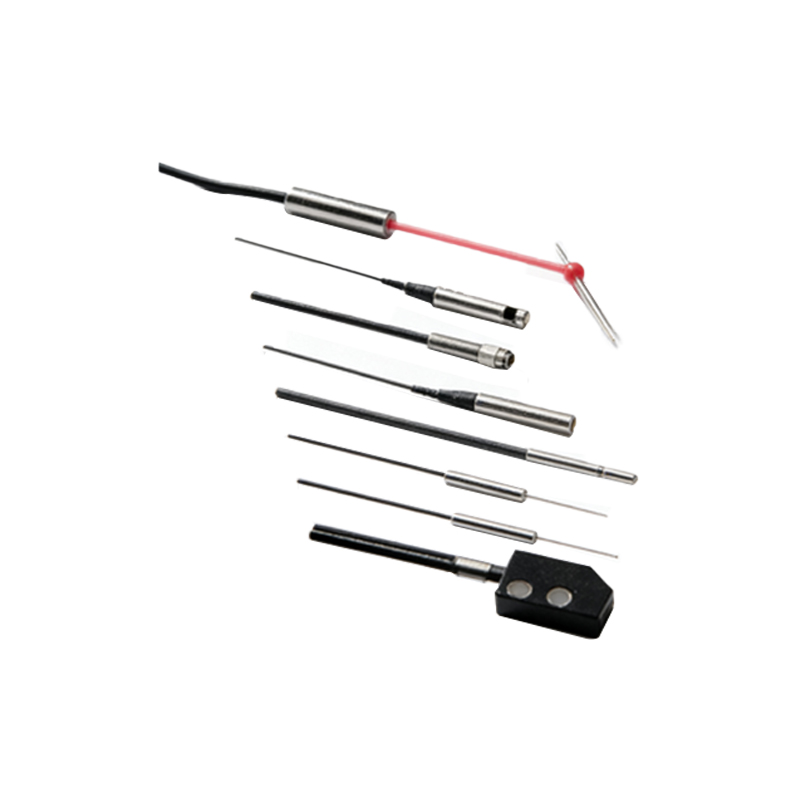
Designing or selecting a photoelectric sensor begins with a thorough understanding of its key performance parameters. Sensing range, often specified as a nominal value and a guaranteed operational limit, is paramount. For through-beam sensors, this is the maximum distance between emitter and receiver. For diffuse and retro-reflective types, it refers to the maximum distance to a standard target. Response time, measured in milliseconds or microseconds, determines the sensor's ability to detect high-speed events. Light source type (red, infrared, laser, blue) influences spot size, visibility, and material compatibility. Environmental ratings, particularly Ingress Protection (IP) codes (e.g., IP67, IP69K) and National Electrical Manufacturers Association (NEMA) ratings, define resistance to dust, water, and chemical exposure. Additionally, specifications for supply voltage, output type (PNP/NPN, analog, IO-Link), and housing material must align with the application's electrical and mechanical demands.
Optical Design and Beam Characteristics
The optical design dictates the sensor's performance envelope. Lens geometry shapes the beam, creating focused spots for precise detection or wide beams for larger target areas. Polarization filters are essential in retro-reflective models to reject false signals from shiny surfaces. The use of modulated pulsed light, as opposed to continuous light, significantly enhances immunity to ambient light interference from factory lighting or sunlight. For background suppression sensors, triangulation principles allow detection at a precise distance while ignoring objects beyond the set range. Laser-based sensors offer exceptionally small, high-intensity spots for detecting minute objects or precise edge detection. Design standards mandate clear documentation of beam patterns, divergence angles, and effective aperture sizes to ensure predictable field performance.
Electrical Interface and Circuit Protection
Robust electrical design is critical for industrial longevity. Sensors must incorporate protection against common electrical hazards. Reverse polarity protection prevents damage from incorrect wiring. Short-circuit protection on outputs safeguards both the sensor and the programmable logic controller (PLC) input. Surge suppression and transient voltage protection are vital in environments with inductive loads like motors and solenoids. For analog output sensors, design must ensure linearity, stability, and minimal drift over temperature variations. The integration of advanced communication protocols like IO-Link transforms sensors into intelligent devices, providing detailed diagnostic data, parameterization on-the-fly, and process value reporting, which elevates them from simple switches to data points within the Industrial Internet of Things (IIoT) ecosystem.
Mechanical Design and Environmental Robustness
The housing is the first line of defense. Standards dictate the use of materials such as stainless steel, nickel-plated brass, or engineered plastics like PBT or PPS, chosen for their resistance to corrosion, chemicals, and mechanical impact. The design must ensure a hermetic seal to achieve the stated IP rating, often involving specialized gaskets and potting compounds. For sensors in washdown environments (e.g., food and beverage), designs must prevent fluid ingress and withstand high-pressure, high-temperature cleaning. Mounting options, including standardized brackets and adjustable mounting heads, provide flexibility for installation. Vibration and shock resistance, tested according to IEC standards, ensure the sensor maintains alignment and functionality in demanding applications like packaging machinery or automotive assembly lines.
Application-Specific Design Considerations
Design standards are not one-size-fits-all; they must adapt to specific industry challenges. In logistics and material handling, sensors require long ranges and robust housings to detect pallets and packages. In electronics assembly, miniature sensors with precise, visible red beams are necessary for detecting tiny components. In the pharmaceutical industry, sensors often require cleanroom-compatible materials and smooth surfaces to prevent particle accumulation. For color detection applications, true-color sensors using RGB white light sources and sophisticated evaluation algorithms must be calibrated to specific tolerances. Contrast sensors, used for mark detection, require high resolution and adjustable sensitivity to differentiate between subtle differences in grayscale or color on labels or packaging.
Compliance with International Standards and Safety
Adherence to international standards is non-negotiable for global market access and safety. Key standards include IEC 60947-5-2 for proximity sensor functionality and safety, IEC 60529 for IP ratings, and IEC 60068 for environmental testing. For functional safety applications where sensor failure could lead to a hazardous situation, compliance with standards like ISO 13849 (Performance Levels) and IEC 61508/IEC 62061 (Safety Integrity Levels) is mandatory. These standards govern the design of safety-rated sensors with features like redundant outputs, cross-circuit monitoring, and proven diagnostics. Electromagnetic Compatibility (EMC) standards, such as IEC 61000-6-2 (industrial immunity) and IEC 61000-6-4 (industrial emissions), ensure the sensor operates reliably in electrically noisy environments without causing interference itself.
Testing, Validation, and Quality Assurance
A comprehensive testing regimen validates that design standards are met in production. This includes functional testing of sensing range and output under specified conditions. Environmental stress testing subjects sensors to extreme temperatures, humidity cycles, and thermal shock. Vibration and mechanical shock tests simulate years of field operation in a condensed timeframe. Ingress protection testing involves dust chambers and water jets. Long-term reliability testing, including accelerated life testing, provides data on mean time between failures (MTBF). Quality assurance processes, often following ISO 9001 guidelines, ensure consistency and traceability from component sourcing to final assembly, guaranteeing that every sensor shipped performs as specified in its datasheet under the promised operating conditions.