Proximity sensors are fundamental components in modern industrial automation, robotics, and smart systems. This teaching plan outlines a structured approach to educate students or trainees on the principles, types, applications, and practical handling of these critical devices. The goal is to move from theoretical understanding to hands-on competency.
The course begins by establishing a clear definition. A proximity sensor is a non-contact electronic device that detects the presence or absence of an object within a specified range without physical contact. Its core function is to convert information about the presence, position, or movement of an object into an electrical signal. The advantages over mechanical limit switches—namely, no physical wear, higher switching speeds, and reliability in harsh environments—are emphasized from the start.
A major module is dedicated to exploring the primary types of proximity sensors, categorized by their underlying detection technology. Inductive proximity sensors form the first in-depth study. They generate an electromagnetic field and detect the eddy current losses caused by metallic targets. Key teaching points include their operation range (typically up to 60mm), immunity to non-metallic materials, and common applications like counting metal parts, detecting piston position in cylinders, or machine tool positioning. The discussion covers factors influencing sensing distance, such as target material, size, and shape.
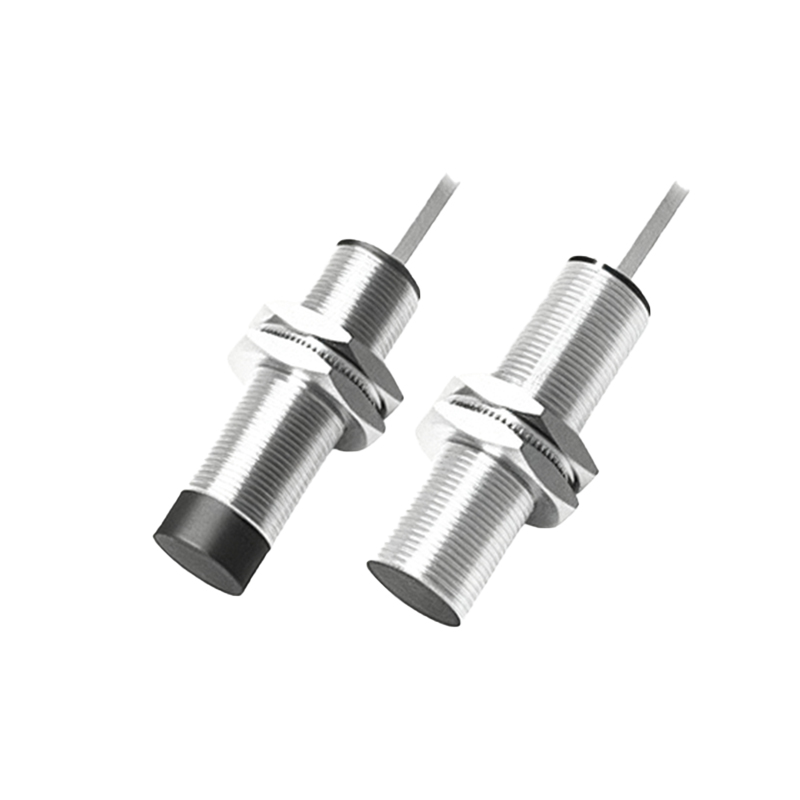
Next, capacitive proximity sensors are examined. These sensors detect both metallic and non-metallic materials (plastics, wood, liquids, granules) by measuring changes in capacitance. The lesson explains how the sensor forms one plate of a capacitor, with the target object forming the other. This makes them ideal for applications like fill level detection in tanks, paper or glass break detection, and presence sensing of packaged goods. Their sensitivity adjustment to ignore containers and sense contents is a crucial practical detail.
The third core type is the photoelectric sensor, often grouped under proximity sensing. The curriculum breaks down its three main configurations: through-beam (separate emitter and receiver), retro-reflective (with a reflector), and diffuse (reflective). Students learn to select the appropriate type based on required sensing distance, environmental conditions (dust, fog), and target characteristics. Applications range from conveyor belt object detection to high-precision positioning.
Ultrasonic proximity sensors round out the primary types. Using sound waves beyond human hearing, they measure the time-of-flight of an echo to determine distance. Their ability to detect virtually any material, regardless of color or transparency, and to operate in challenging environments (dust, steam) is highlighted. Typical uses include bulk material level control, collision avoidance in AGVs, and loop control in winding machines.
The theoretical section concludes with a comparison chart, guiding students on selecting the right sensor based on target material, required sensing distance, environmental factors, output type (PNP/NPN, NO/NC), and connection methods (2-wire, 3-wire, 4-wire).
The practical, hands-on portion of the plan is equally critical. It involves a series of lab exercises. Students first learn to correctly wire different sensor types to a programmable logic controller (PLC) or a simple relay circuit, paying close attention to sourcing (PNP) vs. sinking (NPN) configurations. A series of mounting and alignment exercises teach the importance of avoiding sensor flush-mounting in metal, maintaining proper clearance zones, and aligning optical/ultrasonic sensors correctly to prevent false triggers.
Diagnostic and troubleshooting scenarios form a key competency. Trainees practice interpreting indicator LEDs, diagnosing common issues like wiring errors, insufficient sensing distance, electrical noise interference, and sensor contamination. They learn calibration procedures for adjusting sensitivity and hysteresis to ensure stable switching.
Finally, the plan integrates the sensors into mini-projects. Examples include designing a simple parts sorting station using inductive and capacitive sensors, creating a bottle counting system on a simulated conveyor with photoelectric sensors, or programming a small robotic arm with ultrasonic sensors for obstacle detection. Assessment is based on a combination of written tests on principles, lab performance reports, and the successful demonstration of a final integrated project. This comprehensive approach ensures learners gain not just knowledge, but the practical skills demanded in automation and maintenance roles.