Introduction to Photoelectric Sensor Leveling
Achieving precise leveling is a fundamental requirement in countless industrial automation and manufacturing processes. Photoelectric sensors, renowned for their accuracy, non-contact operation, and versatility, are frequently employed for this critical task. Proper leveling ensures product quality, prevents machinery damage, and maintains consistent production flow. This article delves into the core principles, methodologies, and practical considerations for effectively utilizing photoelectric sensors in leveling applications, providing a comprehensive guide for engineers and technicians.
Fundamental Operating Principles
Photoelectric sensors function by emitting a beam of light—often visible red, laser, or infrared—and detecting changes in the received light signal. For leveling purposes, the key principle is the detection of the presence, absence, or precise position of a target object relative to a reference point. The sensor's output signal changes state when the light beam is interrupted (in retro-reflective or through-beam modes) or when the reflected light from the target reaches a specific intensity (in diffuse reflective mode). This binary or analog change is interpreted by a controller to determine if a surface or object is level or requires adjustment.
Primary Sensor Types for Leveling Tasks
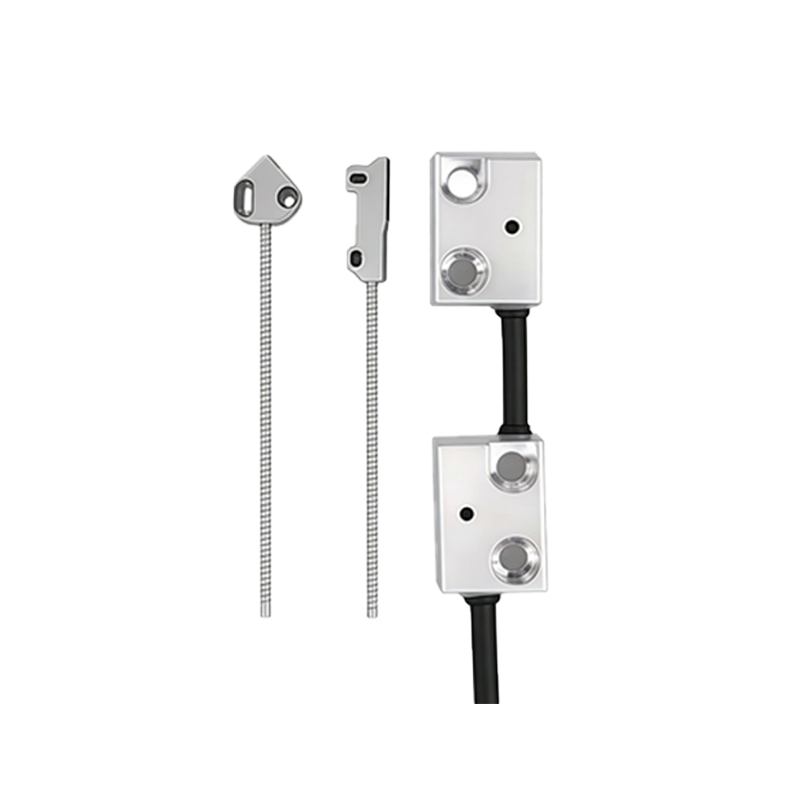
Selecting the appropriate sensor type is crucial for successful leveling. Through-beam sensors, with separate emitter and receiver units, offer the longest sensing ranges and highest accuracy, ideal for detecting the edge or height of objects on a conveyor. Retro-reflective sensors, which use a reflector, provide a good balance of range and ease of installation for medium-distance applications. Diffuse reflective sensors, which detect light reflected directly from the target, are suitable for shorter ranges and are commonly used for detecting the presence or absence of material to infer level, such as in bin filling. Laser displacement sensors, a subtype of diffuse sensors, provide precise analog distance measurements, enabling highly accurate continuous level monitoring.
Key Leveling Techniques and Setups
Several standard techniques are employed. The two-sensor differential method involves mounting two identical sensors at a known distance apart, aimed at a reference surface. Any tilt in the surface causes a differential change in the received signal between the two sensors, which can be calculated to determine the angle of misalignment. Single-sensor edge detection is used to ensure objects are positioned flat by verifying that a specific edge or feature is at the correct height. For continuous monitoring of material levels in tanks or hoppers, a sensor is mounted above the material surface, and the time-of-flight or triangulation principle (in laser sensors) is used to measure the distance to the material, thereby calculating the fill level.
Critical Installation and Alignment Factors
Precise mechanical installation is paramount. The sensor must be securely mounted to prevent vibration-induced misalignment. For through-beam and retro-reflective types, perfect optical alignment between the emitter, receiver, and/or reflector is essential; even minor misalignment can cause unreliable operation. The sensing beam should be perpendicular to the target surface for accurate distance measurement. Environmental factors such as ambient light, dust, fog, or target color and reflectivity must be carefully evaluated. Using sensors with modulated LED light and background suppression technology can mitigate interference from ambient light and varying surface properties.
Calibration and Signal Processing
After installation, calibration is necessary to establish the "level" reference point. This often involves positioning a master reference object or surface and teaching the sensor its position. For analog sensors, scaling the output (e.g., 4-20mA or 0-10V) to correspond to a specific measurement range is required. Signal conditioning, such as hysteresis setting, is vital to prevent output chatter when the target is near the detection threshold. Integrating timers and logic functions in the PLC or controller can filter out transient signals and provide a stable, reliable leveling signal for actuating correction mechanisms like leveling feet or hydraulic pistons.
Troubleshooting Common Leveling Issues
Common problems include false triggers, missed detections, and drifting measurements. False triggers often stem from reflective backgrounds, optical misalignment, or electrical noise. Using polarized filters or sensors with precise background suppression can help. Missed detections may be due to dirty lenses, insufficient sensing range, or a highly absorbent target material. Regular maintenance and selecting a sensor with excess power reserve are countermeasures. Measurement drift can occur due to temperature fluctuations affecting electronic components or mechanical mounting instability. Choosing sensors with temperature compensation and ensuring robust mounting are effective solutions.
Advanced Applications and Integration
Beyond basic on/off leveling, photoelectric sensors are integrated into sophisticated systems. In CNC machining and 3D printing platforms, laser sensors provide real-time feedback for automatic bed leveling. In automated assembly lines, arrays of sensors perform multi-point plane verification for large components. Integration with Industrial IoT platforms allows for predictive maintenance, where sensor performance data trends can indicate the need for recalibration or replacement before a failure causes downtime. The combination of photoelectric sensing with robotic actuators enables fully automated leveling and alignment correction cycles.
Conclusion and Best Practices Summary
Effective photoelectric sensor leveling hinges on a methodical approach: clearly define the leveling tolerance and required accuracy; select the optimal sensor type and technology for the environment and target; ensure precise and stable mechanical and optical installation; perform thorough calibration and signal conditioning; and implement a routine maintenance and verification schedule. By adhering to these principles and leveraging the advanced features of modern photoelectric sensors, engineers can build robust, reliable, and highly accurate leveling systems that enhance quality and productivity across diverse industrial landscapes.