Introduction to Proximity Sensing Technology
Proximity switches, specifically inductive sensors, are fundamental components in modern industrial automation. They provide non-contact detection of metallic objects, offering high reliability, long operational life, and resistance to harsh environmental conditions. Among the various configurations available, the 3-wire PNP type with an 8mm sensing distance represents one of the most common and versatile solutions for a wide range of applications. This design balances a compact form factor with a sufficient sensing range for detecting small to medium-sized machine parts, tools, and actuators. The principle of operation is based on generating an electromagnetic field; when a metallic target enters this field, it causes a change in oscillation amplitude, which is then processed by the internal circuitry to switch the output state.
Decoding the 3-Wire PNP Configuration
The "3-wire PNP" designation is critical for proper integration and wiring. A 3-wire sensor requires a DC power supply, typically 10-30V DC. The three wires are color-coded: brown for positive supply voltage (V+), blue for common negative (0V), and black for the switched output signal. In a PNP (sourcing) configuration, the black output wire acts as a switch that sources current from the positive supply to the load. When the sensor detects a target, it connects the black wire to the internal positive voltage, providing a "high" signal to the connected device, such as a PLC input, relay, or indicator lamp. This is in contrast to an NPN (sinking) configuration, which switches the negative side. Understanding this distinction is paramount for ensuring compatibility with control system inputs.
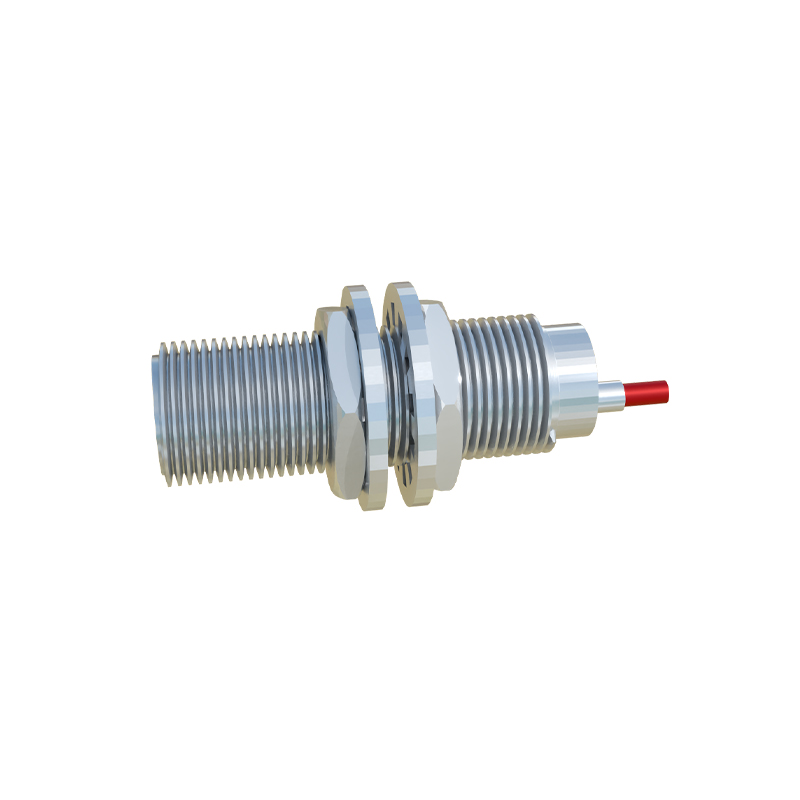
Key Specifications of the 8mm Sensing Range
The 8mm nominal sensing distance, often referred to as the "Sn" value, is a defining characteristic. This distance is calibrated for a standard mild steel target of a specified size. It is crucial to note that the sensing range can vary for different metals; for instance, stainless steel may reduce the effective range, while copper or aluminum reduces it further. The 8mm range is ideal for applications requiring precise positioning without physical contact, such as verifying the presence of a piston in a cylinder, counting parts on a conveyor, or serving as an end-of-travel limit switch. Factors like embeddable vs. non-embeddable mounting, temperature fluctuations, and supply voltage tolerance can influence the real-world sensing performance and must be considered during design.
Wiring and Installation Best Practices
Correct installation is essential for optimal performance and longevity. Always disconnect power before wiring. Connect the brown wire to the positive DC terminal and the blue wire to the negative terminal. The black output wire connects to the load, which is then connected back to the negative terminal. For inductive loads like relays or solenoids, use a protective flyback diode across the load to suppress voltage spikes. Mounting is equally important; ensure the sensor is securely fastened, and maintain the specified lateral and axial clearance from metal mounting surfaces and other sensors to prevent mutual interference. The sensing face must be kept clean from debris, oil, or metal chips that could cause false triggering or reduced range.
Application Examples in Industrial Automation
The robustness of the 3-wire PNP 8mm proximity switch makes it suitable for diverse sectors. In automotive assembly lines, they detect the position of robotic arms or verify component placement. In packaging machinery, they count bottles or boxes on a moving belt. Within CNC machining centers, they serve as tool presence detectors or door interlock safety sensors. Their sealed housings (often rated IP67 or higher) allow reliable operation in environments with coolants, dust, or light washdowns. The fast switching speed, often in the kilohertz range, enables high-speed counting and positioning tasks that would be impossible for mechanical limit switches.
Troubleshooting Common Operational Issues
Even with proper installation, issues may arise. If the sensor fails to detect a target, verify the power supply voltage and polarity. Check for the correct metal type and ensure the target is within the 8mm range. An oscilloscope can be used to monitor the output signal on the black wire. If the output is constantly on, there may be metal debris adhered to the sensing face or an incorrect grounding scheme. Intermittent operation can point to loose wiring connections, electrical noise from nearby motors or drives, or an unstable power supply. Always consult the manufacturer's datasheet for specific diagnostic LED indicators and technical specifications to guide the troubleshooting process.
Selection Criteria and Future Trends
When selecting a 3-wire PNP 8mm