Proximity sensors are widely used in industrial automation, consumer electronics, and safety systems due to their ability to detect the presence or absence of an object without physical contact. Understanding the working principle of these sensors is essential for selecting the right type for a specific application. This article explains the fundamental operating mechanisms behind common proximity sensor technologies.
The core function of a proximity sensor is to emit a field or beam and detect changes in that field caused by a target object. Based on the underlying technology, proximity sensors are primarily categorized into inductive, capacitive, ultrasonic, and photoelectric types. Each type operates on a distinct physical principle.
Inductive proximity sensors are designed to detect metallic objects. They contain a coil wound around a ferrite core, which forms part of an oscillator circuit. When an alternating current passes through the coil, it generates an oscillating electromagnetic field around the sensor's active face. When a metallic object enters this field, eddy currents are induced on the surface of the object. These eddy currents draw energy from the oscillator, causing a reduction in the oscillation amplitude. The sensor's detection circuit monitors this amplitude change. Once the amplitude drop exceeds a predefined threshold, the sensor's output state switches, signaling the presence of the object. Inductive sensors are robust, unaffected by non-metallic materials like dust or liquids, and are ideal for harsh industrial environments involving metals.
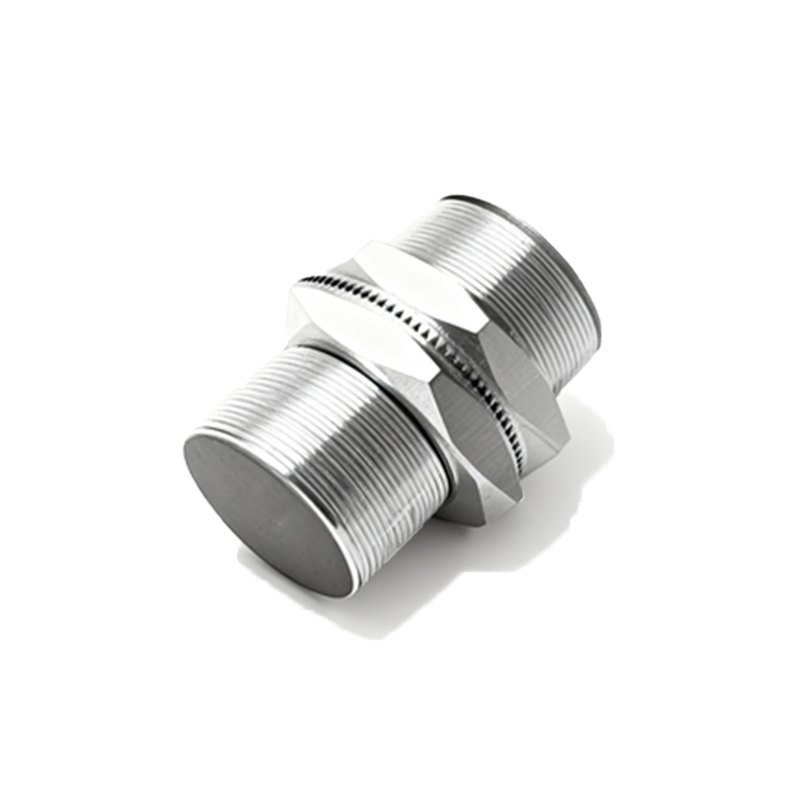
Capacitive proximity sensors can detect both metallic and non-metallic materials, including liquids, plastics, wood, and granular substances. They operate by generating an electrostatic field. The sensor's active surface acts as one plate of a capacitor, with the target object acting as the other plate. The air gap between them serves as the dielectric. As an object approaches the sensor, the capacitance of the system increases because the dielectric constant changes (the object's material replaces some of the air). An internal oscillator circuit is tuned to trigger at a specific capacitance level. When the approaching object causes the capacitance to reach this threshold, the oscillator begins to oscillate. This oscillation is then converted into a digital signal that changes the output state. Sensitivity adjustments allow these sensors to ignore certain materials or detect through thin non-metallic containers.
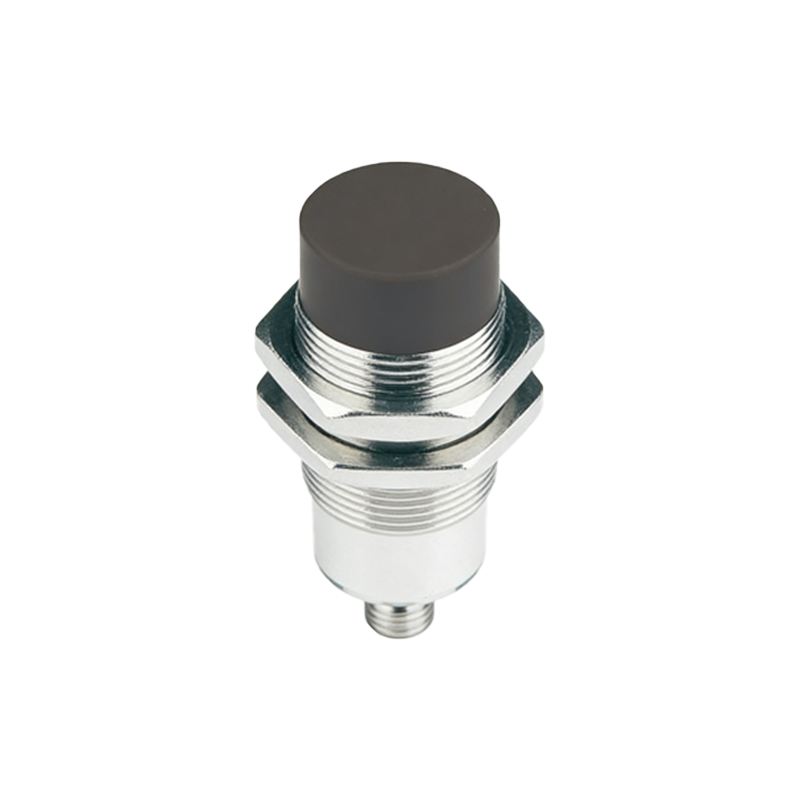
Ultrasonic proximity sensors measure distance or detect objects using sound waves beyond the human hearing range (typically 40-200 kHz). They consist of a transmitter that emits high-frequency ultrasonic pulses and a receiver that listens for the echo. The sensor calculates the time interval between pulse emission and echo reception, known as the time-of-flight. This time is directly proportional to the distance to the target object. For simple presence detection, a threshold distance is set. Ultrasonic sensors are effective for detecting objects of various materials, colors, and surface properties, and they perform well in environments with dust, smoke, or light interference. However, they can be affected by temperature variations and soft, sound-absorbing materials.
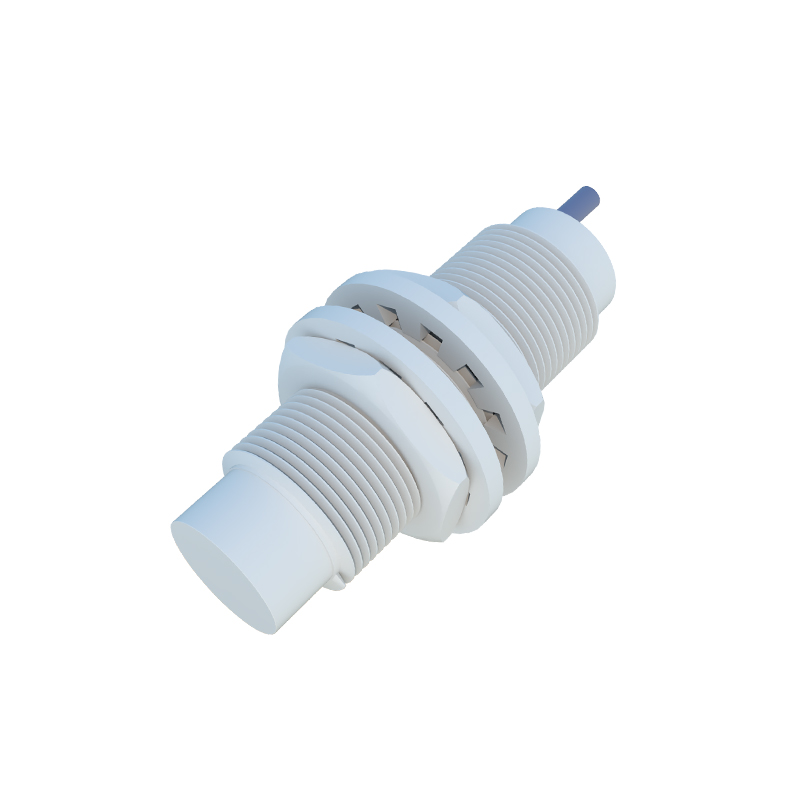
Photoelectric proximity sensors use light to detect objects. They comprise a light emitter (usually an LED producing visible red, infrared, or laser light) and a photodetector (like a phototransistor). There are three main operating modes. The through-beam (or opposed) mode has separate emitter and receiver units placed opposite each other. Detection occurs when the object interrupts the light beam. The retro-reflective mode uses a single unit with both emitter and receiver, along with a reflector. The object is detected when it blocks the reflected light beam. The diffuse (or proximity) mode relies on the reflection of light from the object itself. The emitter and receiver are housed together, and the sensor detects light scattered back from the target. The detection circuit triggers when the received light intensity crosses a set level. Photoelectric sensors are versatile and can detect small objects over long distances but may be influenced by ambient light, color, and surface reflectivity.
In summary, the choice of proximity sensor depends on the target material, required sensing distance, environmental conditions, and application precision. Inductive sensors are best for metals, capacitive for diverse materials including liquids, ultrasonic for challenging environments and distance measurement, and photoelectric for high-speed or long-range detection. By leveraging these non-contact principles, proximity sensors enable reliable automation, enhance safety, and improve efficiency across countless modern systems.