Introduction to L-Type Inductive Proximity Sensors
Inductive proximity sensors of the L-type, characterized by their elongated, rectangular form factor, are fundamental components in modern industrial automation. These non-contact sensors operate on the principle of electromagnetic induction to detect the presence of metallic objects. When a metal target enters the sensor's oscillating electromagnetic field, eddy currents are induced on the target's surface. This causes a change in the oscillation amplitude within the sensor's coil, which is then processed by an internal circuit to trigger a solid-state output signal. The L-type design, often resembling a small rectangular block, is engineered for applications where space constraints are critical, particularly in machine tools, material handling systems, and automated assembly lines. Its shape allows for easy mounting in tight spaces where cylindrical sensors might not fit, offering designers greater flexibility in system layout. The robust construction typically involves a housing made of nickel-plated brass or stainless steel, ensuring high resistance to mechanical impacts, coolant fluids, and metallic chips commonly found in harsh industrial environments.
Key Technical Specifications and Operating Principles
The performance of an L-type inductive sensor is defined by several critical parameters. The sensing range, or nominal switching distance (Sn), is a primary specification. For standard L-type models, this typically ranges from 1 to 15 millimeters, depending on the target material. It is crucial to note that the effective sensing distance varies with the target metal; for instance, steel (Fe37) is the reference material with a factor of 1.0, while stainless steel may have a reduction factor of 0.7 to 0.9, and non-ferrous metals like copper or aluminum can have factors as low as 0.3 to 0.4. The sensor's operating frequency, indicating how many switching cycles it can perform per second, is vital for high-speed applications. Modern L-type sensors can achieve frequencies up to 5 kHz, enabling reliable detection in fast-moving production processes. Other essential specifications include the supply voltage range (commonly 10-30V DC or 20-250V AC/DC for universal models), output configuration (PNP/NPN, NO/NC), and the degree of protection offered by the housing, typically rated at IP67 or IP69K for resistance to dust and high-pressure water jets.
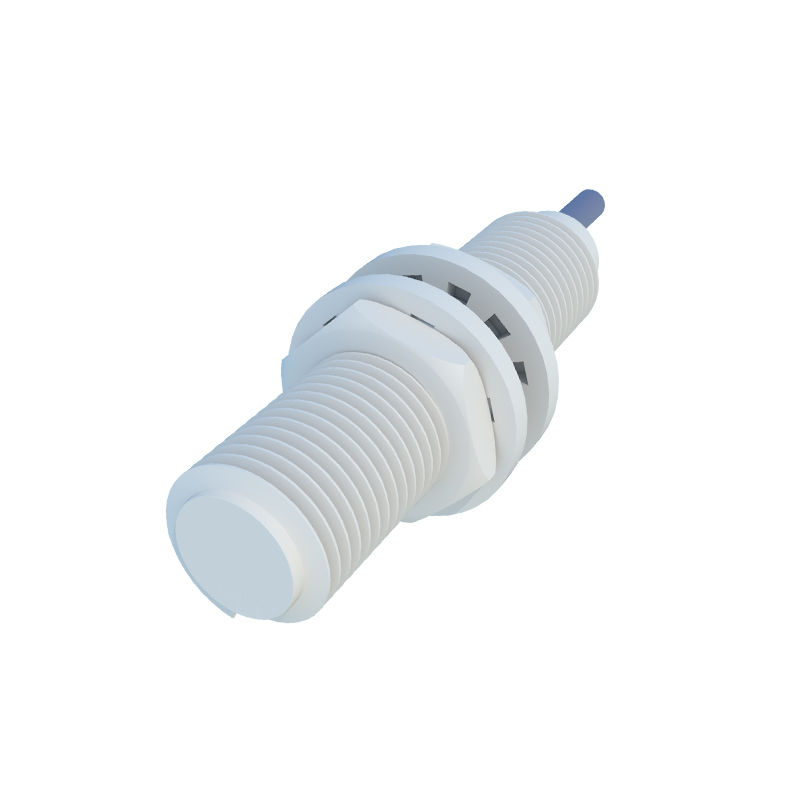
Advantages Over Cylindrical Sensor Designs
The distinct rectangular shape of the L-type sensor provides several operational advantages. The flat sensing face allows for a more precise and repeatable detection point, which is beneficial for applications requiring accurate positioning. Its form factor enables side-by-side mounting without mutual interference, a common challenge with cylindrical sensors that require specific minimum spacing. The mounting process is often simpler, utilizing standard brackets or direct bolt-on installation via threaded holes on the housing. This design also allows for the incorporation of multiple sensing elements or advanced diagnostics, such as IO-Link communication, within a compact package. The LED status indicator is usually prominently positioned for easy visual inspection from multiple angles, aiding in quick troubleshooting and maintenance. Furthermore, the elongated body can sometimes house a larger coil, potentially offering a slightly extended sensing range compared to a cylindrical sensor of similar volume, enhancing detection capabilities in space-limited setups.
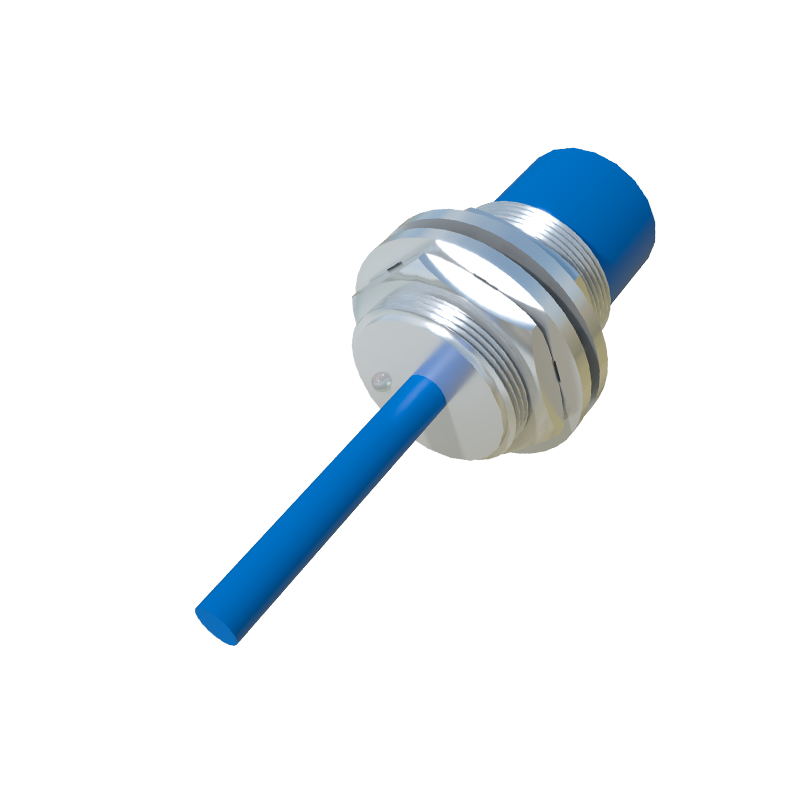
Typical Application Scenarios in Industry
L-type inductive proximity sensors find extensive use across diverse industrial sectors. In metalworking and CNC machining centers, they are employed for tool presence verification, monitoring slide positions, and detecting the open/closed status of chuck jaws or pallet changers. Their flat profile is ideal for integration into the narrow slots of linear guides or tool magazines. Within automated packaging machinery, these sensors monitor the position of metallic components on chains, verify the presence of foil lids or metallic labels, and control the indexing of conveyor systems. In the automotive industry, they are integral to robotic welding cells, detecting fixture positions and confirming the placement of metal sub-assemblies before a weld cycle begins. Material handling systems, such as automated storage and retrieval systems (AS/RS), utilize L-type sensors for cart positioning and load presence detection on metallic forks or lifts. Their robustness makes them suitable for harsh environments like foundries or stamping plants, where they reliably operate despite exposure to vibration, heat, and particulate contamination.
Installation Considerations and Best Practices
Correct installation is paramount for optimal sensor performance and longevity. Designers must first ensure that the selected sensor's sensing range and material factor are appropriate for the target. The sensor should be mounted securely to minimize vibration, which can cause false triggering or physical damage. It is critical to maintain the recommended lateral and axial spacing from other metal objects, including the mounting bracket itself, to prevent the shielding effect, which can