In the seamless dance of modern automation and smart interaction, there exists a silent, unseen actor. It doesn't make a sound, rarely has a visible form, yet its role is absolutely critical. This is the proximity sensor, a fundamental component that has evolved from simple industrial tools to the cornerstone of intuitive user experiences and sophisticated machine operations.
At its core, a proximity sensor is a device that detects the presence or absence of an object within a specific range without any physical contact. It does this by emitting a field or a beam of electromagnetic radiation, often infrared light, or by creating an electromagnetic field. When an object enters this designated zone, it causes a detectable change in the signal, which the sensor's circuitry interprets as "presence." This simple principle belies its profound utility.
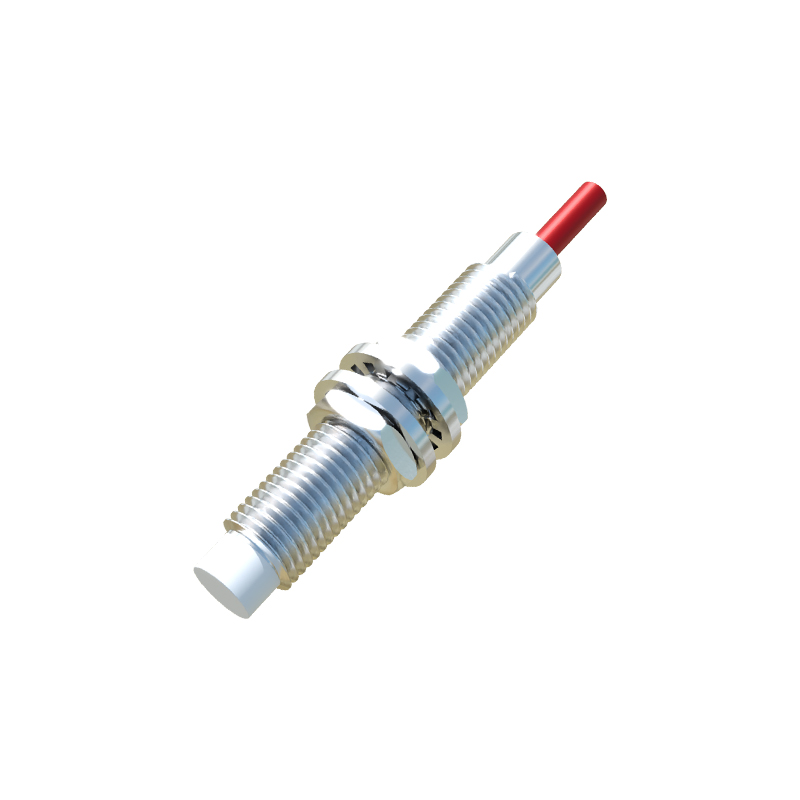
The technological landscape of proximity sensors is diverse, with each type suited to particular applications. Inductive sensors are the workhorses of heavy industry, detecting metallic objects with unwavering reliability in the grime of manufacturing plants. Capacitive sensors, on the other hand, can detect a wider range of materials, including liquids and plastics, making them ideal for level sensing in tanks or touch-sensitive interfaces. Ultrasonic sensors use sound waves to measure distance and are excellent for challenging environments with dust or vapor, commonly found in parking assist systems. Photoelectric sensors, utilizing light beams, offer long-range detection and are staples in packaging lines and automated doors.
The applications are as ubiquitous as they are varied. In the industrial realm, they are indispensable for tasks like object counting, jam detection, and precise positioning on assembly lines, ensuring both efficiency and safety by halting machinery when a hand ventures too close. The automotive industry relies on them extensively; from the parking sensors that beep reassuringly as you reverse, to the systems that automatically unlock doors as you approach with the key fob.
Perhaps the most familiar interaction for the average person is with their smartphone. The small black dot near the earpiece is a proximity sensor. During a call, it senses when the phone is held to your face and turns off the display to prevent accidental cheek-presses, conserving battery life in the process. This small feature exemplifies how the sensor enables intuitive, "human" design.
Looking forward, the role of proximity sensing is only expanding. In the burgeoning Internet of Things (IoT), these sensors provide the essential contextual awareness that allows devices to react to their environment intelligently. Smart homes use them to activate lighting as you enter a room, while advanced robotics employ arrays of sensors for navigation and object manipulation. The development of more miniaturized, energy-efficient, and accurate sensors, including those based on Time-of-Flight (ToF) technology for precise 3D mapping, is pushing the boundaries further.
Despite their silent operation, the importance of proximity sensors cannot be overstated. They bridge the gap between the physical and digital worlds, providing the critical data point of "something is there." They enhance safety, optimize processes, and create seamless, frustration-free interactions between humans and machines. As technology continues to weave itself more deeply into the fabric of daily life, these invisible guardians will remain at the forefront, quietly enabling a more responsive and automated world.