Fundamental Operating Principles
The core distinction between capacitive proximity sensors and Hall effect sensors lies in their underlying physics. A capacitive proximity sensor functions by generating an electrostatic field. When a target object enters this field, it alters the sensor's capacitance. This change is detected by an internal oscillator circuit, which then triggers a switching output. Crucially, capacitive sensors can detect a wide range of materials, including metals, plastics, liquids, and granular substances, as long as the target has a dielectric constant different from air. In contrast, a Hall effect sensor operates on a magnetoelectric principle. It contains a semiconductor element through which a constant current flows. When exposed to an external magnetic field, the Lorentz force deflects the charge carriers, generating a measurable voltage difference perpendicular to both the current and the field. This output voltage is proportional to the strength of the magnetic field, making Hall sensors specifically reactive to magnetic stimuli.
Target Detection and Material Considerations
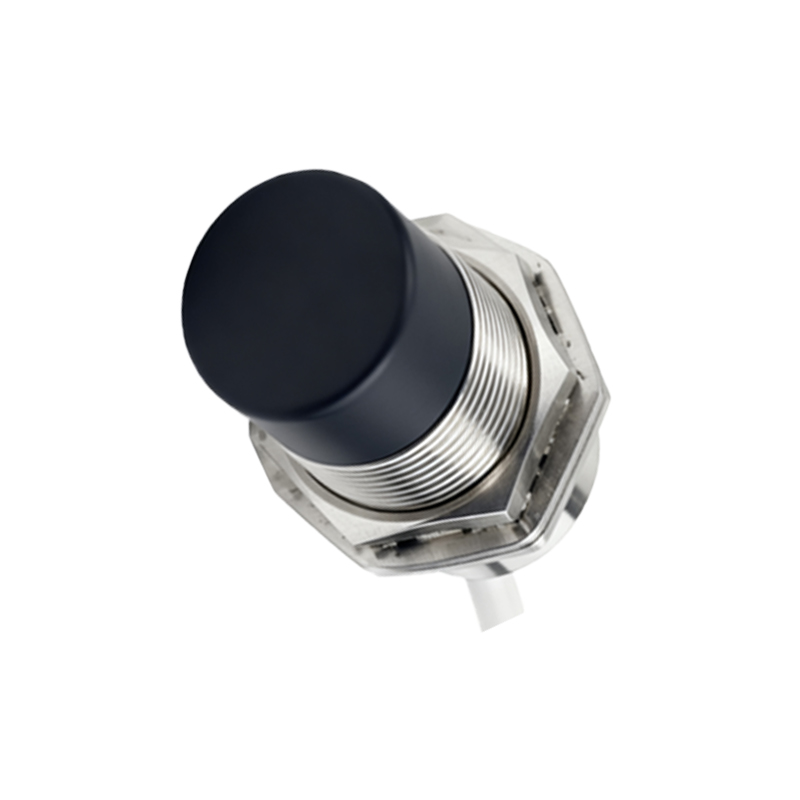
Material compatibility is a primary selection criterion. Capacitive sensors excel in versatility. They are ideal for non-contact detection of non-metallic objects where other sensor types fail, such as monitoring plastic bottle levels, detecting wood or glass panels, or sensing powder levels in a hopper. Their sensitivity is often adjustable to compensate for different material properties or to ignore background interference. Hall effect sensors, however, are inherently designed to detect magnetic fields. Their primary target is a permanent magnet or an electromagnet. They are commonly used to sense the position of a magnet embedded in a piston rod, the rotation of a gear with magnetic teeth, or the open/closed status of a door with a magnetic reed. They do not directly detect ferrous metals unless a magnet is attached.
Environmental and Operational Factors
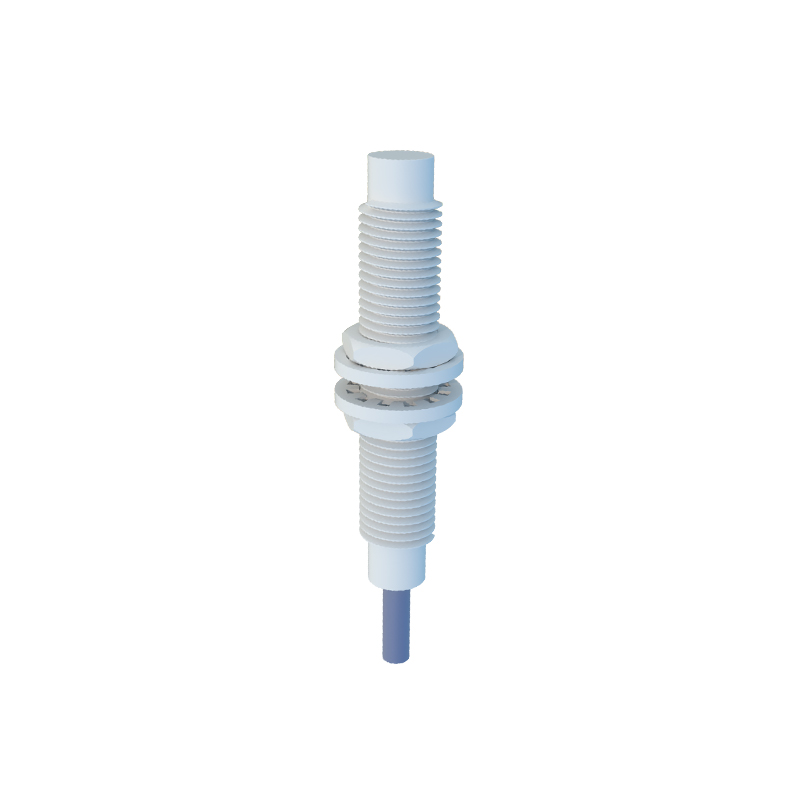
Environmental robustness varies significantly. Capacitive sensors can be susceptible to factors that change the dielectric constant around them. Contaminants like dust, moisture, or oil films on the sensor face can cause false triggering if not properly accounted for. They are also influenced by extreme humidity changes. Modern designs with robust housing and compensation electrodes mitigate these issues. Hall effect sensors are solid-state devices with no moving parts, offering high reliability and longevity. They are immune to dust, oil, and moisture (provided the housing is sealed) and can operate in dirty environments. However, they can be affected by strong external magnetic fields or high temperatures, which may degrade the semiconductor's performance or saturate the signal.
Output Characteristics and Electrical Interface
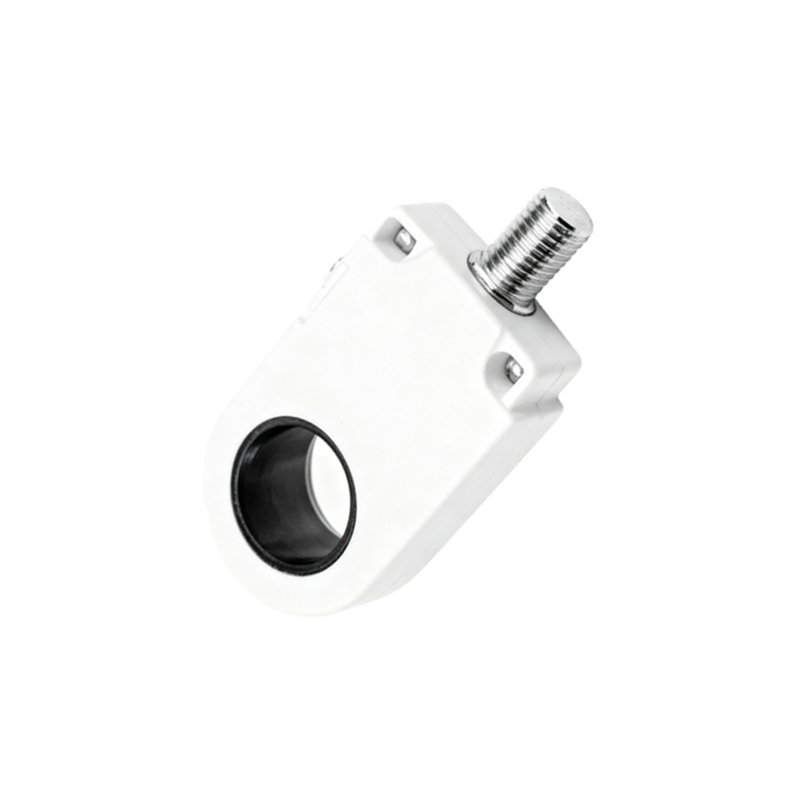
Both sensor families offer digital (switching) and analog (proportional) output variants. Digital capacitive sensors provide a simple ON/OFF signal when a target enters the sensing range. Analog capacitive sensors output a continuous signal proportional to the distance to the target, useful for level sensing or precision positioning. Similarly, digital Hall switches (like latch or switch types) change state in the presence of a specific magnetic field threshold. Linear Hall sensors provide a voltage output that varies linearly with the magnetic field strength, enabling precise measurement of displacement or current (in conjunction with a current-carrying conductor). Electrical interfaces typically include DC (PNP/NPN) and AC/DC models, with many offering short-circuit and reverse polarity protection.
Typical Application Scenarios in Industry
Application landscapes highlight their complementary roles. Capacitive proximity sensors are workhorses in packaging, food and beverage, and chemical processing. They detect fill levels of liquids or granular materials in non-metallic tanks, control presence detection of plastic caps on conveyor lines, and sense the position of composite materials. Hall effect sensors dominate in motion control and automotive applications. They are integral to brushless DC motor commutation, providing precise rotor position feedback. They function as speed sensors for rotating shafts (using a magnetic encoder wheel), as current sensors by measuring the field around a conductor, and as position sensors in automotive transmissions and throttle pedals.
Key Selection Guidelines for Engineers
Selecting the appropriate sensor requires a systematic approach. First, identify the target material. For non-metals, liquids, or varied materials, a capacitive sensor is likely necessary. For detecting the presence or position of a magnetic field, choose a Hall sensor. Second, evaluate the operating environment. Consider contaminants, temperature ranges, and potential electromagnetic interference. Third, define the required output: simple detection, analog measurement, or speed sensing. Finally, consider mechanical constraints like required sensing distance, mounting style, and housing material. Capacitive sensors often have shorter ranges than inductive counterparts but are unmatched for non-metals. Hall effect sensing ranges depend on magnet strength and alignment.