Proximity sensors are ubiquitous in today's automated world, silently performing critical tasks from preventing elevator door accidents to enabling smartphone screen blanking. But how exactly do these devices trigger? The process is a fascinating interplay of physics, electronics, and precise engineering, devoid of physical contact.
At its core, a proximity sensor triggers when it detects the presence or absence of a target object within a specified detection range. This "triggering" is the moment the sensor's output state changes, typically switching a digital signal from HIGH to LOW or vice-versa, or altering an analog signal's voltage. The mechanism behind this detection varies significantly by sensor type.
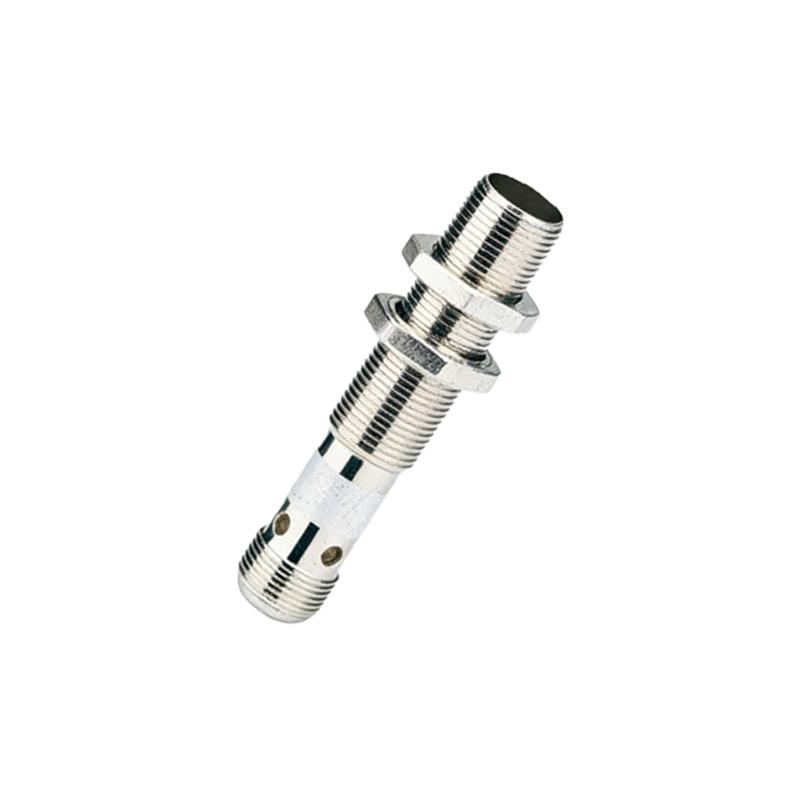
Inductive proximity sensors are workhorses in industrial settings for detecting metallic objects. They contain a coil fed by an oscillator to generate a high-frequency electromagnetic field at the sensing face. When a metal target enters this field, eddy currents are induced on the metal's surface. These currents draw energy from the oscillator, damping its amplitude. An integrated circuit monitors this oscillation level. Once the damping reaches a threshold—corresponding to the target being within the nominal sensing distance—the circuit triggers, switching the output state. The sensor remains triggered as long as the metal is within range and resets once it leaves.
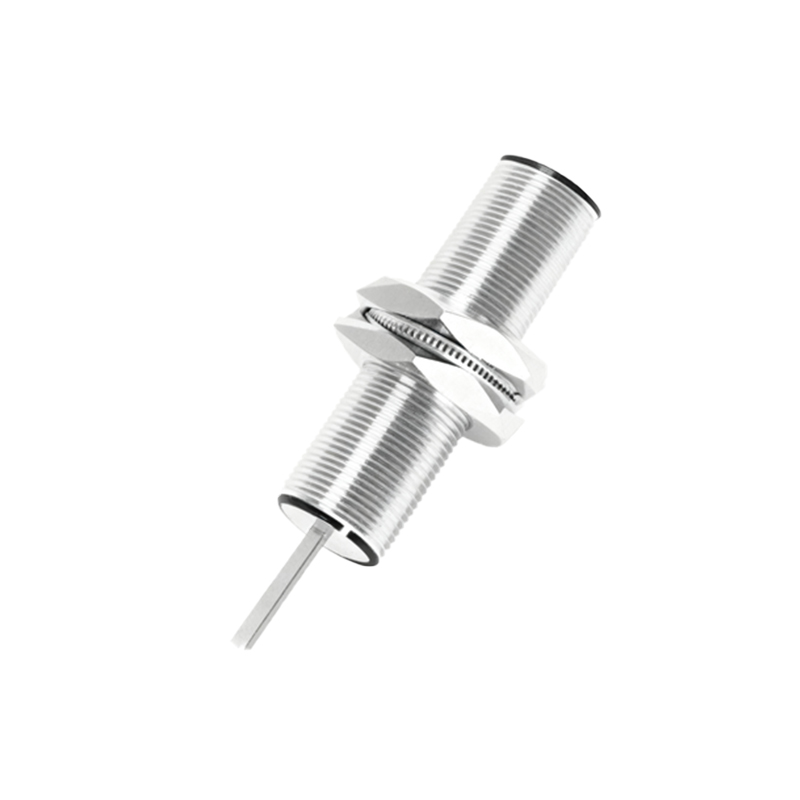
Capacitive proximity sensors operate on a different principle, capable of detecting both metallic and non-metallic materials like liquids, wood, or plastics. They generate an electrostatic field. A target object entering this field alters the capacitance between the sensor's electrode and ground. The sensor's circuitry, often a relaxation oscillator or RC circuit, measures this change in capacitance. When the change exceeds a pre-set sensitivity level, the sensor triggers. This sensitivity can often be adjusted, allowing it to ignore certain materials or detect through thin barriers, making it ideal for level detection in tanks.

Photoelectric sensors, another major category, use light beams. An emitter sends out a modulated light beam (often infrared, laser, or visible LED). A receiver detects this light. In a through-beam setup, the sensor triggers when the target obstructs the beam, causing a loss of signal at the receiver. A retro-reflective sensor triggers when the beam, normally reflected back by a reflector, is blocked. Diffuse sensors, the most common for proximity detection, trigger when the target itself reflects the emitted light back to the receiver located in the same housing. The key is the modulation of the light, which allows the sensor to ignore ambient light and only respond to its specific signal, ensuring reliable triggering.
Ultrasonic sensors calculate distance by emitting sound pulses and measuring the time for an echo to return. Triggering is based on a time or distance threshold. For instance, a sensor can be set to trigger its output when an object comes closer than 50 centimeters, meaning the echo return time falls below a specific value. This makes them excellent for precise distance measurement and detecting objects regardless of color or material, though they can be affected by soft, sound-absorbing surfaces.
The actual trigger event is managed by the sensor's solid-state output switch. For a standard 3-wire DC sensor, this is typically an NPN or PNP transistor. When the sensing condition is met (target present), the internal circuit biases this transistor to either conduct (sinking current to ground for NPN) or stop conducting (sourcing current for PNP), thereby changing the voltage on the output wire. This clean, fast electrical signal is what the connected controller, like a PLC or microcontroller, reads as a "trigger."
Several factors influence reliable triggering. The sensing distance, or "nominal range," is specified for a standard target. For inductive sensors, this is usually mild steel. A different metal may reduce the effective range. The hysteresis of a sensor is crucial—it is the difference between the point where the sensor triggers as the target approaches and the point where it releases as the target withdraws. This prevents rapid, chattering output switching if the target vibrates at the edge of the detection zone. Environmental factors like temperature, electrical noise, and for optical sensors, dirt or fog, must also be considered for consistent operation.
In application, this triggering capability enables countless functions. On a assembly line, an inductive sensor triggers to confirm a metal part is in place for a robot to weld. In a smartphone, a capacitive or infrared sensor triggers to turn off the display during a call. In automotive systems, ultrasonic sensors trigger to activate parking assist warnings. The reliability and speed of this unseen trigger event are foundational to automation, safety, and the seamless functionality of modern devices.