Introduction to Proximity Sensing at Scale
The evolution of proximity sensor technology has reached a pivotal juncture, driven by the demands of Industry 4.0, smart infrastructure, and autonomous systems. Large-scale deployment of these sensors represents a paradigm shift, moving beyond isolated detection tasks to creating interconnected sensory networks. This research delves into the core technologies enabling this scalability, examining the materials, signal processing architectures, and communication protocols that allow thousands of sensors to operate cohesively. The fundamental challenge lies not merely in miniaturization or cost reduction, but in achieving robust, reliable, and energy-efficient operation across vast physical or operational domains, from factory floors to urban environments.
Core Sensing Modalities and Their Scalability
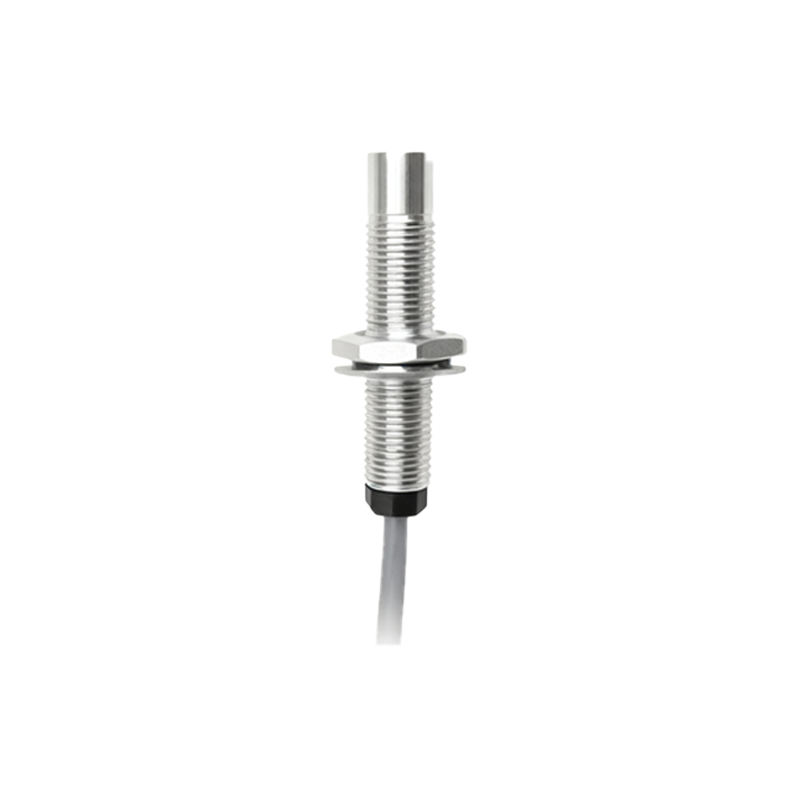
Several sensing principles form the backbone of large-scale systems. Inductive and capacitive sensors remain staples for metallic and non-metallic object detection in industrial automation, prized for their durability and non-contact operation. For longer ranges and environmental mapping, ultrasonic and photoelectric sensors (including laser-based LiDAR) are critical. The scalability of each modality is constrained by factors like interference, power consumption, and data throughput. For instance, deploying thousands of ultrasonic sensors requires sophisticated scheduling to avoid acoustic crosstalk, while large LiDAR arrays demand immense computational resources for point cloud processing. Recent advancements in solid-state LiDAR and millimeter-wave radar are particularly promising, offering higher resolution and reliability in compact, scalable form factors.
Advanced Materials and Fabrication Techniques
Material science is a key enabler for next-generation proximity sensors. The use of Micro-Electro-Mechanical Systems (MEMS) technology allows for the batch fabrication of incredibly small, consistent, and low-power sensor elements. Materials like graphene and other 2D compounds are being researched for their exceptional sensitivity to minute changes in electromagnetic fields or pressure, potentially leading to ultra-sensitive, flexible sensors. Furthermore, printed electronics using conductive inks enable the cost-effective production of sensor arrays on flexible substrates, opening doors for large-area sensing surfaces in applications like smart packaging or structural health monitoring.
Signal Processing and Data Fusion Architectures
In a large-scale network, the raw data from individual sensors is of limited value. The intelligence lies in the processing layer. Edge computing has become indispensable, where initial filtering, digitization, and basic analysis occur at the sensor node or a local gateway. This reduces the bandwidth needed to transmit data to a central server. For complex environments, sensor fusion algorithms integrate data from heterogeneous sensors (e.g., combining radar for distance with a camera for classification) to create a more accurate and reliable situational awareness. Machine learning models, increasingly deployed at the edge, can identify patterns, predict failures, and reduce false triggers, enhancing the overall system's efficiency and decision-making capability.
Communication Protocols and Network Topology
Reliable data transmission is the nervous system of any large-scale sensor deployment. While traditional industrial buses like IO-Link and PROFINET offer robustness, wireless protocols are essential for scalability and flexibility. Low-Power Wide-Area Network (LPWAN) technologies like LoRaWAN and NB-IoT are designed for long-range communication with minimal power, ideal for sparse sensor fields. For denser, higher-data-rate networks, mesh protocols like Zigbee or Bluetooth Mesh provide resilience through self-healing network topologies. The emerging 5G technology, with its ultra-reliable low-latency communication (URLLC) slices, is poised to support mission-critical, real-time control of massive sensor networks in industrial settings.
Power Management and Energy Harvesting
Powering thousands, or even millions, of sensors is a monumental challenge. Wired power is often impractical. Therefore, advanced power management integrated circuits (PMICs) that drastically reduce sleep-mode current and manage active bursts are crucial. Concurrently, energy harvesting techniques are transitioning from research to deployment. Sensors can now be powered by ambient light, thermal gradients, vibration, or even radio frequency (RF) waves. This trend towards energy autonomy is critical for deploying sensors in remote or inaccessible locations, enabling truly pervasive and maintenance-free sensing networks.
Industrial Applications and Case Studies
The practical impact of large-scale proximity sensing is profound. In smart manufacturing, arrays of sensors enable real-time tracking of components, predictive maintenance of machinery, and collaborative robot safety. In logistics, warehouses utilize dense networks of sensors for inventory management and autonomous guided vehicle (AGV) navigation. For smart cities, embedded proximity sensors monitor traffic flow, parking space occupancy, and pedestrian movement. A notable case study involves a major automotive plant that implemented a network of over 10,000 inductive sensors for tool positioning and quality control, resulting in a 15% reduction in downtime and a significant improvement in production