Introduction to Photoelectric Sensing Technology
Photoelectric sensors are fundamental components in modern industrial automation, providing non-contact detection of objects, distances, and conditions. These devices operate by emitting a beam of light, typically from an LED or laser diode, and detecting changes in the received light signal. The core principle involves the conversion of light energy into an electrical signal, which is then processed to determine the presence, absence, or specific characteristics of a target. Among the various types, CCD (Charge-Coupled Device) and CDL (Constant Distance Laser) sensors represent advanced, specialized categories. They offer distinct advantages in precision, reliability, and application-specific performance, making them indispensable in complex manufacturing, packaging, robotics, and quality control systems. Their ability to function in harsh environments with high speed and accuracy has solidified their role as critical tools for enhancing productivity and ensuring process integrity.
Deep Dive into CCD Photoelectric Sensors
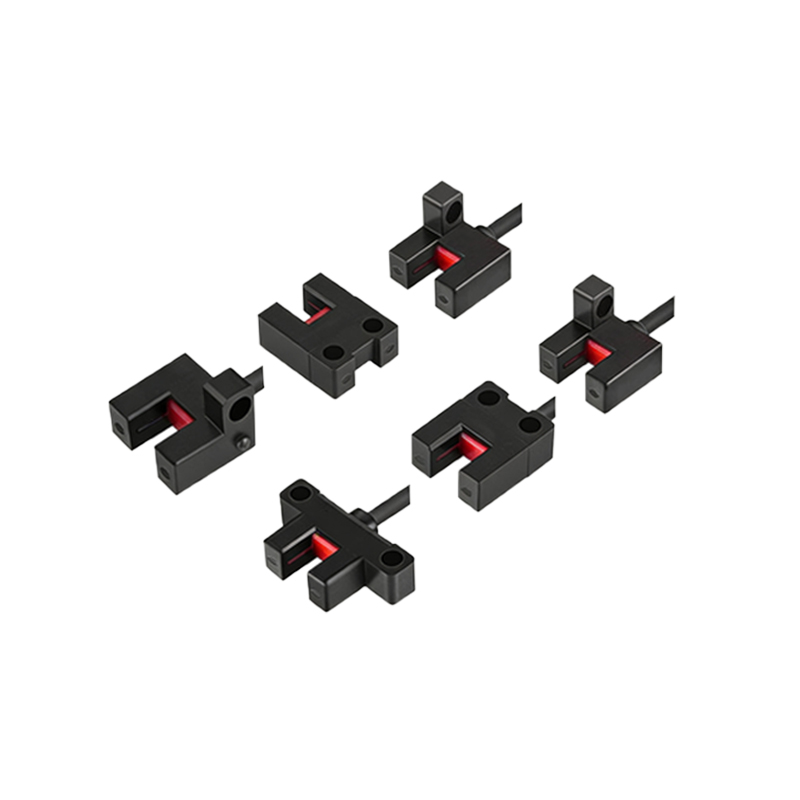
A CCD photoelectric sensor utilizes a Charge-Coupled Device, which is essentially an integrated circuit containing an array of linked, or coupled, capacitors. When light photons strike the sensor's surface, they generate an electrical charge in these capacitors. This charge is then sequentially transferred across the chip to an output node, where it is converted into a voltage and processed. This technology is exceptionally adept at capturing detailed visual information. In industrial contexts, CCD-based sensors are often employed in sophisticated vision systems for tasks like dimensional gauging, pattern recognition, barcode reading, and precise alignment. They can detect minute contrasts and shapes, providing rich data far beyond simple presence detection. Their high resolution allows them to inspect complex assemblies or verify intricate labels with remarkable fidelity. However, they typically require more processing power and careful lighting setup compared to standard photoelectric sensors.
Exploring CDL Photoelectric Sensors
CDL, or Constant Distance Laser, sensors represent a specialized branch of laser-based photoelectric sensors. Their primary function is to maintain a constant measurement distance from a target object, regardless of surface irregularities or color variations. They achieve this through a triangulation principle. The sensor projects a laser spot onto the target surface. The reflected light is received by a position-sensitive detector (like a PSD or a CMOS array). If the target distance changes, the position of the reflected spot on the detector shifts. The sensor's internal circuitry continuously calculates this shift and adjusts its output or triggers a control signal to indicate when the object is at the precise, pre-set "constant distance." This makes CDL sensors ideal for applications such as edge detection on winding materials, loop control, and maintaining precise stand-off distances in robotic guidance or assembly processes where tolerance is extremely tight.
Key Technical Specifications and Comparison
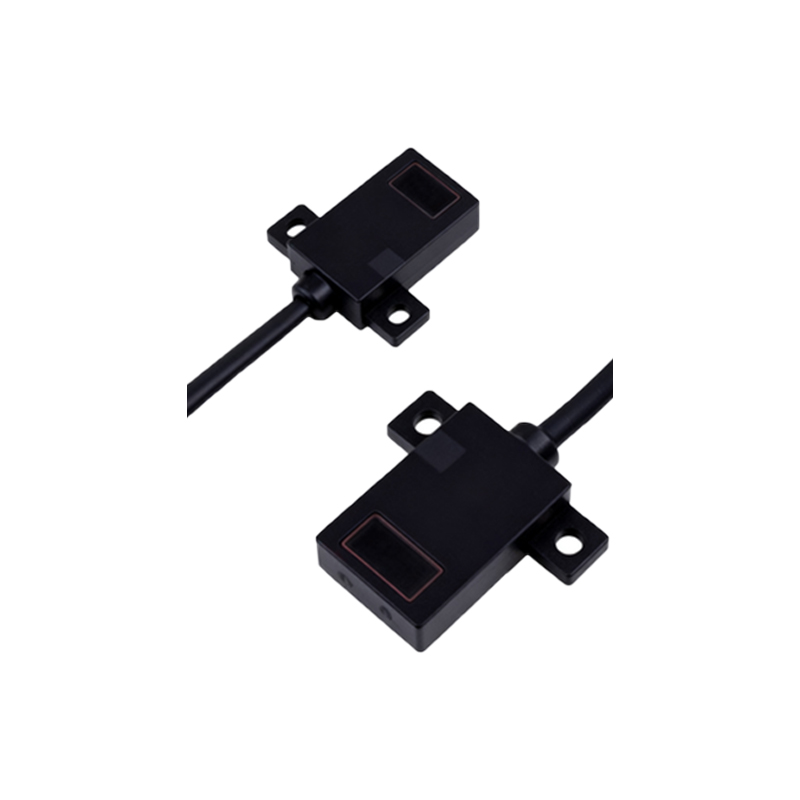
When selecting between CCD and CDL technologies, engineers must evaluate key specifications. For CCD sensors, critical parameters include resolution (pixel count), scan rate, spectral response (visible, infrared), and interface (e.g., Ethernet, USB). For CDL sensors, the focus is on measuring range, repeatability, spot size, response time, and the type of output (analog, digital, or both). A CCD sensor provides area-based information, capturing a full image or profile. A CDL sensor provides a precise point measurement of distance or displacement. The choice is application-driven: CCD is for "seeing what it is," excelling in identification and complex inspection, while CDL is for "knowing exactly where it is," excelling in ultra-precise distance control and profiling of continuous surfaces. Environmental factors like ambient light, dust, and vibration also significantly influence the selection and housing requirements of both sensor types.
Typical Industrial Applications and Use Cases
CCD photoelectric sensors are extensively used in machine vision systems. Examples include verifying the correct placement of components on a printed circuit board (PCB), reading 2D matrix codes on pharmaceutical packages, and measuring the fill level in transparent bottles on a high-speed line. Their ability to process a full field of view is crucial. Conversely, CDL sensors find their niche in processes requiring unwavering precision in distance. A prime example is in paper or film converting machinery, where a CDL sensor monitors the material edge to ensure perfect winding tension and alignment without physical contact. Another is in automotive assembly, where a robot arm uses a CDL sensor to maintain a precise gap while applying adhesive beads. Both sensor types contribute to zero-defect manufacturing, predictive maintenance, and fully automated, flexible production lines.
Installation, Calibration, and Best Practices
Proper installation is paramount for optimal performance. For CCD sensors, this involves securing the sensor and lens assembly against vibration, ensuring consistent, appropriate illumination to highlight features of interest, and calibrating the field of view and software thresholds. For CDL sensors, mounting must be rigid to prevent misalignment, and the laser beam must be positioned perpendicular to the target surface for accurate triangulation. Initial calibration involves teaching the sensor the reference distance or profile. Best practices include regular cleaning of lenses and apertures, protecting sensors from mechanical damage and electrical noise, and performing routine validation checks against a master sample. Understanding the target object's properties—such as color, reflectivity, texture, and possible surface contaminants—is essential for configuring both sensor types effectively.
Future Trends and Technological Advancements
The evolution of CCD and CDL sensors is closely tied to advancements in electronics and software. CCD technology is increasingly being complemented or replaced by CMOS-based vision sensors, which offer lower power consumption and higher integration at potentially lower cost. However, high-end CCDs still dominate applications requiring the highest image quality and low noise. For CDL and distance measurement sensors, trends include miniaturization, higher-speed processors enabling faster response times, and enhanced connectivity via Industrial Internet of Things (IIoT) protocols like OPC UA and MQTT. Smart sensors with embedded diagnostics and AI-based pattern recognition are emerging, allowing for self-adjustment and more complex decision-making at the edge of the network. These advancements promise even greater integration, intelligence, and reliability in future automation systems.